
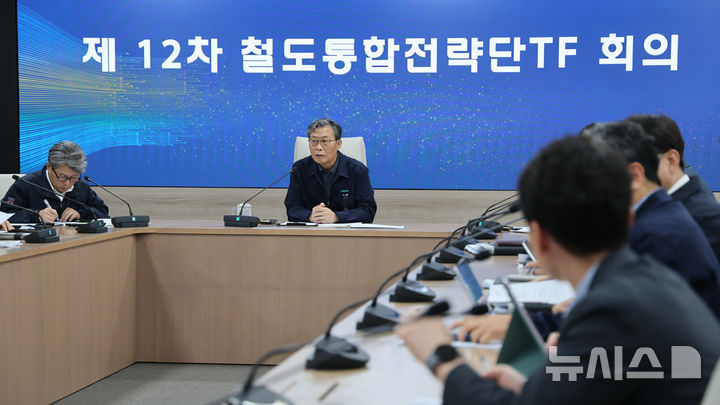
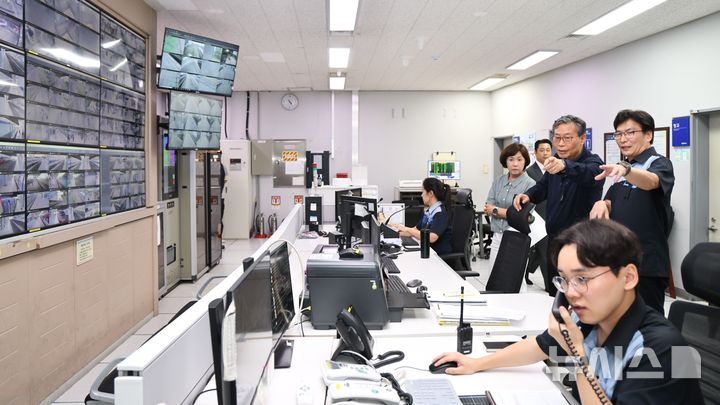
Last night, a news story caught my eye. It reported that on the day before the integrated operations began, the CEO of Korail not only presided over a meeting at the Daejeon headquarters but also personally visited Seoul Station in the afternoon to inspect the control room. I initially thought it was just a standard press release saying, “We are well-prepared,” but upon closer look, the number “12” stood out. They held twelve company-wide inspection meetings just for this integration. I wondered if it was really that significant, so I looked into it further.
KTX-SRT Integration: What Changes Today?
To start with the conclusion, as of today, September 1st, the SRT brand effectively disappears. The two separate systems—KTX centered at Seoul Station and SRT at Suseo Station—are merging under a single name: KTX. With the unification of the high-speed rail operating system, we can expect increased seat availability, lower fares, and better convenience for passengers as ticketing windows are also consolidated.
Looking at the numbers makes the impact clearer. After the integration, an additional 15,000 seats will be supplied on weekdays and up to 17,000 on weekends. Specifically, the Suseo line, which suffered from chronic seat shortages, will see a 30% increase in supply. It seems there was a reason why SRT tickets from Suseo always sold out so quickly during the holidays. As for fares, KTX fares will be adjusted to match the existing SRT level, resulting in an average 10% decrease. Additionally, passengers can now earn 5% of their purchase price as mileage on the Suseo line—a welcome change for those who were previously disappointed by the lack of a mileage program on SRT.
The carriage operation method is also interesting. By connecting KTX and existing SRT trains together, they can operate “multi-unit trains” to provide more seats per run. This method was already test-run at Seoul Station on May 15, 2026. Since they are linking two different types of trains into one consist, we will see just how much more room there is during the upcoming Chuseok holiday.
Why Was This the Moment for Integration?
What I was curious about was the timing. SRT began operations in 2016, marking its 10th anniversary this year. Originally, the SRT was established in 2013 and a competitive system was introduced in 2016 to eliminate the monopoly and inefficient management of the KTX-only market. So, merging back into one company after 10 years might look like a step backward at first glance.
However, it seems the need for integration has been discussed for quite some time. The main reasons cited include maximizing efficiency in a network industry under a single operator, eliminating redundant costs, improving financial structure, subsidizing deficit-prone routes with profits from high-speed rail, integrating ticketing systems, and increasing seat supply. Critics pointed out that it was inefficient for two companies sharing the same tracks to operate separate ticketing systems, mileage programs, and call centers. Since this integration was also one of President Lee Jae-myung’s campaign promises, it is likely the result of both political momentum and industrial necessity.
Of course, there are concerns. Some point out that since the original purpose of splitting the companies was to prevent a monopoly, merging them again could lead to a massive organization prone to inefficient management. Whether service quality will be maintained without a competitor remains to be seen, so I am watching this development with caution.
12 Inspection Meetings: Why the Tension?
Looking back at the articles, the expression emphasized by Korail CEO Kim Tae-seung is striking. He reportedly repeated the phrase “rapid response to unpredictable situations” during the meetings, and it seems this wasn’t just a boilerplate remark.
These meetings covered final preparations for the entire integrated operation, including train operations, vehicle maintenance, station facility checks, and customer guidance. They specifically focused on potential risk factors and contingency plans. Korail stated that they held 12 company-wide inspection meetings to ensure a stable high-speed rail integration. The fact that they held so many meetings suggests this was treated not just as a simple system transition, but as a matter directly linked to operational safety.
His visit to Seoul Station is also worth noting. CEO Kim inspected the platforms, passenger flow, signage, business facilities, and the deployment of on-site staff. He checked countermeasures for safety hazards and customer inconveniences that might arise during actual operations. The fact that the CEO personally went down to the control room suggests he was operating under the assumption that problems could actually occur on the first day, rather than treating it as a formal event.
I looked up recent news related to Korail to understand why they were so tense, and I found the answer. Just a few days before the integration announcement, on August 29th, a 50-year-old Korail employee was struck and killed by a train while performing shunting operations at Uiwang Station in Gyeonggi-do. The Ministry of Labor and the Railway Police are investigating potential violations of the Occupational Safety and Health Act, and the Ministry of Land, Infrastructure and Transport has announced plans to strengthen railway safety measures. What makes this weightier is that this is not the first occurrence. Despite ongoing efforts to prevent accidents involving railway workers—such as the Obong Station fatality (November 2022), Guro Station fatality (August 2024), Geondeok Station fatality (February 2025), and the fatality near Cheongdo Station (August 2025)—similar accidents have continued to occur. Given the history of safety accidents, it’s understandable why they held twelve meetings before introducing a new operating method involving cross-line and multi-unit trains.
What Challenges Remain After the KTX-SRT Integration?
Improvements in fares and seat availability on the first day of integration are clearly visible changes. However, some view this as just the beginning, not the end. Success will depend on whether they can achieve tangible improvements in fares, seats, ticketing, and service, while simultaneously resolving deficit issues and stabilizing the organization.
| Category | Before Integration | After Integration |
| — | — | — |
| Brand | KTX / SRT Separate | Unified as KTX |
| Fares | SRT approx. 10% cheaper | KTX fares lowered to SRT level (avg. 10%↓) |
| Seat Supply | Suseo line relatively scarce | 15,000 extra on weekdays, 17,000 on weekends, Suseo line 30%↑ |
| Mileage | No permanent program for SRT | Unified to 5% of purchase price |
| Ticketing App | KorailTalk / SRT App separate | Integrated into Korail Plus (SRT app to run in parallel for now) |
Summary of changes in fares, seats, and mileage before and after high-speed rail integration
It is worth noting that the app transition can be confusing. It is not an entirely new app but an update to the existing KorailTalk. Those who only used the SRT app must install the new Korail Plus separately. It is a good idea to check this in advance if you have Chuseok tickets pending, as updating the SRT app will not automatically turn it into Korail Plus.
Safety management systems are harder to quantify, so they require ongoing observation. As cross-line and multi-unit operations expand amid a string of accidents, concerns are rising that the safety management system will be put to the test immediately. The same goes for personal information. The risks of data privacy breaches during the process of merging and managing the member information held by the two separate companies must also be managed thoroughly.
To be honest, it is difficult to judge whether the integration was a success or failure based on just one day. While the lower fares and increased seat capacity are immediately noticeable, whether the two organizations can truly function as one and whether safety protocols are being followed on the ground—not just on paper—are issues that will take several months to evaluate. For now, it is clear that something has changed starting with the first train today.
References
- Newsis, Korail CEO 'Full preparations for integrated high-speed rail operation to respond quickly to unpredictable situations', 2026-08-31
- Segye Ilbo, Korail Integrated Operation D-1… CEO Kim Tae-seung focuses on preparations, 2026-08-31
- SBS, KTX-SRT integration from September… Fares down 10%, increased operations and seats
- Edaily, Challenges for the KTX-SRT high-speed rail integration era after 10 years
- Daily e-News, Hoping for KTX-SRT integration to be an opportunity for service improvement
- Maeil Ilbo, September KTX-SRT integrated operation begins, remaining challenges
- Hankook Ilbo, Korail employee tragedy at Uiwang Station, recurring railway site fatalities
- Financial News, Investigation into Korail employee death at Uiwang Station begins in earnest
- Yojeumgeotdeul, Summary of changes from September for KTX-SRT integration
- Namuwiki, SRT entry