
Prologue: Behold the ‘Black Universe’ Hidden Beneath Your Feet
Let’s be honest.
We’ve long believed the heroes saving our planet reside in places we must look up to.
We’ve praised the dense Amazon rainforest as the ‘Earth’s lungs,’ and thought that planting more trees was the only salvation for our warming planet.
But while our gaze was fixed on the forests, a far larger and more dynamic respiration was happening right beneath our feet.
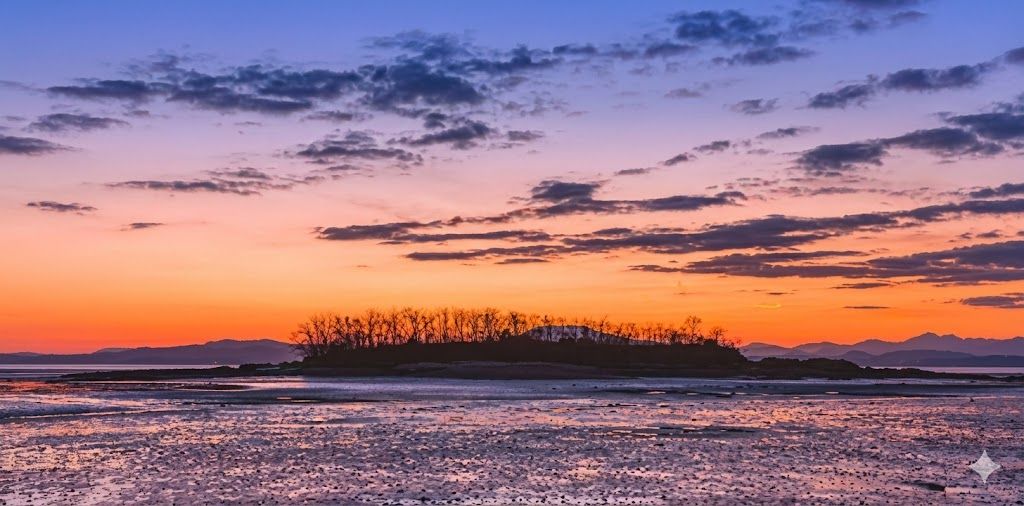
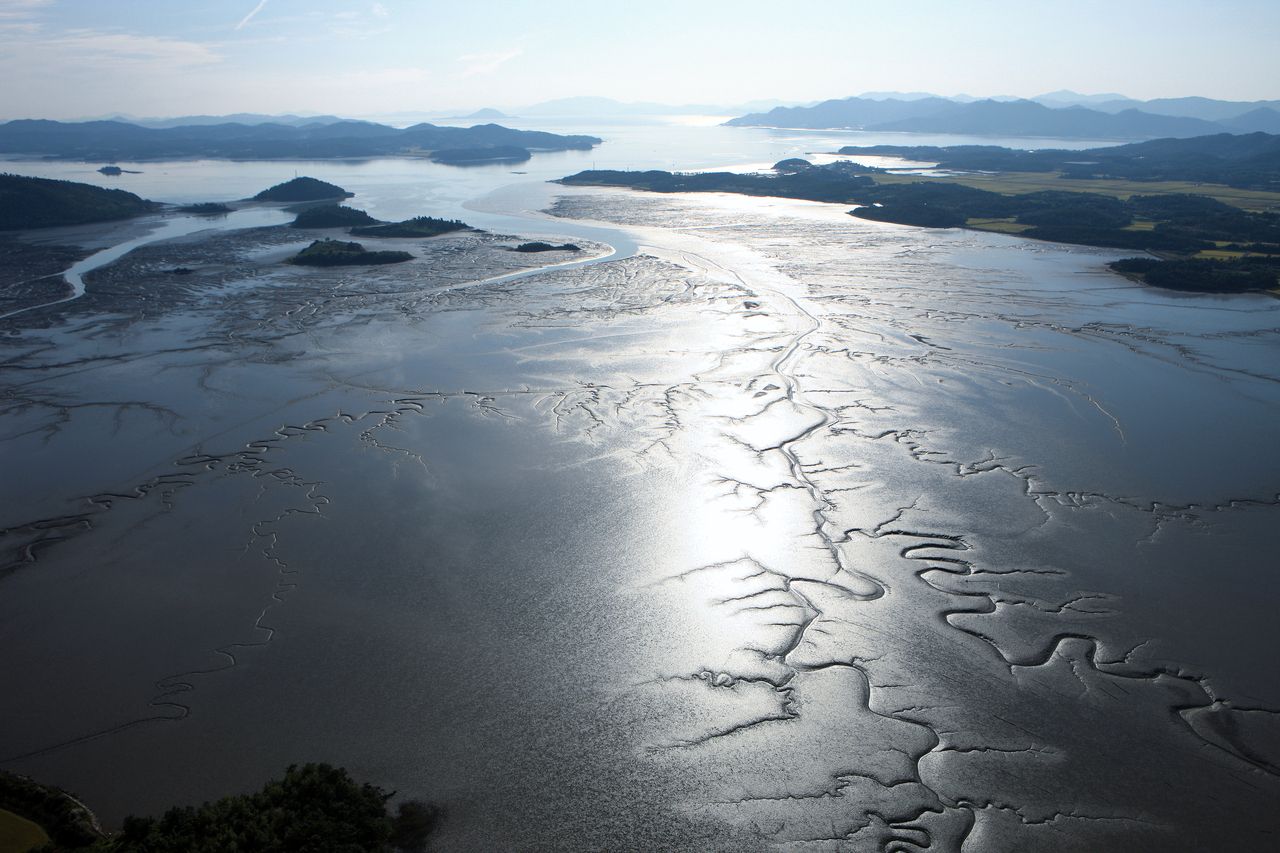
It’s the dark, viscous land where the sea and land violently collide: the Tidal Flat.
The area of tidal flats along Korea’s west and south coasts spans a vast 2,482 km2.
This is more than four times the area of Seoul.
In the past, cartographers marked this as mere ‘grey zone,’ and economists dismissed it as ‘wasteland’ that should be quickly reclaimed for factories.
However, modern science has completely overturned these outdated notions.
Tidal flats are not empty land. They are cauldrons of life teeming with hundreds of millions of microorganisms in just 1 gram of mud, and they are the true lungs of the Earth, absorbing greenhouse gases faster and more powerfully than forests.
From here, we will uncover, one by one, the secrets of Korea’s tidal flats – the most potent breakwater ensuring humanity’s survival against the monumental wave of the climate crisis.
1. The Science of Blue Carbon: Why Tidal Flats, Not Forests?
The Secret Behind an Absorption Rate 50 Times Faster Than Land
In 2009, the United Nations Environment Programme (UNEP) and the International Union for Conservation of Nature (IUCN) released a report that shocked the world.
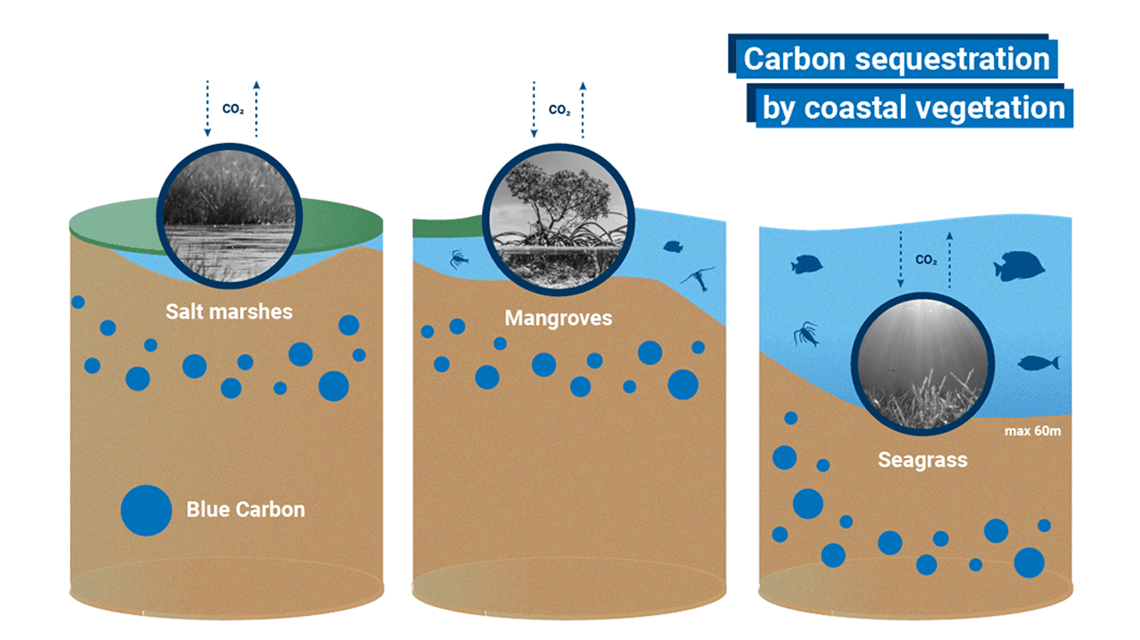
It was the emergence of the concept of ‘Blue Carbon.’
The core finding was that marine ecosystems absorb carbon up to 50 times faster than terrestrial forests (Green Carbon), and their carbon storage capacity can last for thousands of years.
“Wait, tidal flats are more powerful than trees?” you might wonder.
The secret lies in the unique ‘anaerobic environment’ and ‘sedimentation rate’ of tidal flats.
The carbon cycle in forests is surprisingly short.
When trees die and decay, or when wildfires occur, the stored carbon is released back into the atmosphere.
But tidal flats are different.
Tidal flats are submerged twice a day, and the deep mud layers are almost completely oxygen-deprived.
In the absence of oxygen, bacteria that decompose organic matter and release carbon dioxide cannot function.
In essence, carbon trapped within tidal flats is not decomposed and remains ‘permanently sealed’ underground.
Furthermore, sediments carried by rivers and the sea accumulate like layers of rice cake, leaving no room for carbon to escape.
Non-Vegetated Tidal Flats: Carbon Factories of Invisible Workers
Here lies a fascinating and globally debated aspect unique to Korea’s tidal flats.
Until now, the Intergovernmental Panel on Climate Change (IPCC) only recognized Blue Carbon in areas with ‘visible vegetation,’ such as mangrove forests or reed beds.
However, 90% of Korea’s tidal flats are ’non-vegetated mudflats.’
“How can they photosynthesize and capture carbon without plants?”
Korean marine scientists, led by Professor Jong-Seong Kim of Seoul National University, provided a clear answer to this question.
Under a microscope, they examined the seemingly sticky mud on the tidal flat surface and witnessed an astonishing sight.
Microalgae (especially diatoms) formed a thin biofilm on the surface of the mudflats.
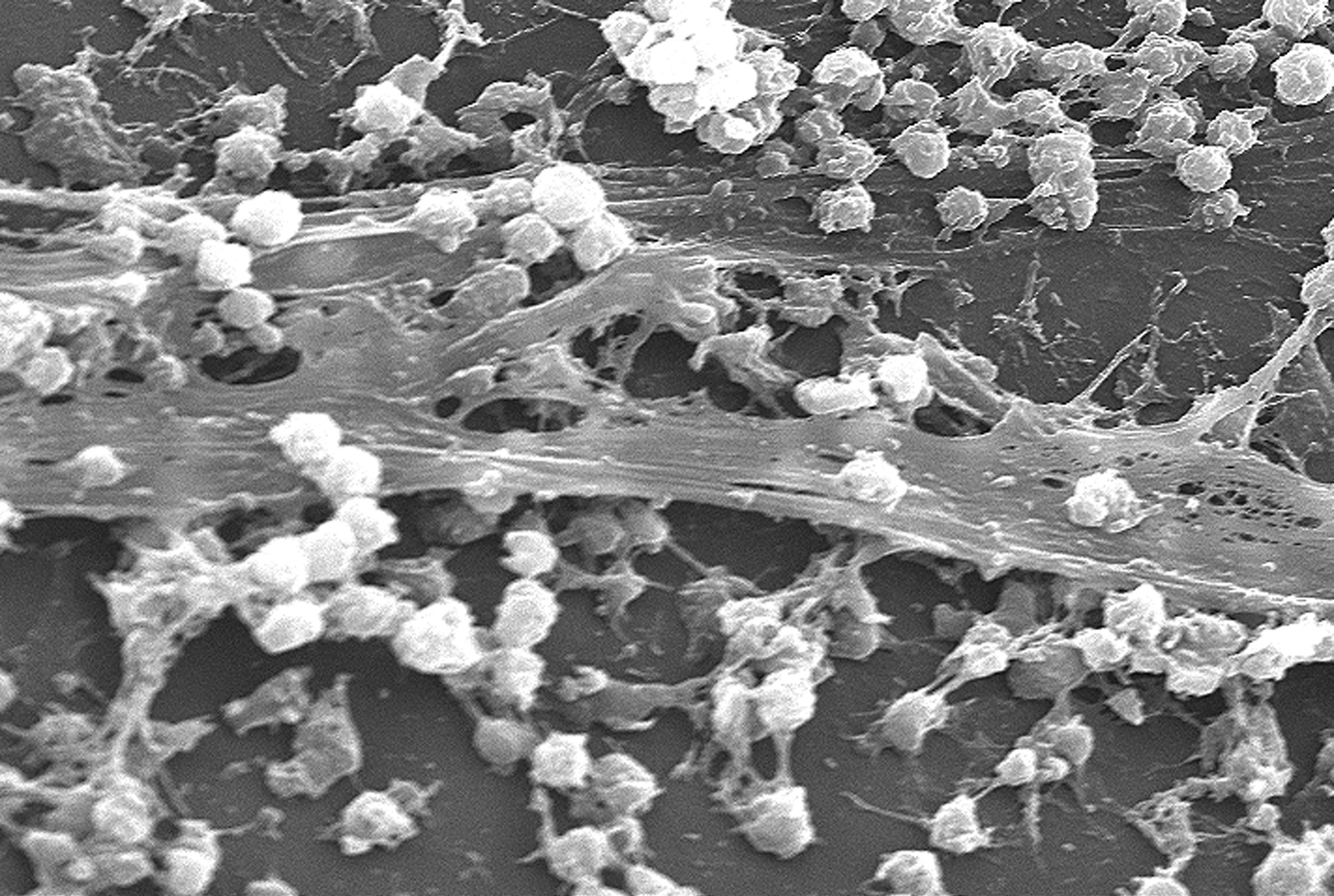
When the tide recedes and sunlight shines, these algae photosynthesize explosively, absorbing atmospheric carbon.
Even more interesting is the role played by benthic organisms like lugworms, crabs, and snails.
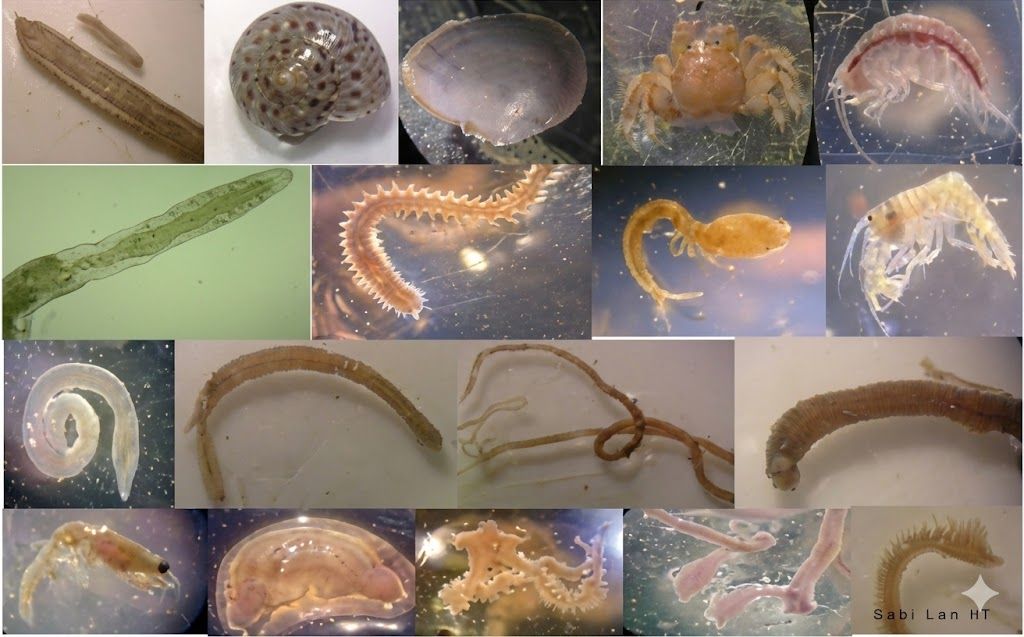
These small creatures constantly burrow and mix the mud (bioturbation), dragging the carbon captured by microalgae deep into the mud and burying it.
In conclusion, non-vegetated tidal flats are not barren lands.
They are state-of-the-art carbon capture facilities operated 24/7 by trillions of invisible micro-workers.
Research indicates that Korean tidal flats absorb approximately 260,000 tons of carbon dioxide annually. This is an astonishing figure, equivalent to eliminating the amount emitted by 110,000 passenger cars in a year.
2. Paradigm Shift: From Reclamation to Restoration
Reclamation: The Disaster Brought by Expanding Maps
Looking back, ‘reclamation’ was a symbol of national strength and prosperity for us.
Filling the sea to expand our limited territory was seen as an inevitable destiny. Seosan, Saemangeum, Siryaho… Our maps expanded, but we lost too much in return.
The blocked waterways turned lakes stagnant, and fishermen’s nets came up empty.
Most importantly, by covering nature’s buffer zones that protected against floods and typhoons, and the giant sponges that absorbed carbon, with concrete ourselves, we accelerated the clock of the climate crisis.
Reverse Reclamation: Opening Blocked Waterways Brings Life
However, hope begins with admitting mistakes. The paradigm has now sharply shifted towards ‘Reverse Reclamation’.
Breaking down the dikes and allowing seawater back in is no longer an option but a necessity.
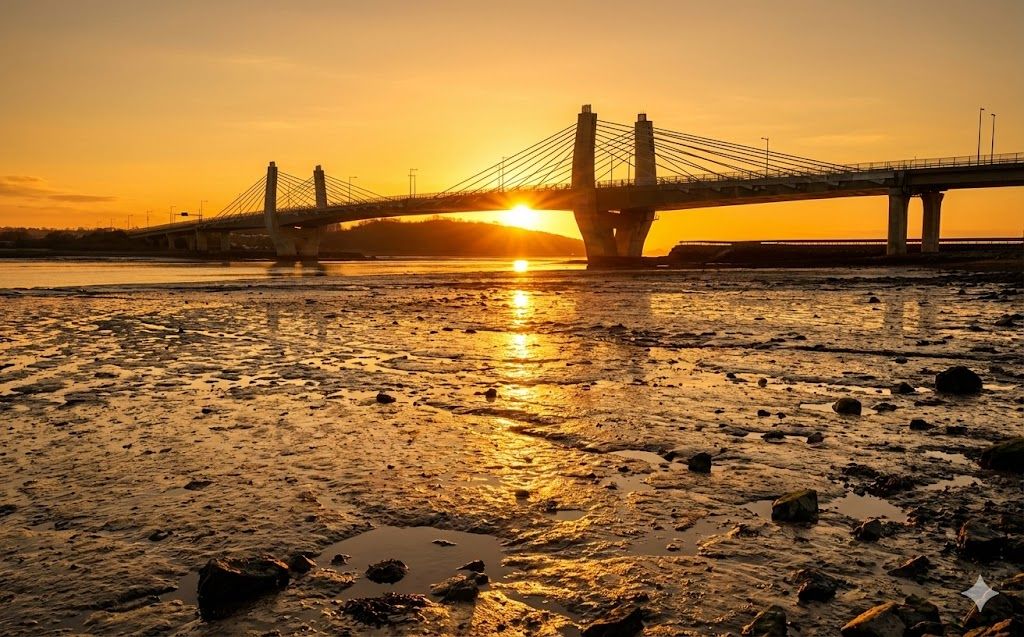
A prime example is ‘Hwangdo’ in Taean, Chungnam, and ‘Suncheon Bay’ in Suncheon, Jeonnam. The case of Hwangdo is particularly dramatic.
Due to the embankment connecting it to Anmyeondo, the tidal flat had become polluted, and clams were dying en masse. The residents and local government boldly removed the embankment and built a bridge allowing seawater to flow.
The result was miraculous.
The hardened mud became soft again, and the disappeared clams returned.
Productivity surged threefold. As the ecosystem revived, the carbon absorption function also returned.
Suncheon Bay was reborn as a world-class ecological tourism destination by restoring its salt pans into tidal flats. This is the most definitive proof that tidal flat conservation yields greater economic benefits than development.
The Essence of Eco-Engineering: Tidal Flat Vegetation Restoration
Restoration doesn’t stop at just opening waterways.
Recently, proactive techniques like ‘Salt Marsh Restoration’ are being introduced. This involves artificially planting salt-tolerant plants like Suaeda japonica, reeds, or glassworts on the upper tidal flats.
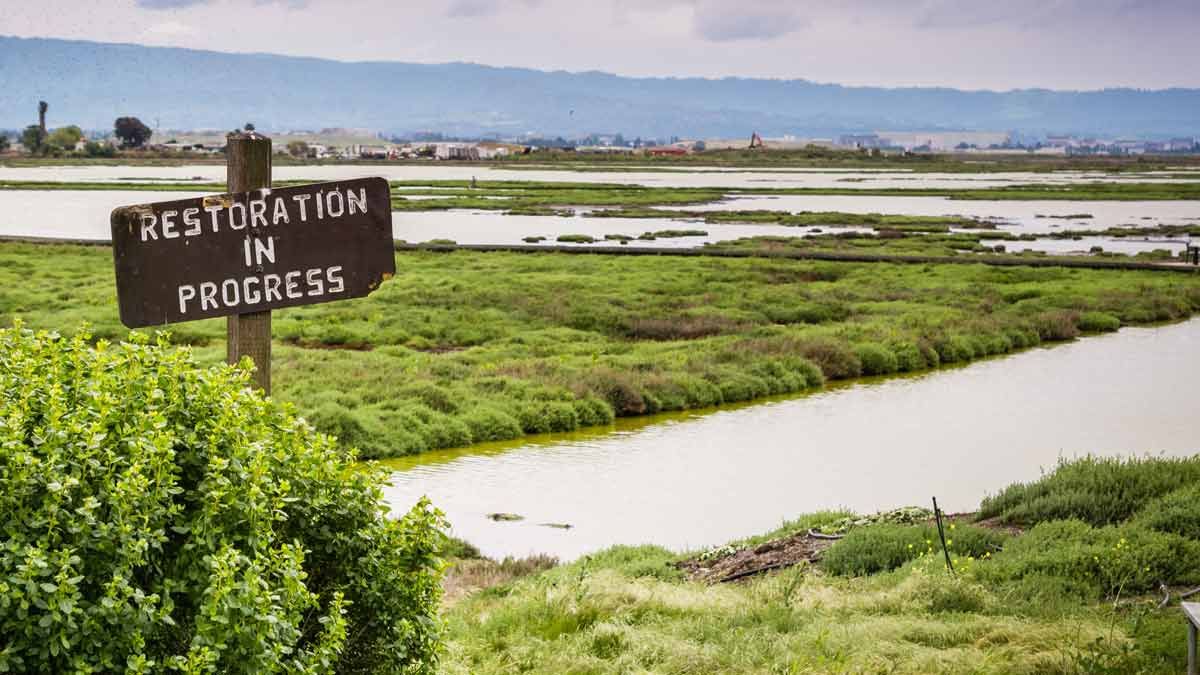
Tidal flats with vegetation have nearly double the carbon absorption efficiency of those without.
Furthermore, the plant roots firmly anchor the soil, acting as a natural breakwater against coastal erosion caused by sea-level rise.
The Ministry of Oceans and Fisheries’ 120 billion won vegetation restoration project represents a strategic approach to managing tidal flats not just as natural environments, but as highly efficient ‘Blue Carbon Farms.’
3. Strategy & Policy: K-Blue Carbon, Towards Global Standards
The 1st Basic Plan for Tidal Flat Management and the Breathing Coastal New Deal
The government enacted the ‘Tidal Flat Act’ and set ambitious goals to secure vast carbon sinks through tidal flats by 2050.
Restoration projects to revive damaged tidal flats are now a core component of the ‘Green New Deal’ and a nationwide project involving the Ministry of Land, Infrastructure and Transport, the Ministry of Oceans and Fisheries, and local governments.
2027 IPCC Certification: A Golden Time for Climate Leadership
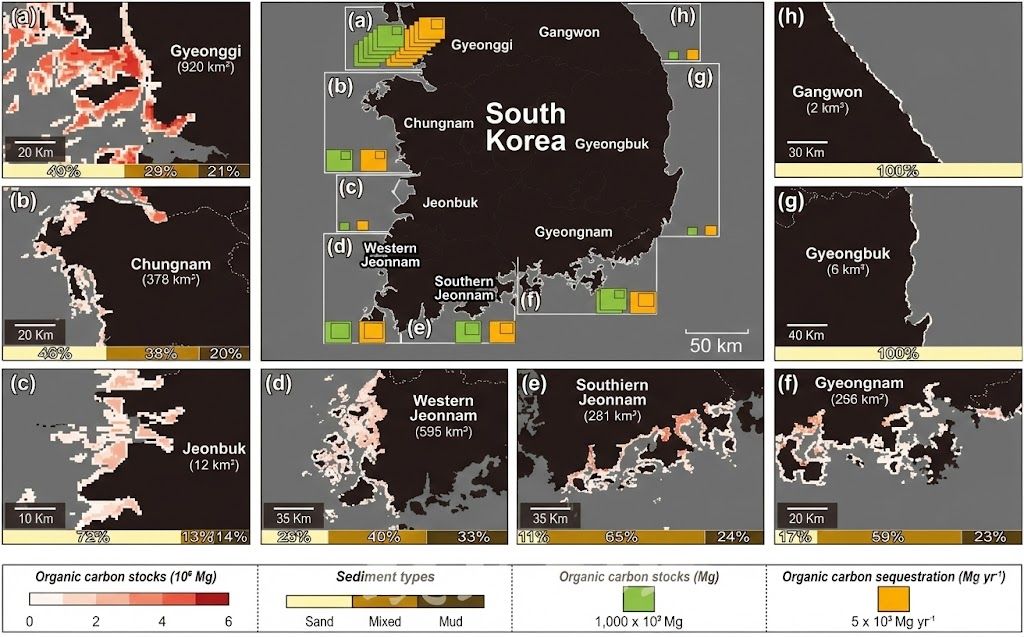
The most crucial goal of Korea’s current tidal flat policy is singular: ‘Official IPCC certification of non-vegetated tidal flats.’
As mentioned earlier, current international standards do not fully capture the potential of Korean tidal flats.
Korea is making a full diplomatic effort to get non-vegetated tidal flats listed as a new carbon reduction measure at the 2027 IPCC Plenary Meeting.
It is leading international opinion by forming a ‘Global Blue Carbon Alliance’ with countries like Germany, the Netherlands, and Denmark (Wadden Sea nations), as well as the UK and Australia.
If this is approved in 2027? Korea will be able to save astronomical costs associated with achieving its carbon reduction targets.
This is not merely a scientific issue, but a fierce diplomatic war concerning national interests.
4. Economics: Tidal Flat Annuity and the Value of Ecosystem Services
17 Trillion Won in Value to the Residents
So, what is the monetary value of tidal flats? Don’t be surprised.
According to the Korea Maritime Institute (KMI), the benefits provided by tidal flats (fishery production, pollution purification, disaster prevention, tourism, carbon absorption, etc.) amount to approximately 17.8121 trillion won annually.
This immense value is a ‘perpetual annuity’ incomparable to the one-time profits gained from filling tidal flats for factory construction.
In fact, some regions, like Shinan County in South Jeolla Province, have introduced a groundbreaking system called the ‘Tidal Flat Annuity.’
This distributes the profits generated from tidal flats to residents as dividends.
It is the most powerful and practical way to make residents tangibly feel that “conservation leads to money.”
A New Blue Ocean in ESG and the Carbon Credit Market
Tidal flats are also a new frontier of opportunity for corporations.
With ESG management becoming a global necessity, companies are actively seeking ways to offset their carbon emissions.
While tree planting was once the primary method, ’tidal flat restoration’ is now the trend.
Global companies like Kia Motors and Samsung Electronics are investing in tidal flat restoration projects.
Notably, in the Emissions Trading System (ETS) market, ‘Blue Carbon Credits’ hold significant potential for high-value transactions due to their rarity.
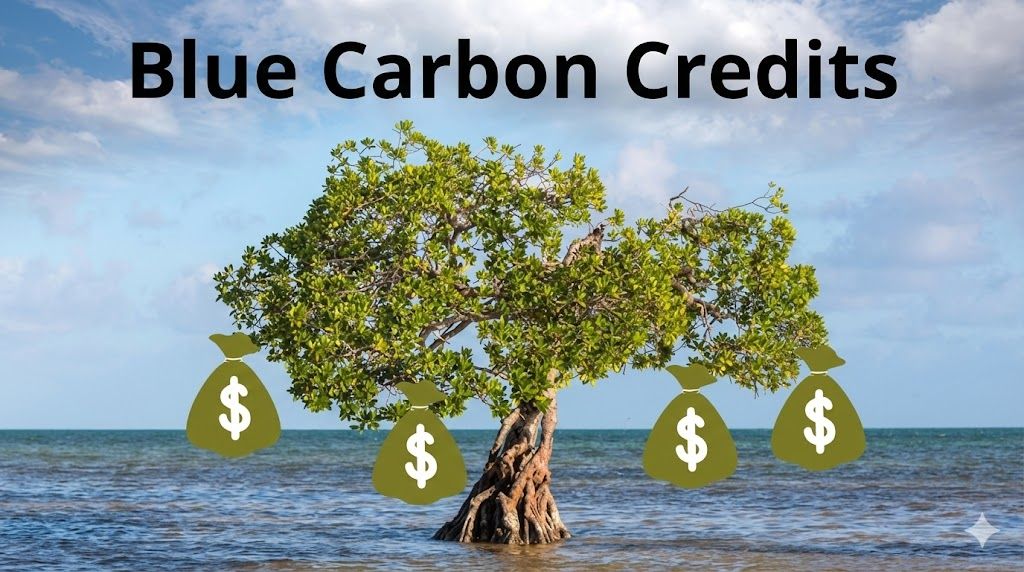
Indeed, tidal flats are evolving from mere natural environments into ‘Natural Capital’ traded in financial markets.
Epilogue: A Blue Contract for Survival in the Anthropocene
For a long time, we viewed the sea as an object of conquest and tidal flats as tools for development.
However, the monumental warning of the climate crisis has shattered our arrogance.
The 2,482 km2 of tidal flats are not abandoned lands we cast aside, but a final emergency exit the Earth has left for us.
The changes happening in the tidal flats today are not simply about environmental protection.
It is a process of renewing a ‘Blue Contract.’
It signifies moving from a one-sided relationship of human exploitation of nature to a symbiotic relationship where we restore tidal flats and share their benefits.
The next time you visit the west or south coast, please pause for a moment to look not at the dazzling white sand beaches, but at those dark, muddy tidal flats. And lend an ear.
Listen to the exhilarating sound of the Earth breathing again within that viscous soil.
References
- Assessment of Carbon Absorption Capacity and Blue Carbon Potential of Korean Tidal Flats (Korean Tidal Flats as a Significant Carbon Sink) - Kim, J.S. et al. (2021)
- The 1st Basic Plan for Management and Utilization of Tidal Flats (2021-2025) - Ministry of Oceans and Fisheries (2021)
- Blue Carbon: The Role of Healthy Oceans in Binding Carbon - UNEP & IUCN (2009)
- Supplement to the 2006 IPCC Guidelines for National Greenhouse Gas Inventories: Wetlands - IPCC (2013)
- Valuation of Tidal Flat Ecosystem Services and Policy Applications - Korea Maritime Institute (KMI)
- KBS Documentary ‘Blue Carbon’ Broadcasts
- Coastally derived carbon sinks (Global scientific analysis) - Nature (2022)