
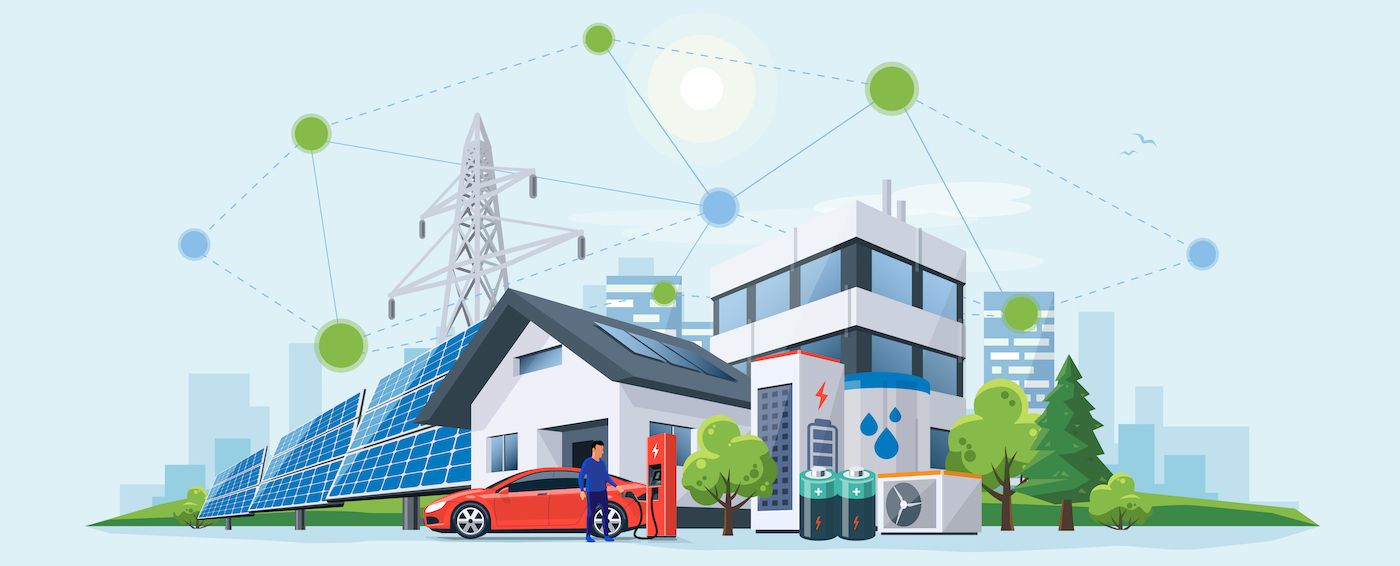
Smart cities that produce and use their own energy — microgrids sit at the center.
“Huh? Another blackout.”
Electricity is something we’ve taken for granted. But to deliver that electricity to our homes, we built massive power plants far out on the coast and erected transmission towers by cutting through mountains. The “centralized power system” that led South Korea’s dazzling growth over the past decades — are you sensing signs that it’s now hitting its limits?
This old system now faces a huge wall made of “money,” “conflict,” and “the environment.”
Chapter 1. Opening the Door: Why Microgrids, and Why Now?
1.1 Is our “old” power system okay as it is?
For decades, the power that literally “lit up” South Korea came from massive coastal power plants. Thanks to the “centralized power system” that transported that power to every corner of the country, we achieved remarkable economic growth. It was efficient, too.
But… to be honest, this system is creaking — not just a little, but quite a lot. It has hit major limits.
The biggest problems are “money” and “conflict.” While hauling electricity from those distant sites to our cities, electricity is literally wasted on the way (transmission losses). To prevent that, we build huge transmission towers here and there. Who pays for that? We do.
Even worse is the conflict. You’ve seen headlines: “What? A transmission tower on the hill behind our neighborhood!?” The social costs of these disputes are beyond imagination.
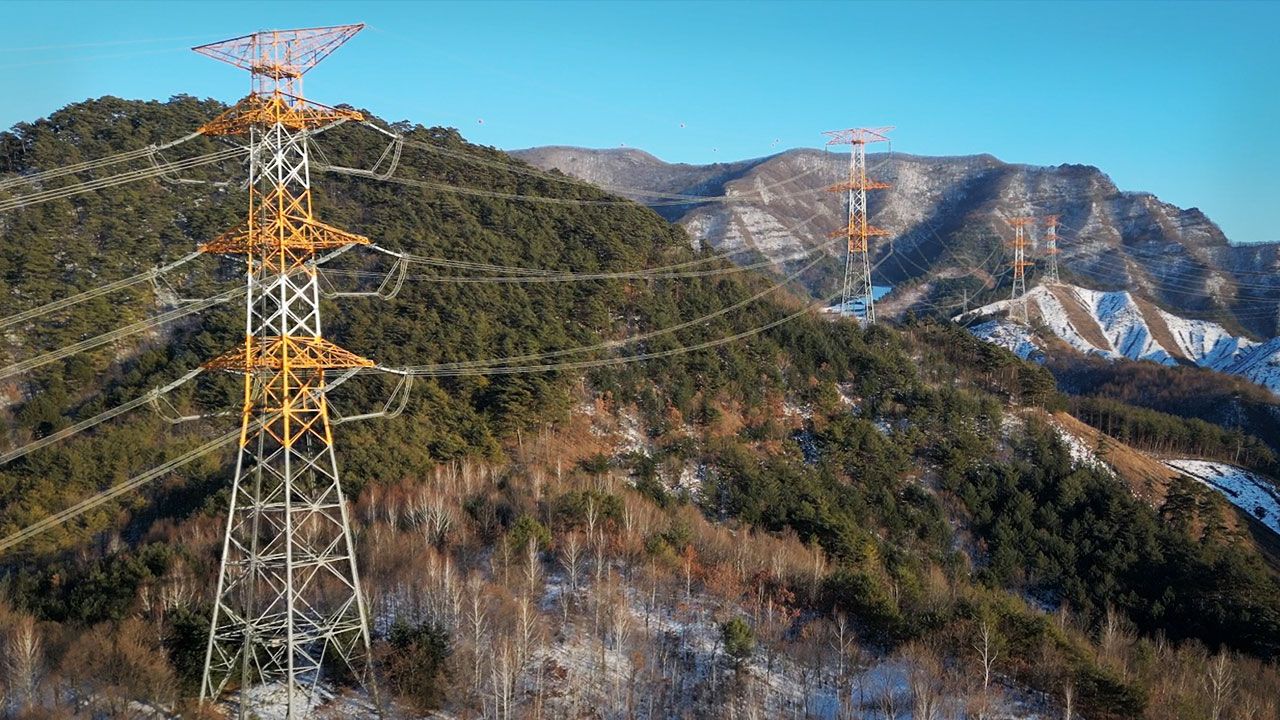
Bringing electricity from far away causes enormous social and environmental costs.
Also, the system is like a row of dominos. If one place collapses due to a natural disaster or an attack? A nationwide blackout could happen. The system inherently carries vulnerabilities.
And then there are environmental issues. The government calls for carbon neutrality through programs like “Renewable Energy 3020,” but connecting weather-dependent sources like solar and wind to this old, rigid grid is technically challenging. It can even destabilize the grid.
These problems are no longer solvable by temporary fixes.
It’s time to fundamentally change how we supply energy.
Instead of producing far away and hauling it inefficiently, we need a major shift to a “distributed system” that produces (production) and consumes (consumption) energy close to where we live.
And at the heart of this enormous energy revolution is the “microgrid.”
1.2 Microgrid? What exactly is that?
Microgrid. The name might sound technical.
Simply put, a microgrid is a small, independent power grid that smartly ties together local “distributed energy resources” such as rooftop solar, an ESS (energy storage system) to store energy, and the “users (homes, factories)” who consume electricity — all within a specific area (for example, a neighborhood, university campus, or factory).
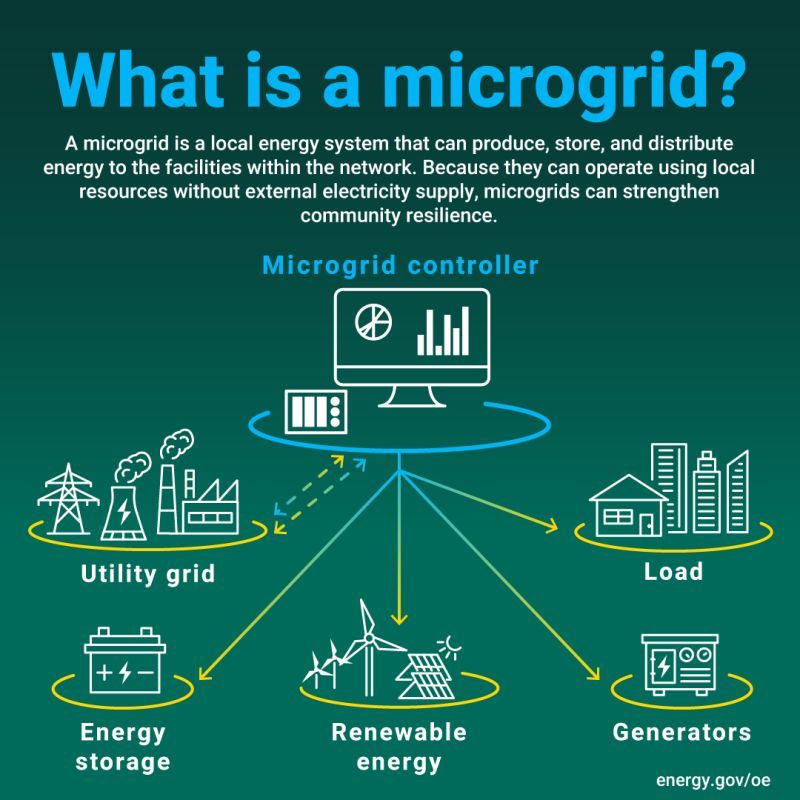
The biggest appeal of microgrids is flexibility.
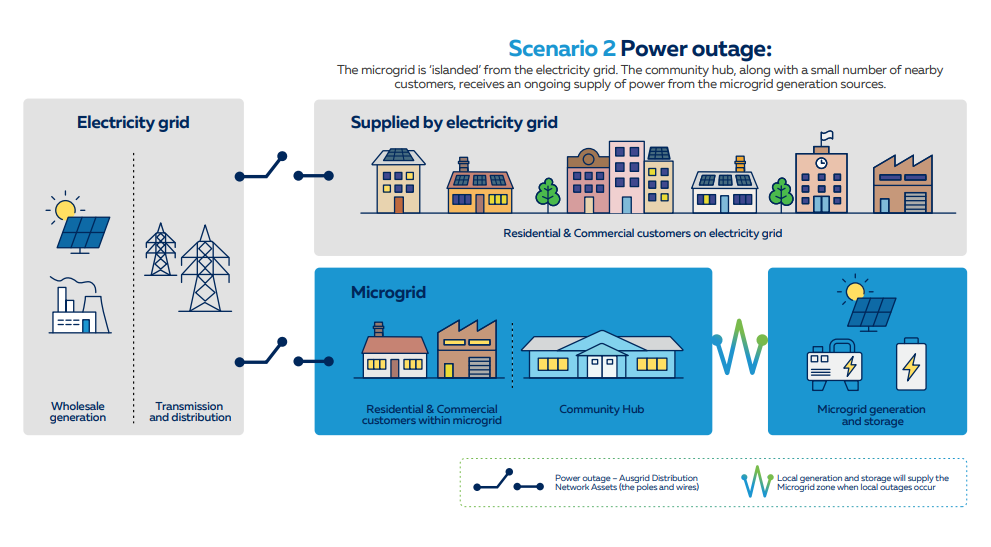
Under normal conditions, they are connected to the national grid (macrogrid) and exchange power. But if — say — a major wildfire or typhoon triggers a large-scale outage?
They immediately switch to “island mode.” In other words, they separate from the national grid and become an independent “island” that produces and consumes its own power. This remarkable capability gives microgrids three core values.
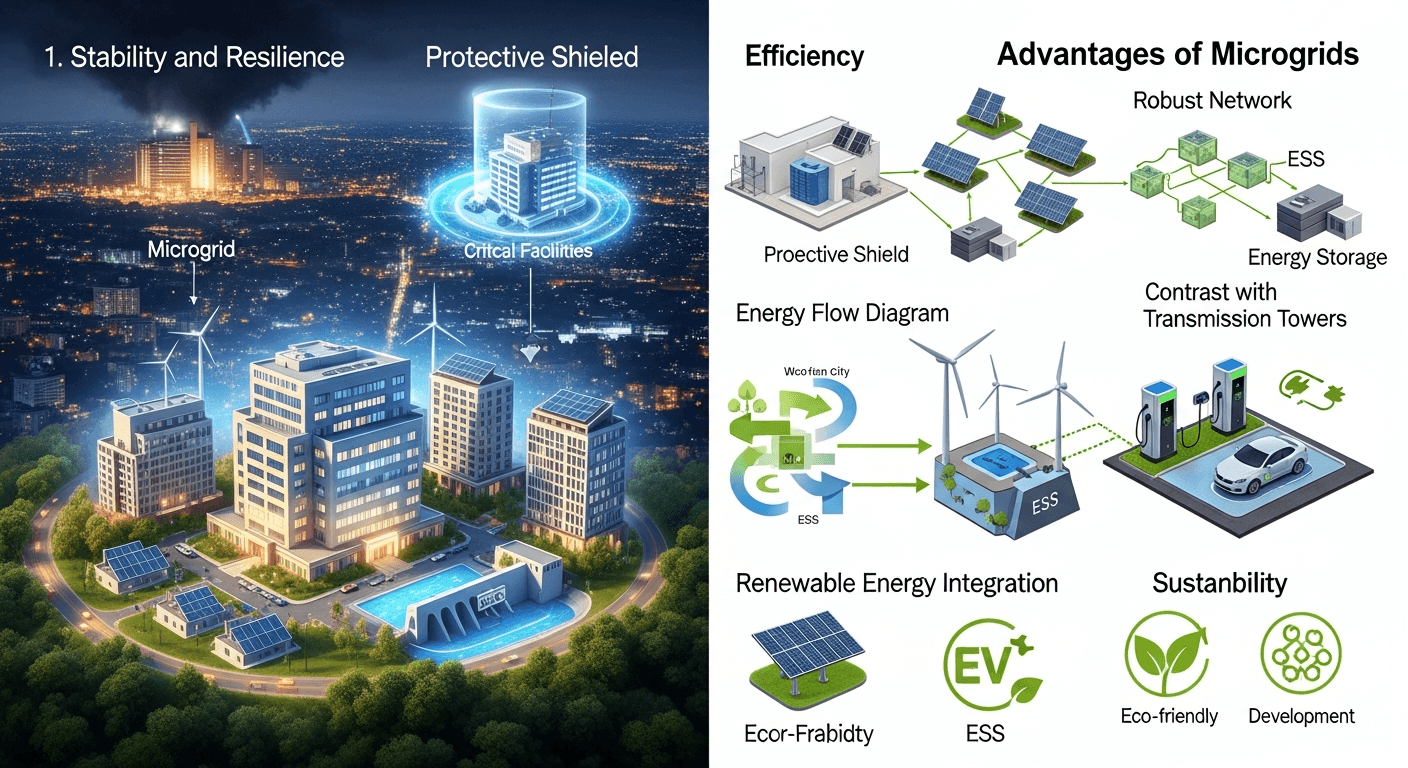
- Unwavering Stability & Resilience
Even if a nationwide blackout occurs, facilities tied into a microgrid — hospital emergency rooms, data centers, military installations — continue operating without issue. This protects critical infrastructure and enables fast recovery. - Waste-free Efficiency
Producing electricity next to where it’s consumed — a local production for local consumption model. Transmission losses are minimal, and unnecessary transmission towers aren’t needed, saving huge national investment costs. - Sustainability for the Future
Microgrids are the best vessel for accommodating variable renewables like solar and wind. ESS (batteries) store surplus energy and release it when needed, smoothing variability. Connecting EV charging stations is a given.
These three benefits work together. Transmission tower disputes make it hard to build renewable plants; microgrids solve this by saying “Let’s just build it in our neighborhood!” while also ensuring stability and efficiency.
So the spread of microgrids is not just a simple technological advance. It’s a strategic necessity that could determine whether South Korea achieves national climate goals like “Renewable Energy 3020.”
Chapter 2. How is South Korea Preparing: Laws and Policies
So what plans is Korea drawing up for these important microgrids? They aren’t just leaving it to companies to “figure it out,” right?
2.1 Two major pillars: Smart Grid Act and Distributed Energy Act
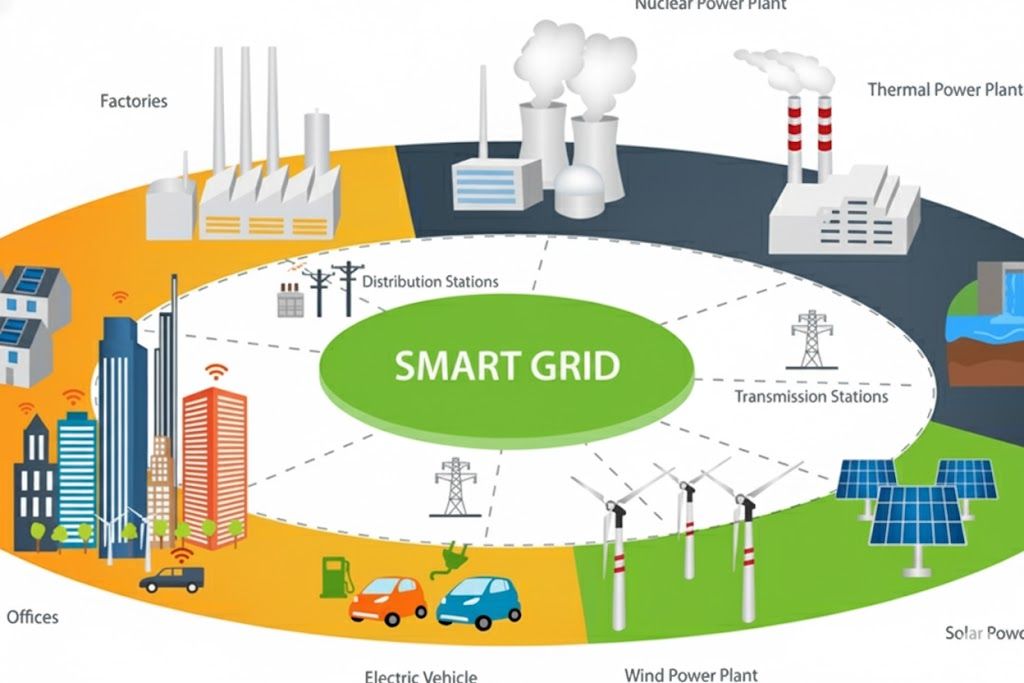
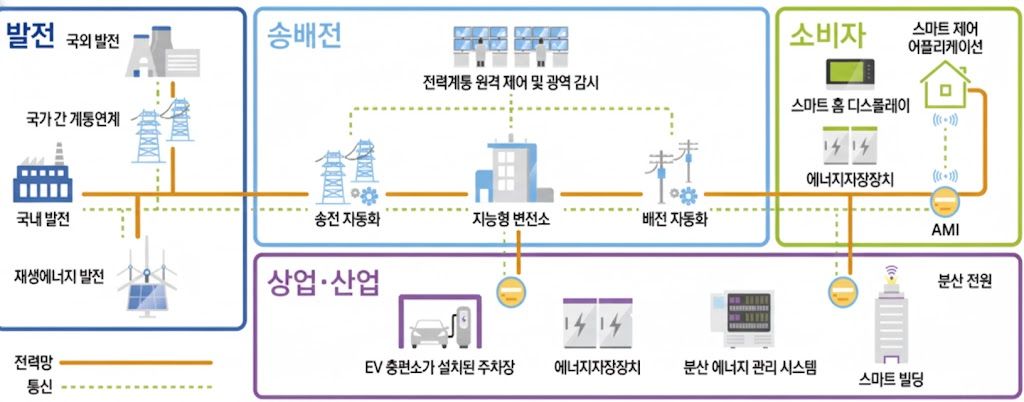
The development of microgrids in Korea has revolved around two major laws. The first is the “Smart Grid Act (지능형전력망법).” As the name implies, it aimed to attach ICT technologies to the grid (the “smart grid”) so suppliers and consumers can exchange real-time information like “I have surplus power now” or “I need power now.” Microgrids were seen as a key component of this bigger picture.
But the law you should really pay attention to is another. The freshly implemented “Special Act on the Activation of Distributed Energy (Distributed Energy Act)” that came into effect in June 2024.
In my view, this law is revolutionary. It contains much more concrete and powerful tools to spread microgrids. It broadened the meaning of “distributed energy” from just “small power plants” to include ESS and electric vehicles, effectively bringing future energy resources into the law.
Here are the three core points of this law.
- From choice to obligation! (Mandatory installation): For newly built large buildings above a certain size, a portion of their energy consumption must be met by distributed energy.
- Preventing concentration in the metropolitan area (Grid Impact Assessment): To stop huge electricity consumers like data centers from clustering in the capital area, they must undergo assessments asking, “If you build there, will it affect the grid?”
- The crown jewel: Special zones for distributed energy: Certain regions can be designated as special zones where restrictive regulations are loosened — a sandbox to test new approaches. (More on this later!)
So, if the Smart Grid Act focused on building an “information highway” for a smart power grid, the Distributed Energy Act focuses on building the “market and traffic system” so that business can actually run on that highway.
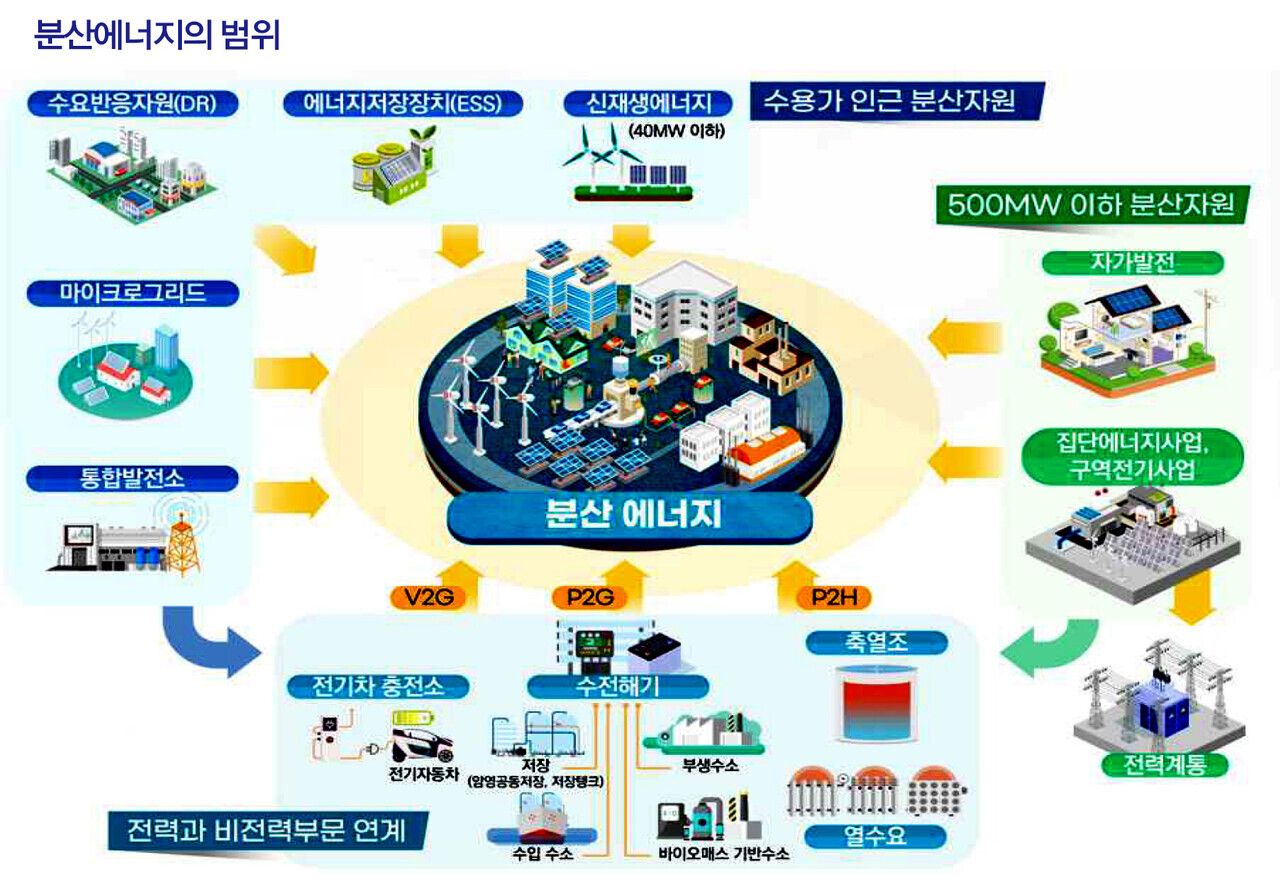
The Distributed Energy Act is a game changer that opens a new energy market.
2.2 The national team’s playbook: The 3rd Smart Grid Master Plan
The government also published a concrete five-year action plan: “The 3rd Smart Grid Master Plan (2023–2027).” Its core aim is simple: “Greatly increase distributed energy to build an intelligent, flexible system.”
They set a target to raise the share of distributed generation to 18.6% by 2027. To achieve this, they plan to:
- Convert surplus renewable energy into heat (P2H) or hydrogen (P2G) for storage,
- Establish systems to use EV batteries as grid resources (VGI),
- Open a market for Virtual Power Plants (VPPs) that aggregate small resources and operate them like a single big plant,
- Encourage everyday citizens to save electricity and earn money through programs like the national Demand Response (“Energy Pause”),
And of course! They plan to rapidly increase tailored microgrids for industrial complexes and islands.
2.3 Changing the rules of the game: Special zones for distributed energy
Earlier I mentioned “special zones for distributed energy.” Why are they so important?
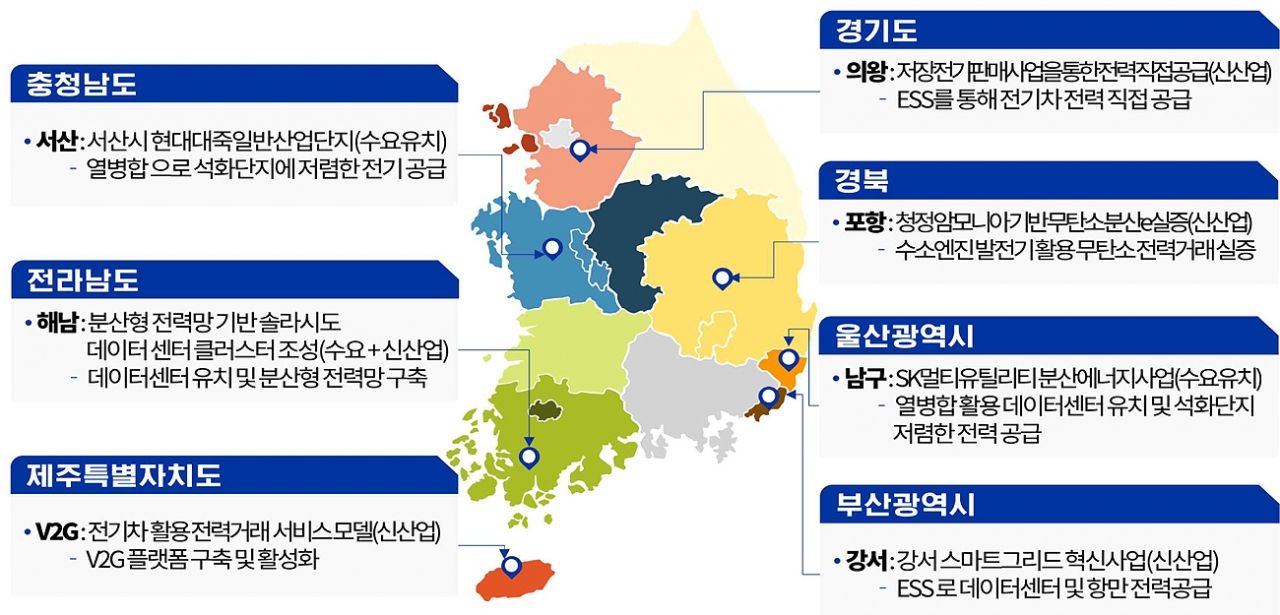
These are regulatory free zones — sandboxes.
The key point is they free players from the rules of the centralized power market (i.e., the monopolistic structure dominated by KEPCO). The most radical change is allowing distributed energy providers to sell power directly to companies or individuals (PPA) without going through the power exchange.
Why is that huge?
- New businesses flood in: Direct buying and selling of electricity opens a real market for VPP operators, energy prosumers, and many other players to compete locally.
- High-tech industry moves to the regions: Energy-hungry factories like semiconductor plants and data centers can be enticed with promises of cheap, stable renewable energy if they relocate outside the capital area.
- “Local electricity discounts” (differential pricing by region): Regions with high self-generation can test differential tariffs that lower electricity prices locally. This is a test bed for such policies.
Currently, seven local governments including Jeju, Busan, Gyeonggi, and Ulsan have been shortlisted and are competing to become special zones.
Frankly, this is the first major effort in Korean power history to deliberately shrink the domain of the incumbent monopolistic utility, Korea Electric Power Corporation (KEPCO). If this model succeeds, Korea’s power industry could be reshaped from a centralized monopoly into a lively region-centric market — a historic moment.
| Policy/Law | Main Goal | Key Microgrid-related Provisions | Target/Implementation Period |
|---|---|---|---|
| Smart Grid Act | Build ICT-based grid infrastructure and maximize energy efficiency | Legal definition of smart grids, component regulations, basis for national master plans | Master plans every 5 years |
| Distributed Energy Act | Foster distributed energy markets and achieve regional balance | Mandatory distributed energy installations, designation of special zones allowing direct power trading | Implemented June 2024 |
| The 3rd Smart Grid Master Plan | Set concrete five-year implementation targets and project promotion | Introduce VPP market, establish V2G framework, build 15 industrial complex microgrids by 2027 | 2023–2027; reach 18.6% distributed generation by 2027 |
Chapter 3. How Microgrids Operate: A Look at Core Technologies
How does this smart “small grid” actually run? Let’s take a look inside. It’s not hard. It’s easy to understand if we compare it to the human body.
3.1 Heart and battery: Distributed Energy Resources (DER) and Energy Storage Systems (ESS)
The “heart” of every microgrid is its power-producing facilities, called Distributed Energy Resources (DER). Rooftop solar panels and wind turbines are DERs, and so are fuel cells or diesel generators used for backup. All these small generators are DERs.
But a heart alone isn’t enough. You need a battery to store energy.
That’s the Energy Storage System (ESS) — a big battery.
ESS is the core of microgrid stability. Its main role is “time shift.” Time shift?
Yes: store solar power produced on sunny days and discharge it during the evening or peak demand times. This compensates for the intermittent nature of renewables and keeps grid quality stable.
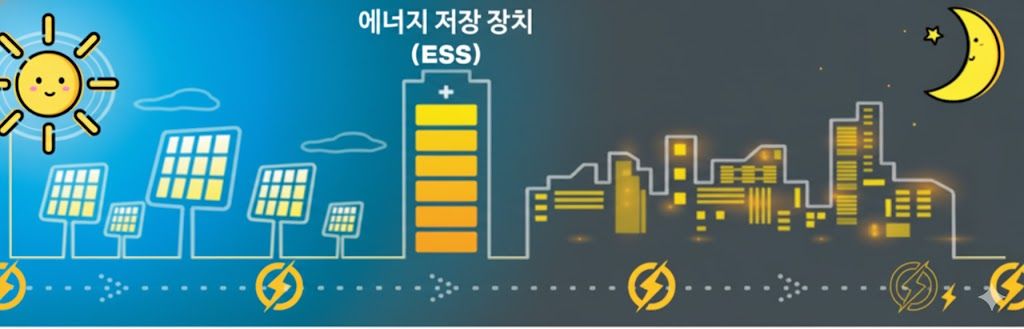
ESS is the giant “battery” that tames renewable variability.
3.2 Translator and switch: Power Conversion System (PCS) and load management
To smoothly connect diverse generators (the heart), batteries (ESS), and loads (our homes), you need a “translator.”
Solar generates DC, but our appliances use AC. The Power Conversion System (PCS) is that translator. It converts DC to AC and AC to DC — essential hardware that controls power forms and flows within the microgrid.
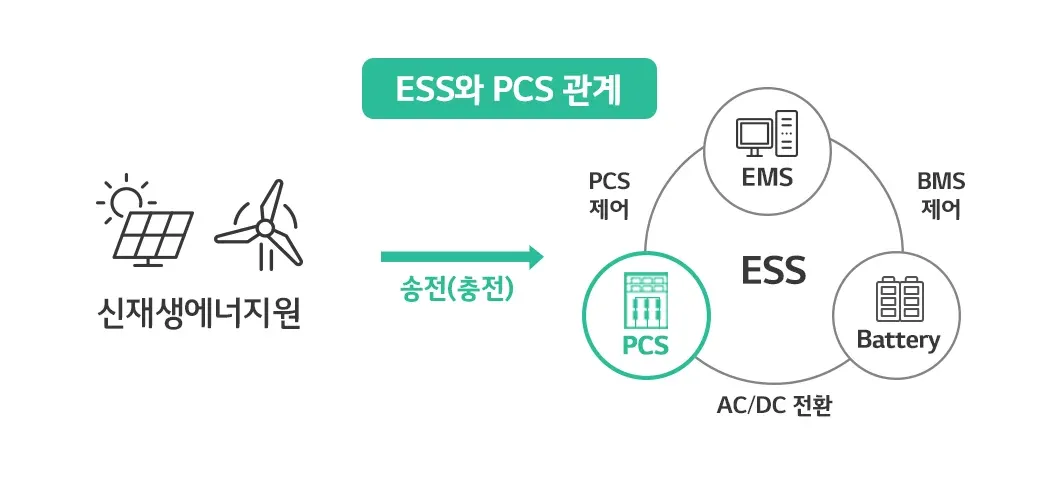
Loads are homes, buildings, and factories that consume electricity. A crucial part of operating a microgrid is managing loads.
In island mode during a major outage, you can’t power everything. So you predefine priorities: “Operating rooms must never lose power (critical load),” “Office lighting can wait (non-critical load).” Prioritizing and supplying power accordingly is essential.
3.3 The brain that commands everything: Energy Management System (EMS)
You have the heart, battery, and translator — but you need a brain to integrate all the hardware and run it most efficiently.
That’s the Energy Management System (EMS).
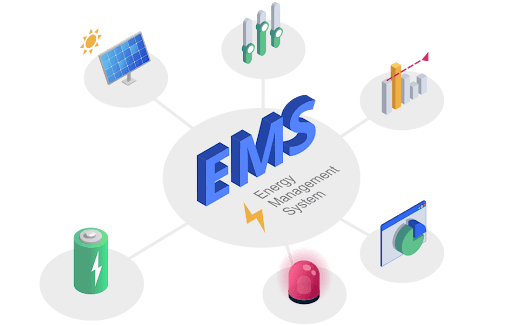
EMS is a central control system based on software and communication tech that monitors, controls, and optimizes the whole system in real time. It’s the real smart component.
What EMS does:
- Forecasting: Uses AI/deep learning to analyze weather and historical data to predict solar output and demand.
- Monitoring: Continuously watches generator conditions, battery state of charge, and real-time consumption.
- Optimization: Chooses the most cost-effective operation: “Electricity is cheap now, so charge the batteries from the grid,” or “Grid prices are high; run on solar and battery and avoid buying power.”
- Grid management: Automatically isolates the microgrid from the main grid in 0.1 seconds during emergencies (islanding) and safely reconnects when conditions stabilize.
In the end, a microgrid’s value isn’t the hardware alone but how smartly those devices are operated. The winners in the future microgrid market will not be equipment sellers but companies offering services — powered by AI-driven EMS — that say, ‘We’ll cut your electricity bill by this much and guarantee reliability.’
EMS is the brain that commands the microgrid.
3.4 Two faces: Grid-connected and islanding technologies
The microgrid’s most unique feature — as emphasized earlier — is its ability to switch between two modes. This magical transition happens at the Point of Common Coupling (PCC), an intelligent switch.
- Grid-connected Mode: The normal mode. The microgrid is connected to the national grid; it can buy power when short and sell when surplus.
- Island Mode: The emergency mode. If the main grid fails, the PCC isolates the microgrid. In this isolated state, the microgrid must maintain its own frequency and voltage stability without the national grid reference — a remarkable technical feat.
Chapter 4. A New Market Opens: The Microgrid Ecosystem
The distributed energy era doesn’t just mean smaller power plants. It means the players in the electricity market will change completely.
4.1 From passive consumer to owner-operator: The rise of the energy prosumer
How were we in the past? Passive consumers of electricity from KEPCO. We only paid the monthly bill.
Now it’s different. Households and buildings install rooftop solar to produce energy and can sell surplus power to the market, becoming “energy prosumers.”
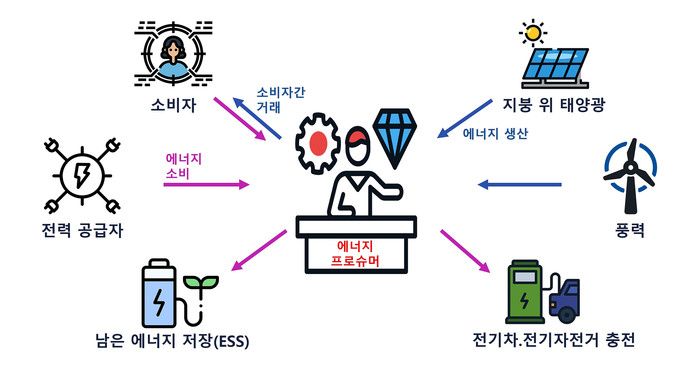
Anyone can now become an energy prosumer.
This grew through net metering: send surplus to KEPCO and get a credit on next month’s bill.
There are limits. Korea still has relatively cheap electricity, so the incentive to invest in rooftop solar has been weak. Many have thought, “Why spend money on self-generation when buying is cheaper?” But that perception is changing.
4.2 Small things add up: The small-scale electricity brokerage market
How much electricity can a single rooftop produce? Not much on its own. To aggregate these small outputs into a substantial resource and trade them efficiently, the small-scale electricity brokerage market opened in 2019.
Small producers under 1MW (like prosumers) don’t join complex markets directly; specialized brokers aggregate and sell their power and RECs.
The market’s early days were tough: costly metering and unclear broker profit models stunted growth.
But the market has recently surged: trades via brokers jumped from 16 GWh in 2019 to 2,390 GWh in 2022 — explosive growth.
4.3 An invisible power plant: Virtual Power Plants (VPP) and Demand Response (DR)
The small-scale brokerage market is a first step toward a larger vision: the Virtual Power Plant (VPP).
A VPP isn’t a physical plant. It aggregates distributed resources — solar, ESS, EVs, and demand reductions (DR) — using cloud-based software (an extension of EMS) to operate as a single “virtual power plant.”
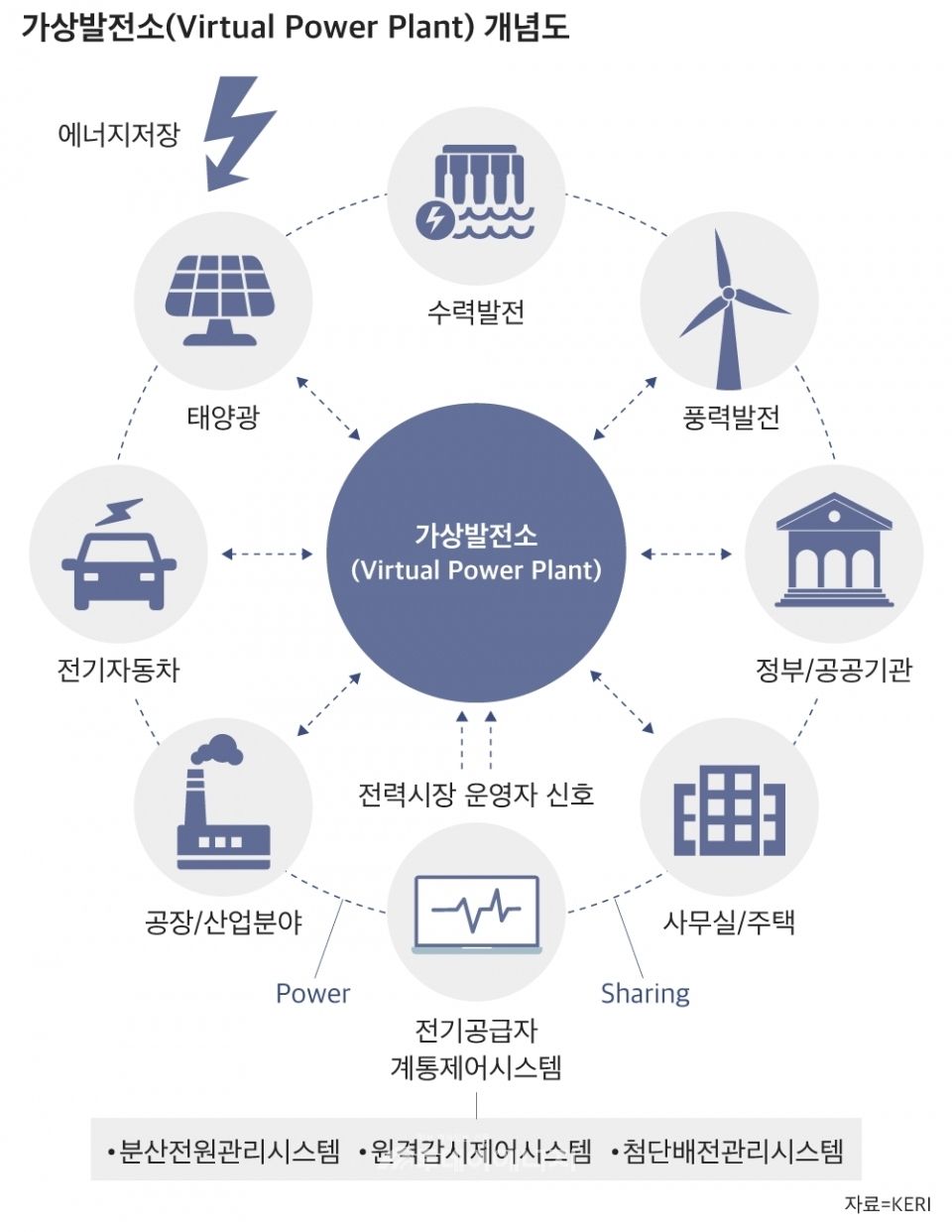
“Power Exchange here! Reserve margin is low. VPP, start 100MW generation now!”
“Acknowledged. Activating solar and 1,000 ESS units across the country immediately.”
This becomes possible.
A crucial VPP resource is Demand Response (DR). During peak times, DR asks, “Factory owner, if you pause your line for an hour, we’ll pay you for the saved electricity.” Saving electricity becomes a resource.
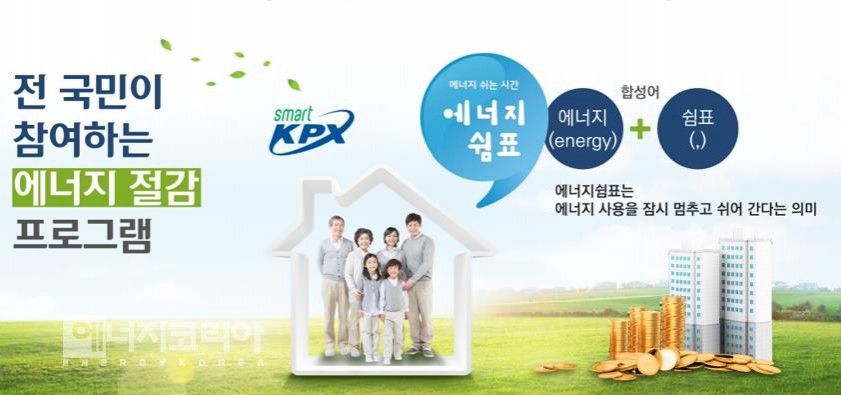
Recently, Korea introduced a nationwide DR program expanded to households and shops — “National DR (Energy Pause)” — where you can press a button on an app to participate and earn money by reducing usage (e.g., temporarily adjusting AC).
VPPs operate scattered resources as one virtual power plant.
4.4 Wake the sleeping giant: Vehicle-to-Grid (V2G)
In the future microgrid ecosystem, this is one of the most revolutionary technologies in my view: Vehicle-to-Grid (V2G).
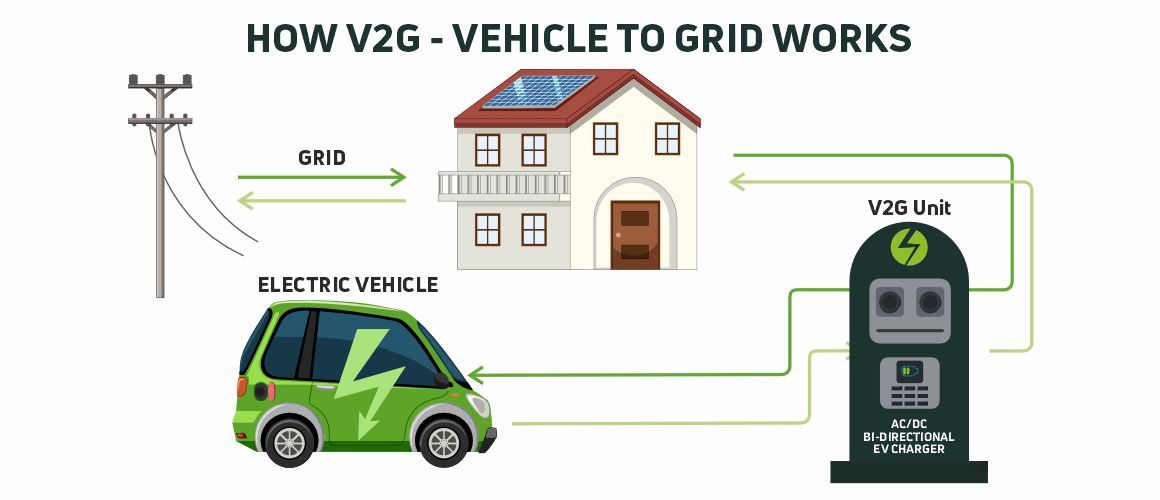
Your EV is not just a vehicle. V2G treats EVs as mobile energy storage (ESS).
Imagine one million EVs with V2G capability — that’s like a 10 GW virtual power plant. Charge during the day with cheap solar, then sell stored power back to the grid during evening peaks, contributing to grid stability and earning revenue.
Korea’s V2G technology is at the pilot stage, with companies like Hyundai demonstrating feasibility. Technology is ready.
But regulations lag. Under current law, individuals cannot legally discharge and sell power from their cars, and concerns remain like, “Who compensates battery degradation from frequent cycling?” Lawmakers are considering mandating bidirectional chargers on EVs from 2025, but bold regulatory changes are needed to wake this sleeping giant.
Chapter 5. Lessons from Our Journey: Successes and Failures
Korea’s microgrid sector did not fall from the sky. It evolved through numerous successes and painful failures.
5.1 First lesson: The costly failure of Gapado’s “Carbon Free Island”
In 2011, Gapado, a small island in Jeju, launched an ambitious “Carbon Free Island” project — a first step in Korea’s microgrid history. With about 14.3 billion KRW, they installed wind turbines and solar to aim for 100% renewable self-sufficiency.
But the project failed and stands as an important cautionary tale.
The reasons were multiple.
- Technical mismatch (a fractured system): The wind turbines were from India, batteries from Japan, parts from China — integration failed. Salt-laden marine conditions corroded equipment, turbines were discontinued with no spare parts, and the installations were eventually abandoned and dismantled.
- Insufficient battery capacity (ESS too small): The installed ESS was too small. Even when wind generated at full capacity, batteries filled in two hours and subsequent production was wasted.
- Forecasting failure (the island got too popular): The island became a tourist hotspot, and new cafes and restaurants increased demand beyond projections, forcing a return to diesel generation.
- Most importantly: local residents’ rejection: Residents felt like the island had been treated as an “experiment.” Noise and neglected faulty equipment caused backlash. The project pushed technology but failed to engage the community.
Gapado taught that microgrids are not just technical projects but socio-technical systems that must breathe with local communities.
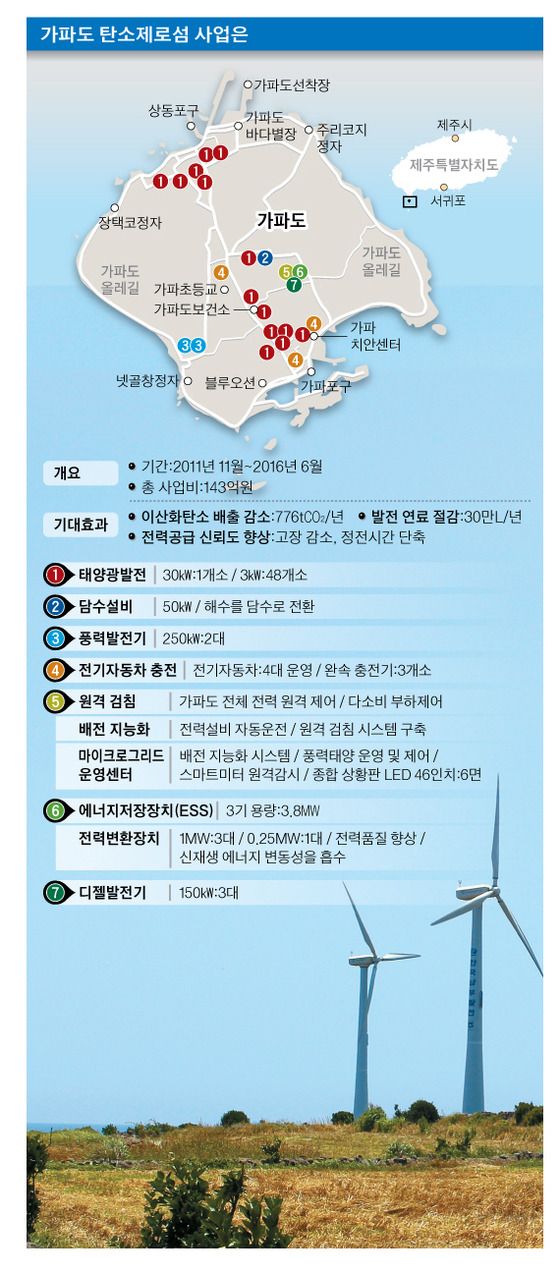
Gapado’s costly failure taught us that people matter as much as technology.
5.2 A second step: Seoul National University proves the urban model
Learning from Gapado, microgrid projects evolved into more practical urban models. A representative example is Seoul National University’s campus demonstration (from 2015), funded with about 18.3 billion KRW.
SNU’s campus is a microcosm of complex urban energy demand with hospitals, research buildings, and dorms — 225 buildings in total.
The project set clear, practical goals from the start:
“1. Reduce electricity costs by 20%,” “2. Provide 4 hours of backup power to critical buildings.”
They built solar, ESS, V2G, and an advanced EMS to orchestrate everything.
Notably, they grouped buildings by function: critical research buildings were placed in a “premium cell” that could operate independently for 4 hours, while dorms and lecture halls were in a “normal cell” focused on real-time monitoring to cut waste.
The result: success. Annual energy costs for the seven targeted buildings dropped by about 21%, and electricity use fell by 11%.
This proved that even in complex urban settings, data-driven EMS-enabled management can yield tangible economic results.
5.3 And now: Gumi industrial complex — the market moves
The latest microgrid model is market-driven industrial complexes rather than government-led pilots. The Gumi Smart Green Industrial Complex project (since 2022) with a budget of about 35.3 billion KRW is an example.
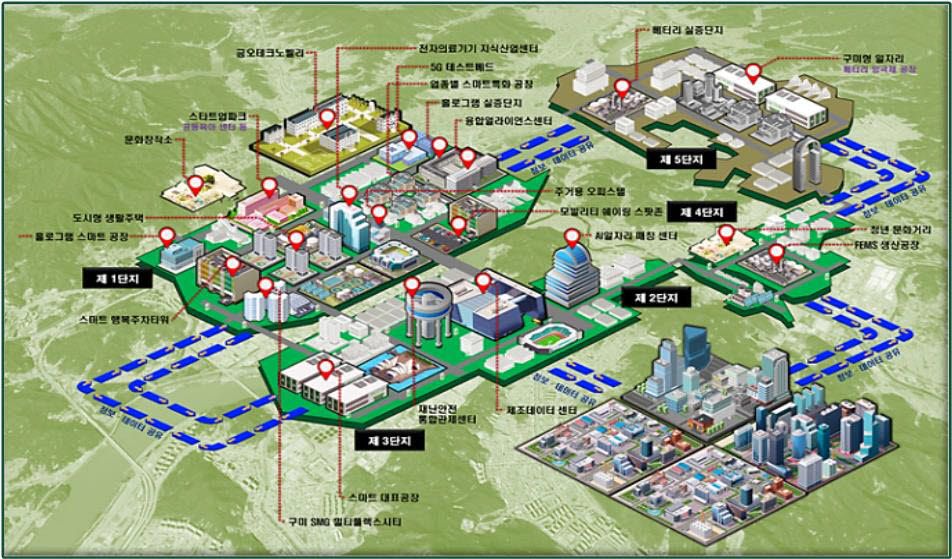
Surprisingly, its main driver is RE100 (sourcing 100% renewable electricity).
Many exporters in Gumi face the risk of being excluded from global supply chains (Apple, Google, etc.) if they fail RE100. That market pressure became a stronger driver than any policy: “We must survive!”
The Gumi model treats the entire industrial park as one large microgrid.
- Supply: Install solar on factory roofs, connect nearby fuel cells and wind farms to supply large-scale clean energy.
- Demand: Upgrade old production equipment to high-efficiency machines and use digital twin tech to simulate and optimize energy consumption virtually.
- Integration: Manage everything on an integrated platform, enable company-to-company power trading, and expand V2G infrastructure.
So far, 57 companies have installed solar and are saving about 194 million KRW annually in electricity bills — visible early results.
The Gumi model, driven by market needs (RE100), is becoming a scalable standard for the industrial microgrid — expanding on its own beyond government pilots.
Market demand for RE100 is turning industrial complexes into massive microgrids.
| Project | Type/Location | Main Goal | Key Technologies | Budget (KRW) | Major Results/Lessons |
|---|---|---|---|---|---|
| Gapado | Remote island | 100% energy self-sufficiency | Wind, solar, ESS | ~14.6 billion | Failed due to technical mismatch, insufficient ESS, demand forecast errors. |
| A costly failure that provides lessons. | |||||
| Seoul National University campus | Urban campus | Cost reduction and emergency power | Solar, ESS, EMS, V2G | ~18.3 billion | Proved technical and economic feasibility in urban settings. |
| Achieved ~21% cost savings across 7 buildings. | |||||
| Gumi industrial complex | National industrial park | RE100 compliance and energy efficiency | Solar, fuel cells, FEMS, V2G | ~35.3 billion | Scalable industrial model driven by clear market demand (RE100). |
| Delivered visible early results. |
Chapter 6. Final Question: What Must We Do?
We’ve come a long way together — Korea’s microgrid past and present, the technologies that underpin it, and the market changes.
6.1 The mountains we still must climb
Korea’s microgrids have indeed made impressive progress: strong policies and smart demonstration projects. But to become a sustainable ecosystem, there are still many mountains to climb.
- Technical challenges: Samsung’s ESS and LG’s solar panels must interoperate flawlessly (interoperability). And with everything connected to the internet, cybersecurity to protect systems from hacking is indispensable.
- Market challenges: VPP and V2G sound great, but robust profit models are still unclear. Can anyone clearly answer, “Will I make money from this?” not yet.
- Above all, the fundamental problem is the current low electricity price.
Cheap, state-controlled electricity makes businesses and individuals ask, “Why should I invest in costly self-generation?” This environment hampers proper market signals.
- Institutional challenges: Friction exists between government policies to expand distributed energy and the inertia keeping the centralized system intact. We must resolve this so private firms can confidently make long-term investments.
6.2 Recommendations for a sustainable future
To overcome these challenges and turn Korea into a leader in microgrids, I believe three things are essential.
- Rationalize electricity pricing.
Move away from the uniform pricing we have now. Reflect the value of electricity by time and region: make congested metropolitan areas more expensive and self-generating special zones cheaper. Reform tariff structures to reflect time- and location-based values. It may be an uncomfortable truth, but this is the strongest signal to get markets moving. - Sell ‘services,’ not just ’equipment.’
Look at Gumi. Companies didn’t want solar panels per se; they wanted the value of RE100 compliance and cost reduction. Move beyond selling hardware to offering comprehensive energy solutions (design, build, operate, maintain) — “Energy as a Service (EaaS).” - It’s ultimately a brain game — invest in software.
The core competitiveness lies not in metal (hardware) but in the brain (EMS, VPP). Improve AI forecasting accuracy, develop secure P2P trading platforms using blockchain, and secure software leadership to dominate the future market.
In conclusion, Korea stands at a crucial inflection point in microgrids.
The implementation of the Distributed Energy Act and the designation of special zones are historic first steps that crack the dam of the long-standing centralized system.
Learning from Gapado’s painful failures and building on the successes of SNU and Gumi, it’s now time to create virtuous cycles of technology, market, and policy.
Our old power grid has reached its limits. The alternative is already before our eyes. If we embrace this change and prepare for the future, I’m confident Korea can become a country with one of the most stable, efficient, and sustainable power systems in the energy transition era.