
“Huh? This is possible?” The world is surprised by the resurgence of K-defense
- Key competitive strengths of the K9 self-propelled howitzer (cost-effectiveness, speed)
- K9’s overwhelming reliability proven through real combat and rigorous testing
- Hanwha’s business strategy of building a ‘defense alliance’ beyond simple sales
The Heart of K-defense: The Current Status of the K9 Self-Propelled Howitzer
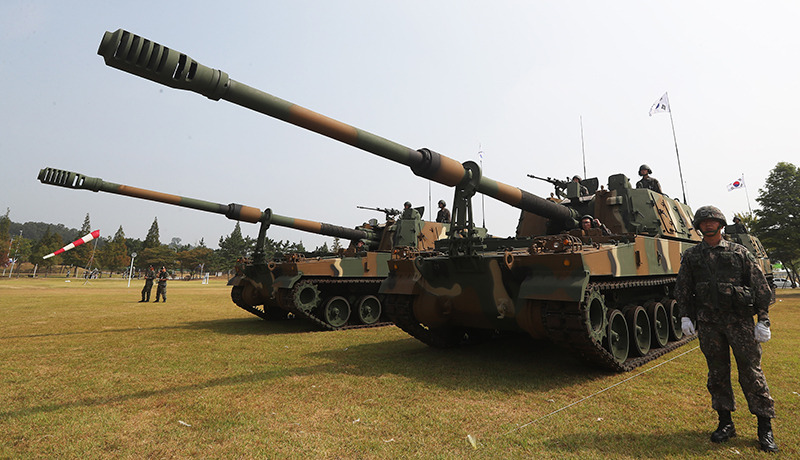
Did you know that South Korea accounts for more than half of the global self-propelled howitzer export market? According to the Stockholm International Peace Research Institute (SIPRI), Hanwha Aerospace’s K9 self-propelled howitzer has surpassed a 50% share of the global self-propelled howitzer export market in the 2020s, holding an overwhelming first place. This figure is greater than the combined market share of competitors ranked second to fourth.
This explosive performance has been reflected in the stock market as well. Over the past year, Hanwha Aerospace’s stock price has soared by more than 300%. A friend of mine who works at the company mentioned that he received a performance bonus worth tens of millions of won this year. Hearing that the company expects similar levels of compensation over the next five years, it truly feels like a ‘big hit’.
The God of War: Why the K9 Shines in an Unstable World
Recently, as security concerns have increased around the world due to the Russia-Ukraine war and conflicts in the Middle East, countries are significantly increasing their defense budgets. NATO member countries have pledged to expand their defense spending to over 2% of GDP, and global defense spending is expected to reach an all-time high in 2023.
While drones and missiles have become icons of modern warfare, self-propelled howitzers, capable of devastating enemy positions from dozens of kilometers away, are still referred to as the ‘God of War’. A market research firm predicts that the global self-propelled howitzer market size will nearly double within the next decade. Notably, two-thirds of the self-propelled howitzers currently in operation worldwide are aging, leading to explosive demand for replacements with modern systems like the K9.
In this context, the K9 has already proven its performance by being exported to nine countries, including Turkey, Poland, and India. There is no better guarantee than a country that has used it coming back for more. Its status has now risen to the point where it can even eye the ‘defense superpower’ market in the United States.
Reasons to Choose the K9 Self-Propelled Howitzer
Is it just national pride? Absolutely not. The multi-trillion-won arms business is determined by cold calculations. The reasons the K9 self-propelled howitzer has captured the global market are clear.
1. Overwhelming ‘Cost-Effectiveness’ and ‘Speed’
Germany’s premium self-propelled howitzer, the PzH2000, boasts excellent performance but costs three times as much as the K9. It has been said, “With the money to buy one PzH2000, you can buy two K9s along with plenty of ammunition.”
Even more astonishing is the delivery speed. Poland received its K9s just four months after signing the contract. Compared to European companies that talk about years, this is almost revolutionary speed. The mass production system that has always kept defense factories operational amid the division has been the driving force behind capturing both price and speed.
| Category | K9 Self-Propelled Howitzer (South Korea) | PzH2000 (Germany) |
|---|---|---|
| Price Competitiveness | Relatively inexpensive (about 1/3 of competing models) | High price |
| Delivery Speed | Very fast (within months) | Relatively slow (takes years) |
| Reliability | Proven in extreme cold/heat and real combat | Reliability issues in some environments |
2. ‘Luxury’ Reliability Proven in Real Combat
The most important virtue of a weapon is ‘reliability’. If it malfunctions at a critical moment, it directly affects the lives of friendly forces. The K9 demonstrated its real combat capability to the world during the 2010 Yeonpyeong Island shelling, retaliating immediately amidst a barrage of North Korean shells.
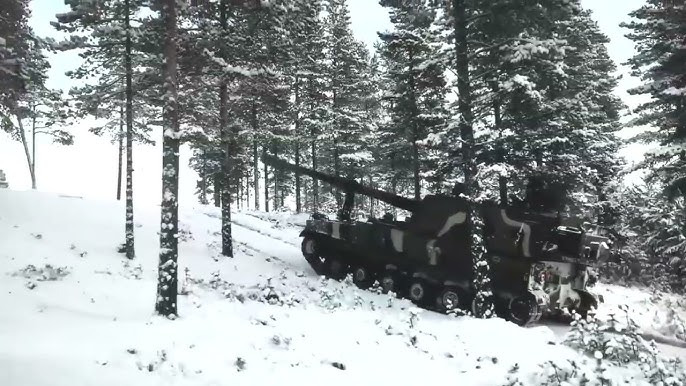
Additionally, during Norway’s harsh winter tests, the competing German PzH2000 failed due to the cold, while the K9 was the only one to pass all tests perfectly. Developed to match the terrain and climate of the distinctly four-season Korean Peninsula, it performs at its best in any environment. This is a unique strength of the K9 that European competitors, who develop weapons in peaceful environments, find hard to match.
3. Providing ‘Solutions’ Beyond Simple Sales
Hanwha Aerospace’s successful strategy goes beyond just selling good weapons. Providing a ’total solution’ tailored to the needs of customer countries is key.
- Localization Strategy: In Poland, they propose a flexible cooperation model by mounting a domestic turret on the K9 chassis to create the ‘Krab’, while in Australia, they have reinforced armor for desert terrain to create the ‘Huntsman’.
- MRO Business: Weapons are operated for decades and require parts replacement and performance upgrades. This maintenance, repair, and overhaul (MRO) market is five times larger than the main market, and Hanwha has established an MRO division to provide systematic follow-up support.
- K9 User Club: Countries that have adopted the K9 are creating a network to share operational know-how and maintenance information, building a strong ‘defense alliance’ centered around the K9.
These strategies serve as a powerful ’economic moat’ that keeps customer countries within the ‘Hanwha ecosystem’. It’s similar to how once you use an Apple product, it’s hard to switch to another brand.
4. Continuous Evolution Towards the Future
Hanwha Aerospace does not rest on its current success. By 2027, they are developing the K9A2, which will fully automate shell loading and firing, and ultimately the next-generation self-propelled howitzer K9A3, which will extend the range to 80 km and allow for remote unmanned operation. They are expanding their dreams into advanced technology fields such as fighter jet engines and space launch vehicles, using the success of the K9 as a stepping stone.
Conclusion
The success of the K9 self-propelled howitzer is a historic event that has changed the status of South Korea’s defense industry beyond mere weapon exports. Despite challenges such as European containment and complex international circumstances, the future of K-defense is bright.
Summary of Key Factors for K9 Self-Propelled Howitzer Success:
- Overwhelming cost-effectiveness and speed: One-third the price of competing models and fast delivery within months.
- Proven reliability: Real combat experience from the Yeonpyeong Island shelling and passing harsh winter tests.
- Customer-tailored ecosystem: Strong partnerships through localization, MRO, and user clubs.
In the midst of an unstable international situation, it is time for all of us to support and watch the vigorous strides of K-defense as it seizes opportunities and boldly innovates for the future.
References
- Culture Daily Domestic K9, surpassing Germany and the UK to dominate half of the global market… Market expected to double in 10 years
- Chosun Ilbo Security is each for their own… Global defense spending reaches 300 trillion won
- Time As U.S. and China Rivalry Heats Up, Each Side’s Asia Allies Ramp Up Military Spending
- SIPRI Unprecedented rise in global military expenditure as European and Middle East spending surges
- Alpha Economy K9 self-propelled howitzer dominates the global market… Surpassing 50% market share
- News1 ‘Luxury’ K9 self-propelled howitzer must utilize AI to reduce operational forces to continue leading the world
- Chosun Ilbo Hanwha Aerospace exports K9 to India worth 370 billion won
- Dong-A Ilbo Norway considers additional K9 procurement worth 800 billion won
- Shindonga Reasons why the domestic K-9 sells better than the world’s number one German PzH2000
- JoongAng Ilbo “The barrel breaks from frequent use”… Why does Poland buy the powerful self-propelled howitzer K9
- Kyunghyang Shinmun Hanwha’s K9 self-propelled howitzer occupies more than half of the global market, also targeting the maintenance market
- Dong-A Ilbo Hanwha Aerospace signs second K9 export contract with Poland