
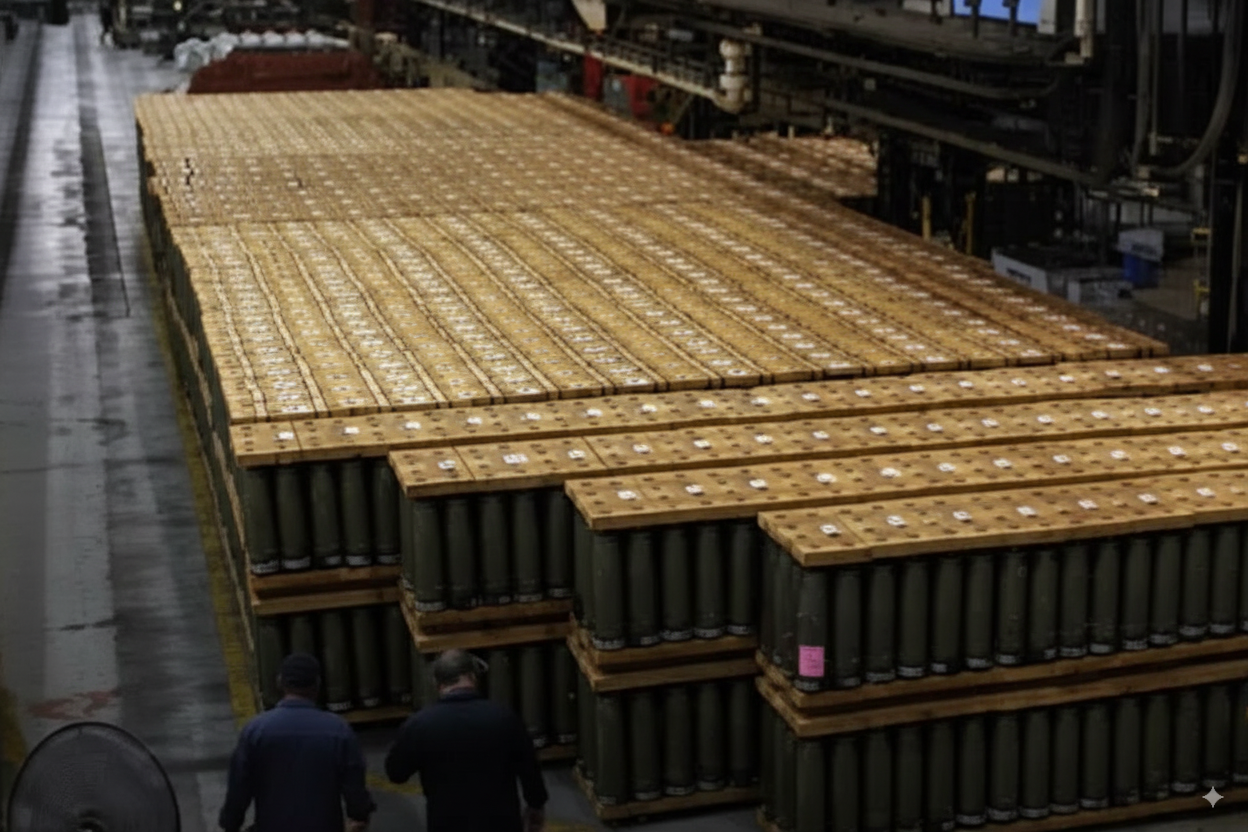
This is not just a simple arms deal. It’s a monumental turning point. The United States, the world’s superpower, reached out to South Korea to replenish its depleted shell stockpiles due to the war in Ukraine. It’s as if a new owner has appeared for the long-standing title of “The Arsenal of Democracy.”
Frankly, this decision goes beyond mere military procurement. It’s the most dramatic example showcasing the changing nature of modern warfare, the hidden weaknesses of the Western world, and South Korea’s emergence in the midst of it all. Let’s delve deep into the fascinating backstory of why the mighty United States had to urgently seek out South Korea.
The Shell Black Hole, Ukraine: Western Armories Running Dry
The war in Ukraine, defying all expectations, has brought artillery, known as the “God of War,” back to the center of the battlefield. It has become a war of attrition where heavy 155mm shells, not advanced missiles, determine victory or defeat.
The Ukrainian military requires 75,000 shells per month to maintain its front lines, and 150,000 shells for counteroffensives. That’s an enormous quantity. From the outset of the war, the U.S. has been Ukraine’s most steadfast supporter, sending over 3 million 155mm shells.
The consequences were clear. In August 2022, the U.S. Department of Defense first acknowledged that its shell stockpiles were at “worrying levels,” and soon after, an internal confession emerged that they had “dangerously depleted.” For the U.S., which had to support Ukraine while also preparing for potential conflicts in regions like the Korean Peninsula or Taiwan, this presented a significant dilemma. An urgent task that could no longer be postponed was to “acquire a large quantity of high-quality shells very quickly.”
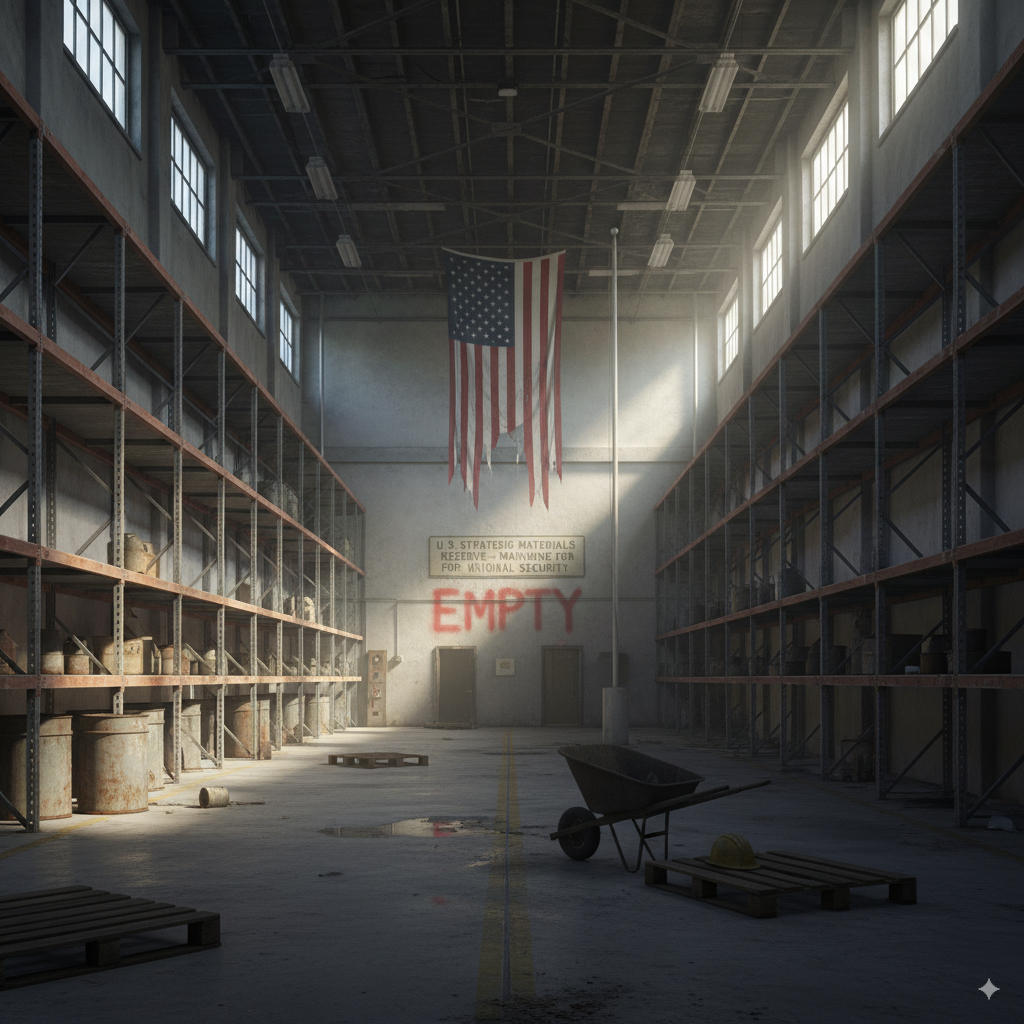
Cannot Produce Even If They Wanted To: The Fatal Weakness of the U.S. Defense Industry
You might wonder, “Why can’t the world’s strongest military easily produce a single shell?” This stems from structural problems that have accumulated over decades.
Production Lines Slumbering in Peace
Before the war, the U.S. monthly production of 155mm shells was a mere 14,000. This was because they believed large-scale conventional warfare was over. Even more serious was the extreme fragility of the production base itself. The shell casings were produced by a single factory, and the combustible cartridges, a critical component for firing, were manufactured by a single company. It was a precarious structure where everything would stop if just one part ceased operation.
The High Wall of Production Increase
The U.S. Army set an ambitious goal of producing 100,000 shells per month, but the reality presented a formidable challenge. The target completion date was repeatedly pushed back to 2026, and production remained stagnant at around 40,000 shells per month. The reasons were multifaceted:
- Lack of Equipment: “Building-sized” specialized equipment needed for expanding production lines required years to receive even after ordering.
- Disruption of Raw Materials: Ironically, the domestic production of TNT, a key raw material for shells, was halted in the 1980s, and it was imported from countries like Russia. Now, they are hastily rebuilding domestic factories.
- Lack of Technology and Workforce: Due to decades of neglect, they had lost the “feel” for mass production, and there was a shortage of skilled workers.
Ultimately, the issue for the U.S. was not a lack of money. It was the result of a strategic failure that led to complacency in peace and neglect of conventional warfare capabilities.
The Solution Was in South Korea: “Absolute Artillery” Forged by the DMZ
When all other avenues were blocked, U.S. eyes turned to one place: South Korea. Why South Korea, of all places? The answer, ironically, lies with North Korea.
In response to the threat of tens of thousands of long-range artillery pieces across the Demilitarized Zone (DMZ), South Korea has for decades poured all its efforts into “counter-battery warfare” capabilities. As a result, it has acquired formidable artillery power, including the world-class K9 self-propelled howitzer, and the overwhelming shell production capacity and stockpiles to support it.
- Production Scale: South Korea’s annual production capacity for 155mm shells is approximately 200,000, far surpassing the U.S. production capacity before the war and making it the largest in the world.
- Quality and Compatibility: More importantly, the quality is exceptional. Korean shells have been manufactured to NATO standards from the outset, ensuring 100% perfect compatibility with U.S. weapon systems. This has been verified through live-fire tests by the U.S. military.
- Prepared Stockpiles: When U.S. stockpiles began to dwindle, South Korea already had a massive reserve of 3 million shells.
The standoff with North Korea has, paradoxically, become the driving force behind South Korea’s complete preservation and development of conventional warfare capabilities, which the U.S. and Europe had lost.
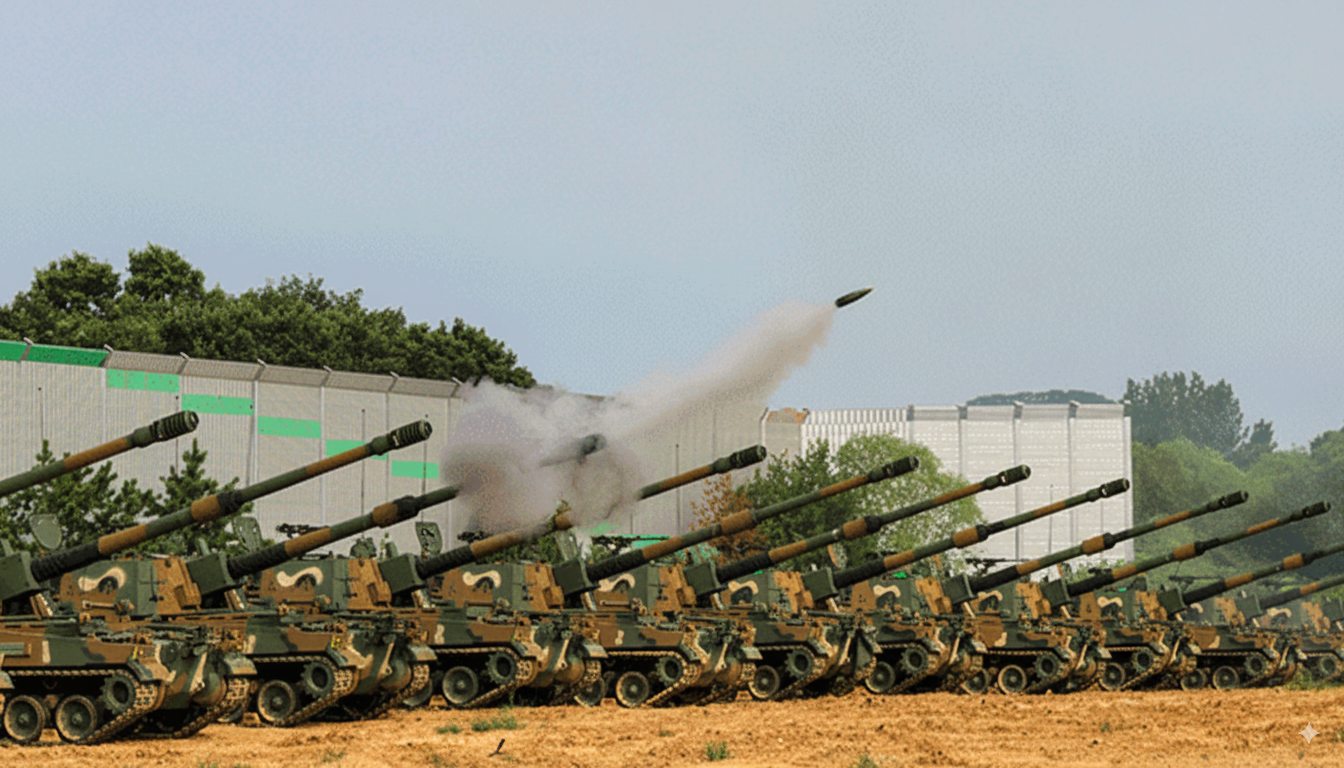
The ‘Seoul Solution’: A Masterstroke Turning Crisis into Opportunity
However, South Korea had a principle: “not to directly provide lethal weapons to Ukraine.” To adhere to this principle while accommodating the U.S. request, both countries devised an ingenious diplomatic solution known as the ‘Seoul Solution’.
This involved selling and leasing Korean shells with the U.S. designated as the “end-user.” This means the U.S. replenishes its own empty arsenals with Korean shells and, in return, sends its own reserve shells to Ukraine.
- 1st Shipment (November 2022): 100,000 shells “sold”
- 2nd Shipment (April 2023): 500,000 shells “leased”
The “lease” mechanism was a clever measure that alleviated both South Korea’s security concerns and political burdens by providing a rationale of “it’s lent, so it will be returned later.”
Beyond a Simple Transaction: The New Era of the ROK-U.S. Alliance and K-Defense Industry
This shell transaction is a harbinger of a fundamental shift in the nature of the ROK-U.S. alliance.
Evolution of the Alliance: From Recipient to Provider of Aid
South Korea is no longer a beneficiary solely reliant on the U.S. security umbrella. Its status has been elevated to a key “Security Provider” that underpins the security of the entire Western world by replenishing America’s arsenals. The ROK-U.S. alliance has evolved from one focused on the Korean Peninsula to a global strategic partnership.
The Rise of K-Defense Exports
This transaction has served as a catalyst for a boom in K-defense exports. The stock price of Poongsan, the shell manufacturer, has soared, and Hanwha Aerospace, which produces the K9 self-propelled howitzers and Chunmoo multi-launch rocket systems, has achieved record-breaking performance with an order backlog exceeding 100 trillion won. The competitiveness of K-defense exports – characterized by good quality, reasonable prices, and fast delivery – has been proven worldwide.
Strategic Imperative, A New ‘Arsenal of Democracy’
In conclusion, the U.S. military’s choice of South Korean 155mm shells was not merely one option among many. It was a “strategic imperative.” The unprecedented demand created by the war in Ukraine, the industrial limitations of the U.S., and South Korea as the sole alternative perfectly meeting all these conditions. These three factors converged precisely.
The ‘Seoul Solution’ is an event that has proven South Korea’s role as a key player in global security. Simultaneously, it has left us with the lesson that true power in the 21st century comes not from a single nation, but from the collective capabilities of trusted allies. This strengthened partnership, forged in crisis, represents the future of the ROK-U.S. alliance and will be a significant milestone in the reshaping of the global defense landscape.
Related Article - A Story About 155MM Shells Indirectly Supplied to Ukraine
**References**
- Militarnyi. “U.S. to purchase ammunition for Ukraine from South Korea — media.”
- CSIS. “Can South Korean 105-Millimeter Ammunition Rescue Ukraine?.”
- AP News. “US to buy South Korean howitzer rounds to send to Ukraine.”
- The Korea Herald. “From ashes of war to arsenal of world: South Korea’s defense industry boom.”
- Korea Institute for Industrial Economics & Trade. “Global Competitive Evaluation of South Korean Defense Industry and Its Challenges.”
- Goover. “South Korea’s Ascent in Global Defense Exports: Strategies, Technologies, and Geopolitical Dynamics.”
- Newsweek. “Russia’s Ammunition Use Plummets After Ukraine’s Long-Ran…”
- National Defense Magazine. “Army Falls Short of 155mm Production Goal.”
- Defense News. “Army races to widen the bottlenecks of artillery shell production.”
- Defense One. “A Lack of Machine Tools Is Holding Back Ammo Production, Army Says.”
- The Diplomat. “The Arctic and the Future of the South Korea-US Alliance.”
- The DONG-A ILBO. “U.S. signals flexibility on South Korea shipbuilding cooperation.”
- Coherent Market Insights. “Artillery Ammunition Market Size,Share and Analysis 2025-2032.”
- Defense.info. “Divergent Paths: A Decade of South and North Korean Arms Exports.”
- IMARC Group. “South Korea Ammunition Market Size Trends & Forecast 2033.”
- Wikipedia. “Defense industry of South Korea.”
- Korea.net. “Korea ranks world’s 8th most advanced defense technology: report.”