
A deep dive into the monumental turning point the U.S. dollar is facing in the digital age.
- Understand the history of how the dollar became the world’s reserve currency.
- Identify the internal and external threats currently facing dollar hegemony.
- Learn how the U.S. is attempting to maintain its hegemony through digital assets (stablecoins).
You’ve probably heard the phrase ’the end of the dollar’ at least once, right? It’s a recurring theme that emerges whenever the global economy shakes, but today, the situation facing dollar hegemony goes beyond mere crisis theories. It stands at the center of the largest structural change since the ‘Nixon Shock’ in 1971.
In this article, we will move beyond vague apocalyptic theories and delve deeply into the ongoing ‘restructuring of dollar hegemony’ through three key fronts.
The History of Dollar Hegemony Built on Gold and Oil
The Bretton Woods System: The Dollar’s Grand Debut
The story dates back to 1944, just after World War II. Forty-four allied nations gathered in Bretton Woods, USA, to agree on the ‘Bretton Woods System’ aimed at rebuilding the war-torn global economy.
The core was simple: The U.S. dollar was guaranteed to be exchanged for gold at $35 per ounce, and all other currencies would peg their value to that dollar. With its overwhelming gold reserves at the time, the U.S. naturally became the center of global finance.

However, this ‘golden age’ was fraught with the structural contradiction known as the ‘Triffin Dilemma.’ For the global economy to grow, the supply of dollars needed to increase, but as more dollars circulated, it became harder to uphold the promise of exchange for gold, leading to a loss of trust.
Eventually, skepticism grew towards the U.S., which had spent enormous sums on the Vietnam War, and in 1971, President Nixon announced the suspension of gold convertibility. The ‘Nixon Shock’ marked the end of the Bretton Woods system, but paradoxically, it became an opportunity for the dollar to seize a new hegemony.
The Petrodollar System: The Dollar’s Alliance with Oil
In the absence of gold, ‘black gold,’ or oil, took its place. In 1974, the U.S. entered a secret agreement with oil-rich Saudi Arabia. Saudi Arabia would accept payment for all crude oil exports solely in dollars, and with that money, it would buy U.S. Treasury bonds.
Thanks to this ‘petrodollar’ system, every country wanting to purchase oil became dependent on the dollar. The dollar solidified its position as the world’s top currency by partnering with oil.
Table 1: Evolution of the International Monetary System
| Era | Anchor of Value | Core Mechanism |
|---|---|---|
| Bretton Woods System (1944-1971) | Gold | Gold-dollar fixed exchange rate system |
| Floating Exchange Rate/Petrodollar System (1971-Present) | Oil and U.S. Economic Power | Floating exchange rate and petrodollar recycling |
| Transition to Digital Age (2020s-) | Data and Digital Networks | Regulated stablecoins and digital wallets |
Shadows of Dollar Hegemony: Internal Cracks and National Debt
The status of being a reserve currency has granted the U.S. ’exorbitant privilege.’ Unlike other countries, the U.S. could simply print more dollars to cover trade deficits because the world viewed U.S. Treasury bonds as a safe asset.

However, this privilege has turned into a poisoned chalice. As fiscal discipline loosened, by 2025, the U.S. national debt is projected to exceed $36 trillion, surpassing 120% of GDP. This massive debt is shaking the very foundation of trust in the dollar and is identified as a potential trigger for a global financial crisis.
External Challenges: The Rise of BRICS and the Yuan
While the U.S. grapples with internal issues, organized challenges to dollar hegemony have begun from outside. At the center of this movement is BRICS (Brazil, Russia, India, China, South Africa), which is attempting to establish an independent financial system while shouting ‘de-dollarization.’
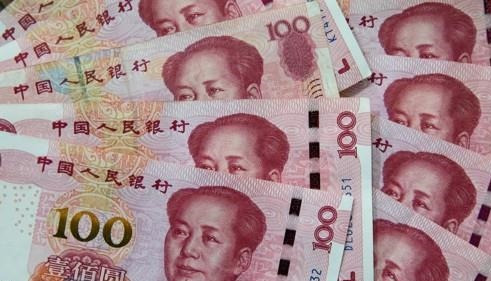
The most promising alternative contender is China’s yuan. However, the yuan’s share in global foreign exchange reserves is only around 2-3%, compared to the nearly 60% held by the dollar, making it difficult to compare. Strict capital controls and an opaque financial system are the biggest obstacles.
Table 2: Comparison of Major Global Reserve Currencies (2024)
| Currency | Share of Global Foreign Exchange Reserves (%) | Strengths / Weaknesses |
|---|---|---|
| U.S. Dollar (USD) | About 59% | Strengths: Overwhelming liquidity, safe asset Weaknesses: Massive national debt |
| Euro (EUR) | About 20% | Strengths: Large single economic zone Weaknesses: Political fragmentation |
| Chinese Yuan (CNY) | About 2.5% | Strengths: Second-largest economy in the world Weaknesses: Capital controls, lack of trust |
The Dawn of the Digital Dollar Empire: America’s Hidden Card
Faced with challenges from within and outside, the U.S. has found a breakthrough in technological innovation. The ‘GENIUS Act,’ passed in 2025, showcases America’s ambition to reshape the digital financial landscape through regulated digital dollars, i.e., stablecoins.
For a long time, I felt that the ’end of the dollar’ was an unrealistic notion while watching economic news. However, upon seeing this legislation, I realized that rather than collapsing, the dollar is evolving into a digital form to maintain its hegemony through a grand strategy.
Table 3: Key Strategies of the U.S. ‘GENIUS Act’
| Regulatory Area | Specific Provisions | Strategic Intent |
|---|---|---|
| Issuer Qualifications | Federally chartered banks or specially authorized institutions | Control of issuing entities, ensuring financial stability |
| Reserve Requirements | 100% cash and short-term U.S. Treasury holdings | Building trust and creating demand for U.S. Treasury bonds |
| User Asset Protection | Priority protection of assets in case of issuer bankruptcy | Securing consumer trust, preventing systemic risk |
The most cunning aspect of this legislation is the reserve requirement. By mandating that global stablecoin issuers fill their reserves with U.S. Treasury bonds, a new source of demand is created to absorb the growing national debt. This can be seen as a digital version of the petrodollar system.
Comparison/Alternatives: Future Digital Currency Competition Models
Two models are colliding over the future monetary system. Which model do you think will lead future finance?
- U.S. Model (Market-Centric)
- Core: Regulated stablecoins issued by private companies
- Advantages: Maximizes technological innovation and market efficiency
- Disadvantages: Risks from private companies could spill over into the entire financial system
- BIS Model (Institution-Centric)
- Core: Digital currencies (CBDCs) directly issued by central banks and ’tokenized deposits’ from banks
- Advantages: Maintains financial stability under central bank control
- Disadvantages: Slower pace of innovation and potential for excessive central bank control

Conclusion
The future of the dollar is not a straightforward collapse but rather a complex process of structural evolution. Just as the dollar transitioned from gold to oil, it is now shifting its pillar of hegemony to a new territory: digital.
- Key Point 1: There will be no sudden collapse of the dollar. Due to overwhelming liquidity and the absence of suitable alternatives, the dollar’s dominance will gradually weaken.
- Key Point 2: The world is likely to be restructured into ’three currency blocs.’ A competitive landscape will emerge among the digitally enhanced dollar bloc, euro bloc, and yuan bloc.
- Key Point 3: The dollar will be less dominant but still central. By seizing the digital financial infrastructure, it will maintain its position at the center of the system.
In conclusion, the ’end of the dollar’ will not come. Instead, we are witnessing the birth of a new global monetary order that is more complex and competitive, yet still centered around the dollar.
References
- The Rise of the Yuan… Possibility of Multiple Reserve Currencies Atlas News
- Exorbitant Privilege: US Dollar Management Study Guide
- Bretton Woods System Wikipedia
- The ‘Nixon Shock’ Incident that Shocked the International Community!! YouTube (tvN)
- Petrodollar Hankyung Economic Dictionary
- Will the U.S.-Saudi 50-Year Pact ‘Petrodollar’ Collapse? Hankyoreh
- U.S. National Debt Downgraded… $36 Trillion, 1.2 Times the Economic Scale Korea International Trade Association
- BRICS Accelerates De-Dollarization… Weakening Control of the ‘Dollar Financial System’ Global Economic
- [S Report] ① Why is the U.S. Clinging to Stablecoins… Eyes on the ‘GENIUS Act’ MoneyS
- Creating Demand for U.S. Treasury Bonds, Strengthening Dollar Hegemony… Stablecoins are Trump’s Big Picture Hankyung
- The next-generation monetary and financial system Bank for International Settlements
- The Federal Reserve Releases First ‘Digital Dollar’ Report… “Optimal Currency Possible” Chosun Biz (Other sources omitted as in the original)