
Lessons from the 2023 Major Flood and the Role of Robots in 2025 in Hong Kong’s Disaster Response Innovation
- Understand the limitations of Hong Kong’s flood defense system revealed by record rainfall in 2023.
- Explore how the latest pumping robots and smart technologies are changing the paradigm of disaster response.
- Examine the blueprint for future cities moving towards a ‘sponge city’ in the face of climate change.
As climate change accelerates, cities around the world are facing unprecedented natural disasters. The case of Hong Kong, in particular, offers significant insights. This article deeply analyzes how the Hong Kong flood mitigation system has evolved through two extreme rainfalls, focusing on the role of technology at its core.
2023 Major Flood: Encountering the Limits of Existing Defense Systems
In September 2023, Hong Kong faced the worst rainfall in its 140-year meteorological history. The remnants of Typhoon Haikui left a trough that unleashed an astonishing 158.1mm of rain per hour. This level overwhelmingly exceeded the design capacity of Hong Kong’s sophisticated triple defense system (blockage, retention, improvement), which is intended for a maximum frequency of 200 years.
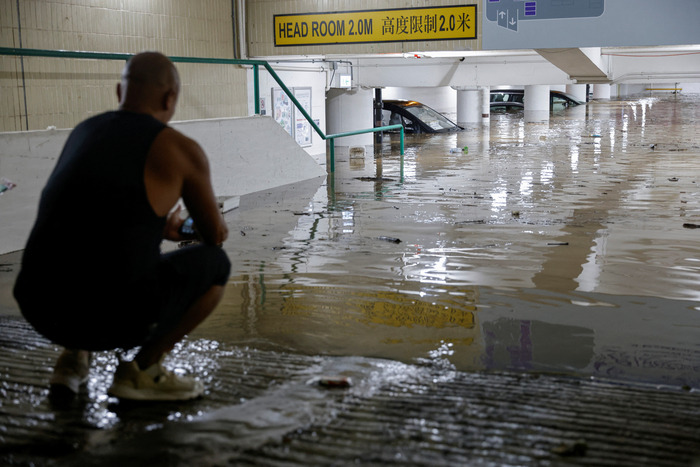
The city was inundated, especially the Wong Tai Sin MTR station, which was completely flooded with cascading water. This incident resulted in 4 fatalities and 144 injuries, along with an economic loss of approximately 1.5 billion Hong Kong dollars, clearly revealing the limitations of the existing static infrastructure-centered defense strategy. The government’s delayed response and the term “once in 500 years flood” drew criticism from citizens.
2025 and the Emergence of Robots: The Beginning of New Responses
Two years later, in August 2025, Hong Kong experienced another record rainfall (breaking the daily rainfall record for August). However, this time was different. Learning from the painful experience of 2023, the Drainage Services Department (DSD) urgently deployed new pumping robots to the field.
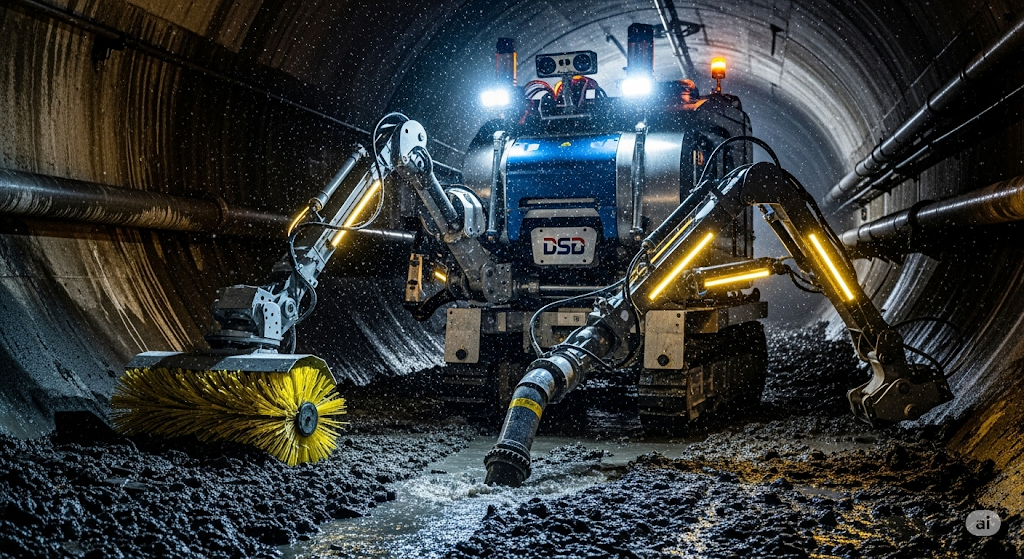
These robots were deployed in habitual flooding areas, such as the parking lot of the Wan Chai Estate, which suffered significant damage in 2023, demonstrating remarkable efficiency by removing water from the flooded parking lot in just one hour. This marked a symbolic event indicating that Hong Kong’s disaster response paradigm had shifted from static defense to dynamic, technology-driven rapid response.
Technological Evolution of Hong Kong’s Flood Mitigation: Smart Drainage Systems
Pumping robots are not merely individual pieces of equipment. They are a core component of a larger ‘smart drainage’ initiative that integrates over 300 sensors across the city, IoT, and AI-based predictive systems. What impressed me most while analyzing this material was the maximization of the robot technology’s utility by immediately deploying it in emergency situations, which was previously used for routine maintenance of drainage pipes.
Key Robot Technologies of DSD
| Robot Type | Key Functions | Core Capabilities |
|---|---|---|
| River Ranger | Emergency river desilting | Wireless remote control, bulldozer attachment |
| Aquabot | Maintenance desilting of culverts | Confined space operation, daily handling of 10 tons |
| Pumping Robot (General) | Emergency drainage | High-performance pump, rapid field deployment |
| Pipeline Inspection Robot | Condition inspection | 360-degree camera, sonar sensor |
Comparison: Static Defense vs. Dynamic Response
The two flood cases starkly illustrate the differences in Hong Kong’s flood mitigation strategies.
| Item | 2023 (Static Defense) | 2025 (Dynamic Response) |
|---|---|---|
| Core Strategy | Reliance on designed infrastructure (tunnels, retention basins) | Rapid field intervention using robots and sensors |
| Advantages | Basic defense capability against large-scale rainfall | Flexibly responding to unpredictable localized downpours |
| Disadvantages | Systematic paralysis when exceeding design criteria | Initial investment costs, technological dependency |
| Results | Widespread urban functionality paralysis, massive damage | Minimization of major facility malfunctions, rapid recovery |
Checklist: Flood Mitigation Strategies for Future Cities
The case of Hong Kong offers important lessons for other cities. In the era of climate change, what preparations should our cities make?
- [✔️] Establish Smart Monitoring Systems: Install water level and rainfall sensors throughout the city to obtain real-time data and predict floods using AI.
- [✔️] Form Robot-Based Rapid Response Teams: Introduce pumping and desilting robots to quickly resolve issues in hazardous areas without human intervention.
- [✔️] Implement the ‘Sponge City’ Concept: Expand permeable pavements, green roofs, and rain gardens to enhance the city’s ability to absorb and retain rainwater.
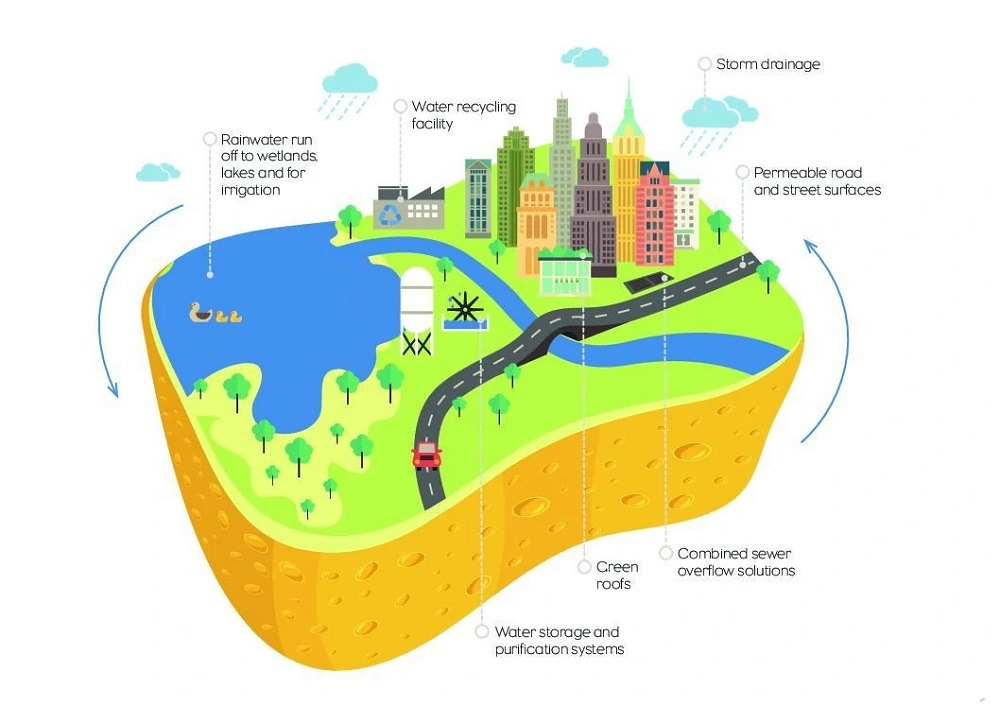
Climate change is increasing the frequency and intensity of extreme rainfall events worldwide.
Conclusion
The stories of Hong Kong’s two storms vividly illustrate the process of learning from disasters and overcoming crises through technology. The survival and prosperity of future cities can no longer rely solely on massive concrete structures.
-
Key Summary:
- The 2023 major flood clearly demonstrated the limitations of the existing infrastructure-centered static defense system.
- The 2025 robot deployment proved the effectiveness of dynamic, technology-driven responses combined with AI and IoT.
- Future Hong Kong flood mitigation will advance through a multi-layered approach combining robust infrastructure, advanced technology, and the ‘sponge city’ concept that coexists with nature.
I hope this article encourages you to take an interest in your city’s disaster response system.