
A Gunshot on an Autumn Day, a Divided Nation

Imagine for a moment. On September 10, 2025, the campus of Utah Valley University was peaceful under the warm autumn sun. Then, a gunshot rang out, shaking everything. That bullet did not merely pierce one person’s heart; it was as if it had been fired at the very soul of a nation already split in two: the United States of America.
The victim was Charlie Kirk, a fervent supporter of Donald Trump and a young voice stirring the most heated debates in the conservative camp. His death became a horrific tragedy that demonstrated how the language of simmering anger and hatred could manifest as real bullets.
This incident brutally revealed that America stands on the brink of a divide that may never heal. People could have reflected on themselves and mourned together through this tragedy. But the reality was different. Even his death became a weapon for both sides, used to fuel the flames of hatred against each other.
From now on, we will follow the unfortunate journey of how one person’s death can have a profound impact on a nation.
Part 1: How Did He Become a Martyr?
1. Who Was Charlie Kirk?
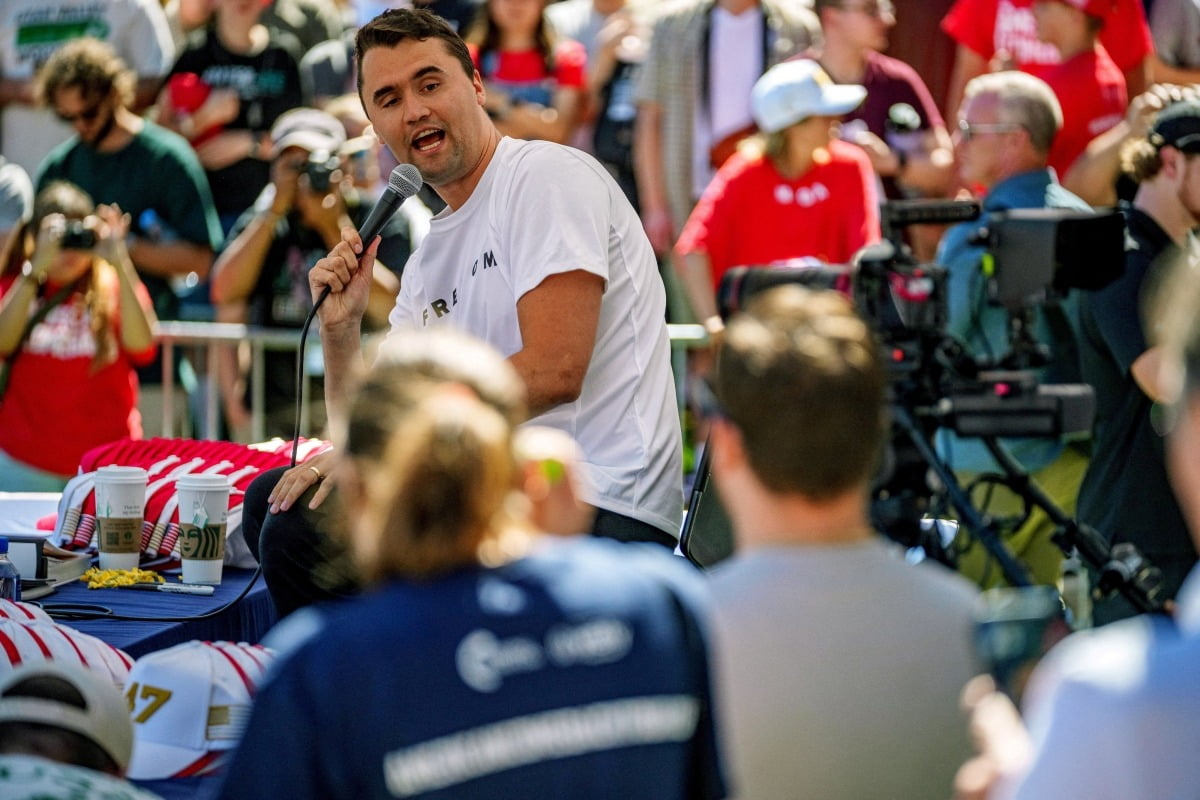
At the center of this story is a man named Charlie Kirk. He passed away at the young age of thirty-one, but his influence was anything but small. He was not just a conservative commentator; he was a symbol of the new conservatism born in the Trump era.
At just eighteen, he founded an organization called ‘Turning Point USA,’ viewing college campuses as the most critical battleground in the ‘culture war.’ His approach was simple yet effective: deliberately confront progressive students or professors and film those encounters to spread online. He became a voice for young people wearing “Make America Great Again” (MAGA) hats, ensuring they would not feel isolated on campus. His podcast gained immense popularity, with over 500,000 downloads per day.
His words were always sharp. He criticized the victim of the George Floyd incident, displayed a hardline stance on immigrants, and fervently spread Trump’s claims of a fraudulent 2020 election. It was as if he was shouting, “Our America is under threat from progressives! It’s time to fight back!”
However, the irony of his final moments was profound. He was a staunch advocate for gun rights, stating that “a few sacrifices due to gun accidents are a price worth paying for freedom.” Yet on that very day, while discussing the dangers of gun violence, he was struck down by a sniper’s bullet. His death appeared to encapsulate the tragic contradictions of a nation endlessly suffering from gun issues.
2. President Trump’s Immediate Response: ‘Martyr’
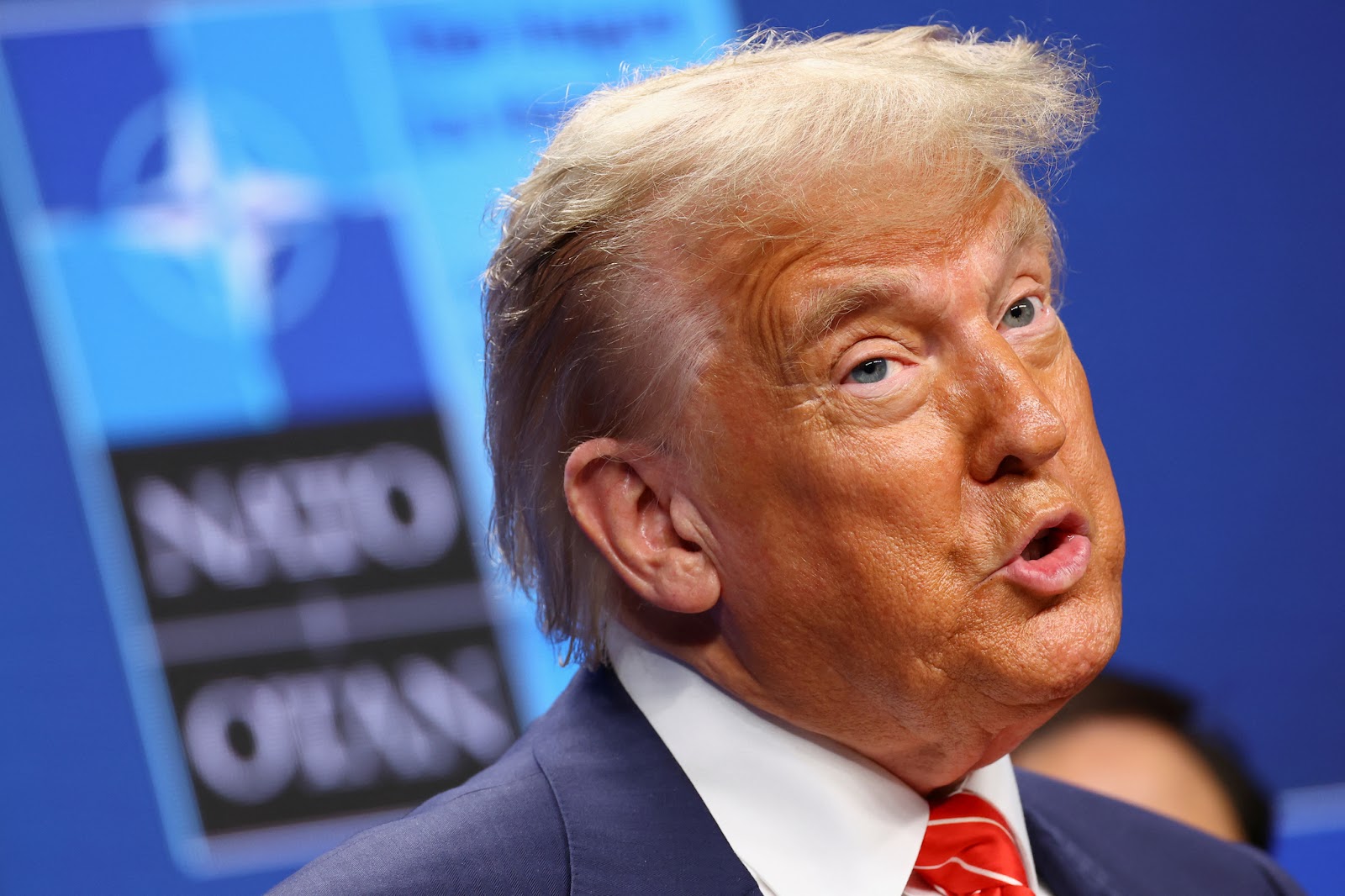
As soon as the news of Charlie Kirk’s death broke, President Donald Trump moved faster than anyone else. He did not wait for police investigations or evidence. Instead, he immediately declared on his social media that Charlie Kirk was a “martyr for truth and freedom.”
The word ‘martyr’ carries immense power. With this single term, the incident transformed from a mere political assassination into a ‘spiritual battle between good and evil.’ A martyr cannot have flaws, and their death becomes sacred. Criticizing Charlie Kirk’s past statements became blasphemy, and his death became the most compelling reason to punish the ‘radical left.’
Trump did not stop there. He ordered all public offices to fly flags at half-mast and announced that Charlie Kirk would receive the highest honor a U.S. citizen can receive: the ‘Presidential Medal of Freedom.’ His statement, “The monster that attacked Charlie has attacked all of us,” united the sorrow and anger of his supporters, transforming it into powerful energy for the next fight. He presented himself not as a comforting president for a grieving nation but as a leader preparing warriors for the next battle.
Part 2: Two Very Different Realities Under the Same Sky
1. Biden’s Appeal: A Cry in the Void
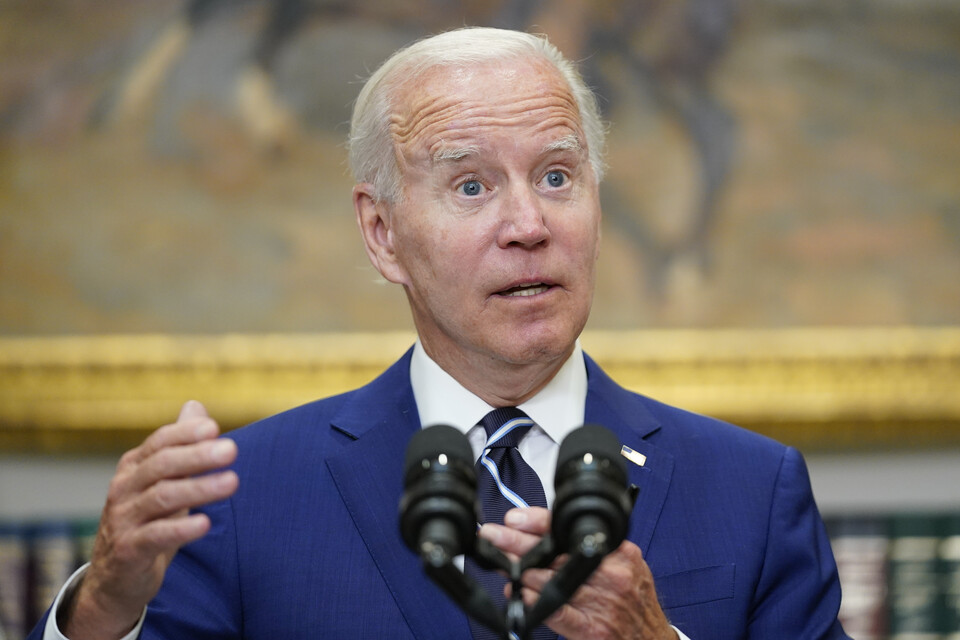
While Trump crafted a powerful narrative of ‘martyrdom,’ Democratic leaders, including former President Joe Biden, presented a starkly different image. Biden appealed for calm and unity, stating, “Such violence has no place in our society.” Other Democratic figures echoed similar messages, expressing bipartisan condolences.
This was the traditional image of a leader seeking to prevent division and unite everyone in times of crisis. However, in the face of Trump’s emotional narrative declaring war, such rational appeals sounded hollow and empty. To Trump supporters, the Democrats’ condolences appeared insincere, and their criticism of violence sounded like an excuse to evade responsibility.
A scene in Congress illustrated this deep divide perfectly. When Republican members suggested a moment of silence for Charlie Kirk, some Democratic members refused to participate, citing his past statements. Soon, the chamber turned into a battleground of shouts and accusations. This reality, where they could not even pause for a moment in the face of national tragedy, showcased the extreme polarization in America.
Part 3: The Tragedy of the Digital Age, an Endless Narrative War
1. An Era Where Everyone is a Witness

In the past, when President Kennedy or Dr. Martin Luther King Jr. were assassinated, people received the news through trusted anchors like Walter Cronkite and shared in the sorrow together. But times have changed.
The horrific video of Charlie Kirk being shot was captured from multiple angles and quickly spread across all social media. While news outlets handled the footage cautiously according to ethical guidelines, the online world exposed the moment of violence without any filters to millions of smartphone screens.
This “digital age Zapruder film” (referring to the Kennedy assassination footage) had terrible consequences. First, people did not just hear the news; they directly ’experienced’ the violence. This evoked extreme emotions instead of rational thought. Second, the social contract about what to see and what not to see collapsed. Everything was consumed as sensational content.
2. Social Media, Another Battleground
The online space where the video spread quickly became a battlefield.
- On the right, there were numerous posts vowing revenge, exclaiming, “This is war!” Unverified suspect information and conspiracy theories spread at lightning speed.
- On the left, some mocked his death or claimed, “He reaped what he sowed.” Although a minority, such reactions were quickly captured and used as evidence of ’leftist cruelty.’
Conclusion: The Beginning of a Storm or the End of a Fever?

The assassination of Charlie Kirk shows that American democracy stands at a serious crossroads. Now, two paths lie ahead for America.
- The first path is to take this tragedy as an opportunity to retract sharp words towards each other, firmly criticize the violence committed by our side, and painfully seek ways to live together again.
- The second path is to exploit this tragedy, deepen mutual hatred, demonize the other side, and justify greater violence.
The immediate aftermath suggests that America is rapidly heading down the second path. We live in an era where we witness scenes of violence more vividly than ever, yet we have completely lost a common language to share and understand that pain.
The bullet that struck Charlie Kirk did not just take one life; it pierced the most crucial pillars of democracy: reason, compromise, and a shared reality. The remaining question is this: Will this horrific event become the last hurdle of a fever leading to a path of healing? Or will it mark the beginning of an uncontrollable, greater storm?
For now, the difficulty of easily being optimistic about that answer makes us even more fearful.