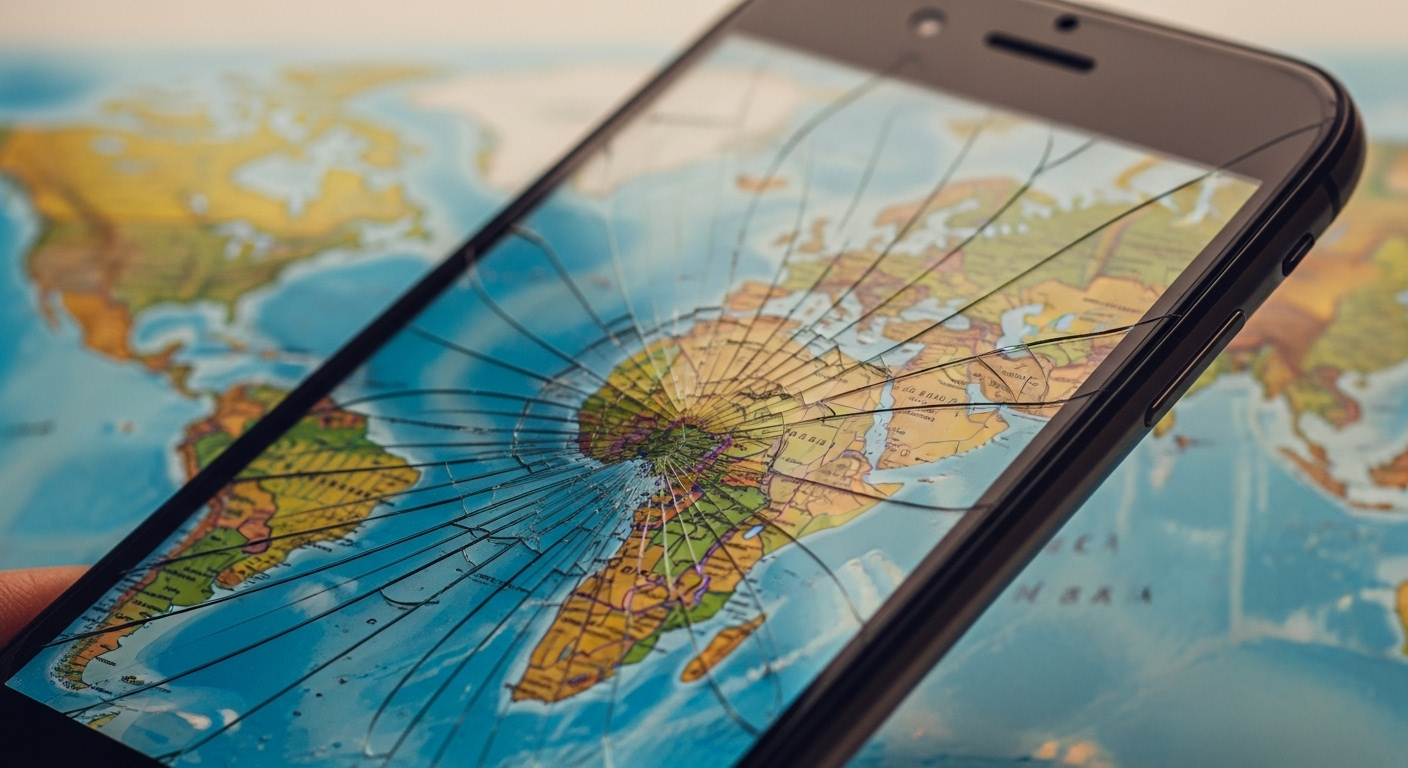
The Question Raised by $100
Have you ever thought about it? In September 2025, when Tim Cook announced the new price of the iPhone 17 Pro, it had increased by exactly $100. Some might have thought, ‘The camera has improved, so it’s reasonable,’ while others might have brushed it off with, ‘Apple is being Apple again.’
But that $100 was not just a simple number. Above it loomed the massive shadows of Washington D.C. and Beijing. The unpredictable tariff bombs and retaliatory measures against them, along with the struggles of a giant corporation trying to survive, were all encapsulated in that $100.
Today, we won’t be discussing the performance of the new iPhone. Instead, we will use this small key of $100 to explore the larger narrative of why the colossal empire of ‘Apple-China,’ which has driven the world for the past 20 years, is shaking, and who ultimately bears the cost of that fracture.

Chapter 1: The Promise of a Golden Age - How Apple Won the Heart of China
The story goes back to the early 2000s, when Steve Jobs amazed the world with the ‘iPod.’ He faced a challenge: “How do I produce this in millions with perfect quality?” The answer lay across the Pacific, in China, which was stretching its arms as the ‘world’s factory.’
While many attribute Apple’s success to ‘cheap labor,’ that’s only half the story. The real treasures Apple gained in China were three things that money can’t buy: ‘speed,’ ‘scale,’ and ‘flexibility.’
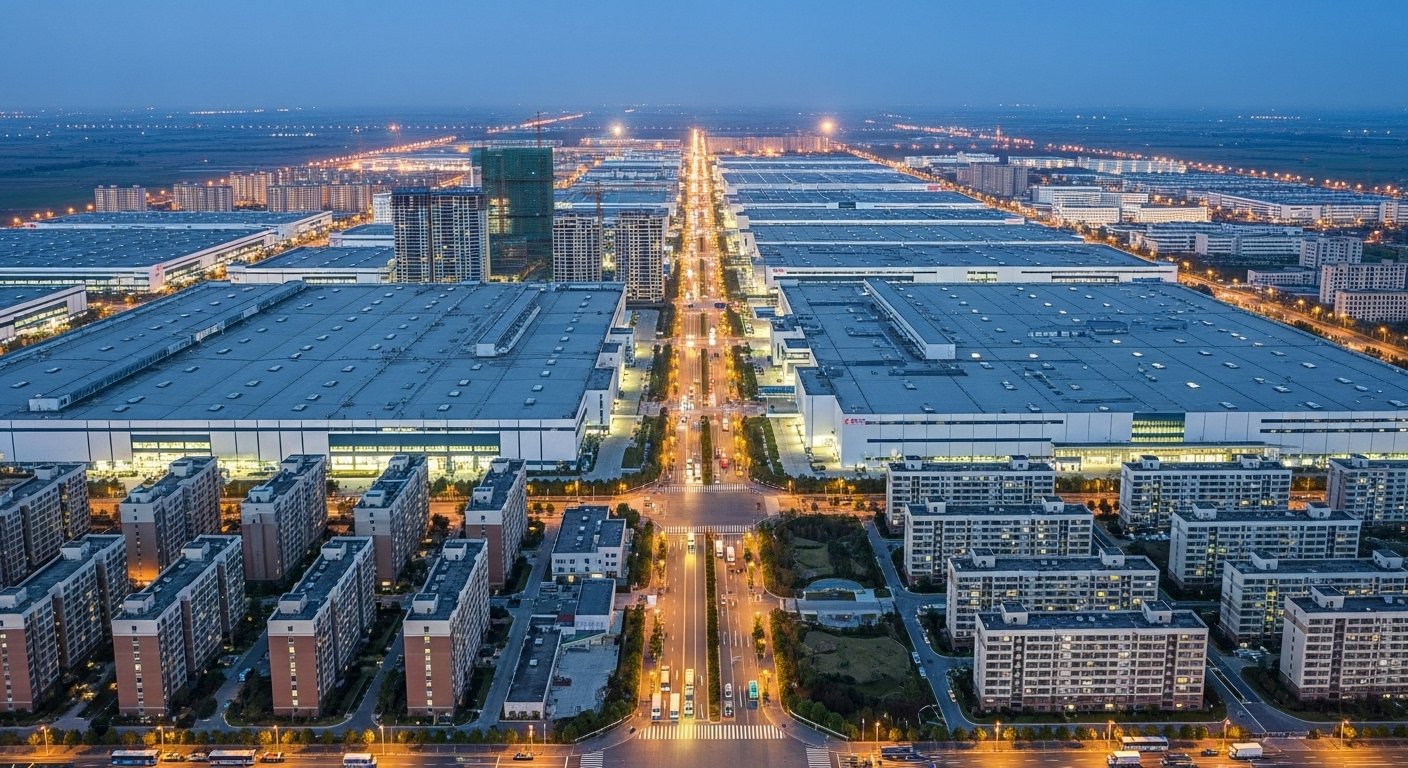
There’s a symbolic anecdote. One night, when Apple needed to urgently change the screen design of a prototype, what would have taken weeks in a US factory was resolved in just a few hours in Shenzhen. The factory manager woke up 8,000 engineers sleeping in dormitories, and after receiving tea and biscuits, they immediately got to work. Within just four days, a system to produce 10,000 iPhones a day was perfectly established. This was the ‘Shenzhen miracle’ that Apple loved.
It’s not just about having a lot of people. Near Shenzhen, suppliers are intricately connected, able to make and source everything that goes into an iPhone, from a single screw to cutting-edge components. When an engineer has an idea, they can prototype it within hours. This was the secret of Apple’s innovation.
The Chinese government also valued this partnership. They provided significant tax breaks, cheap factory land, and millions of laborers. In return, China gained countless jobs, advanced technology, and the reputation of being the ‘world’s leading manufacturing nation.’ While Apple’s product designs were in the US, its heart and hands were firmly rooted in China, making them indispensable to each other.
Chapter 2: The Beginning of the Storm - “A $1 Billion Bill per Quarter”
The peaceful era that lasted nearly 20 years was thrown into turmoil with Trump’s return to the White House in 2025. The second Trump administration began using tariffs as a weapon.
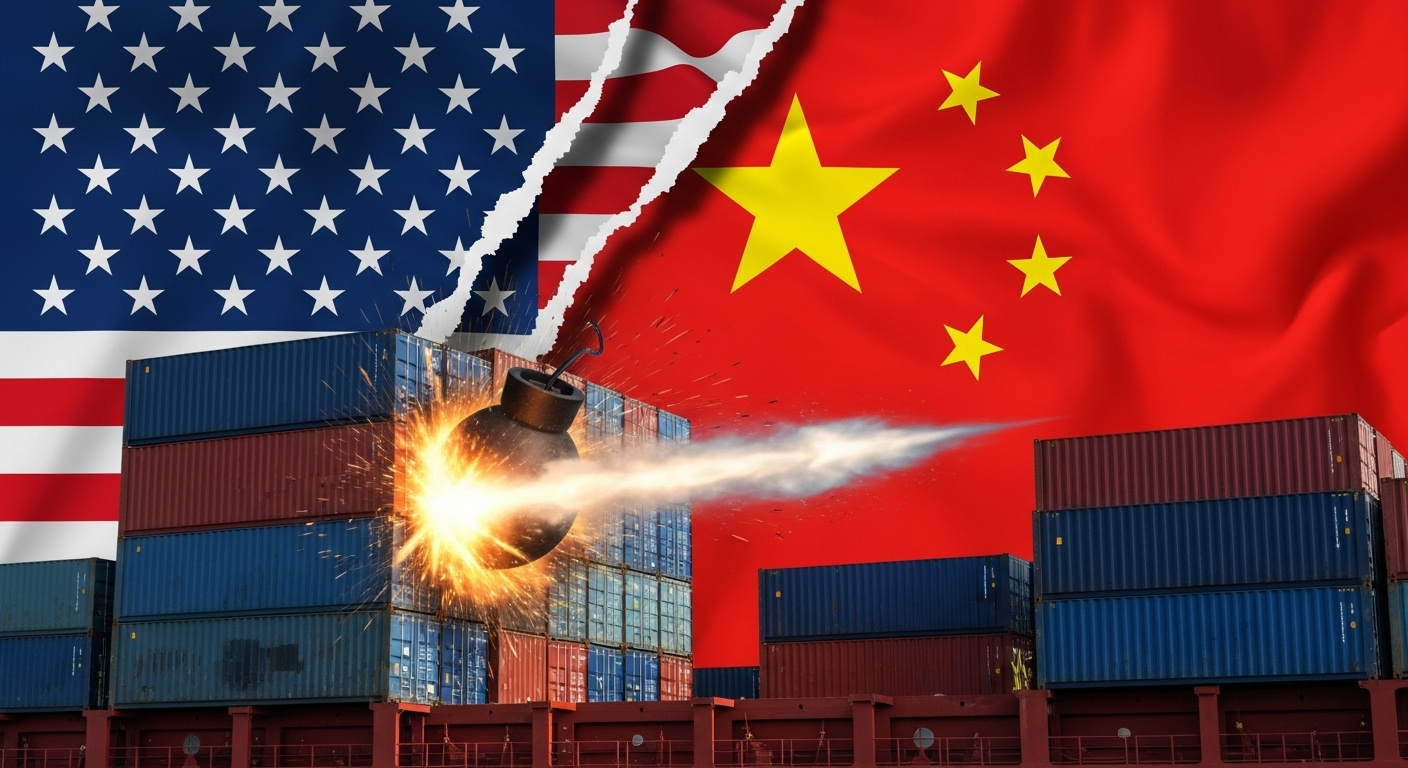
What tightened Apple’s grip was a 10% tariff imposed on all Chinese products under the name ‘fentanyl-related tariffs.’ This jumped to 20% within a month, and retaliatory tariffs surged at one point to 145%, creating sheer ‘chaos.’
This was not a predictable tax; it was like a ticking time bomb, unpredictable in when it would explode. In such an environment, making stable plans became nearly impossible. The problem Apple faced was not simply a ‘20% increase in costs,’ but a more terrifying monster: ‘unmanageable uncertainty.’
Ultimately, this chaos began to manifest in concrete numbers on Apple’s financial statements. Tim Cook anticipated that in the third quarter of 2025, Apple would spend $800 million (about 1 trillion won) just on tariff costs, and in the fourth quarter, $1.1 billion (about 1.4 trillion won). Over a billion won was disappearing unexpectedly every quarter.
To make matters worse, tariffs drove up consumer prices in the US, thinning people’s wallets. Apple found itself in a double bind, facing rising product costs while the financial situation of potential buyers was deteriorating. The era of peace was over, and the fight for survival had begun.
Chapter 3: The Empire Strikes Back - A Massive Shield and a Desperate Escape
In the face of over a billion won in quarterly bombs, Apple did not remain idle. Price increases were the last resort. Before playing that card, Apple mobilized all its imperial power to avoid the crisis.
First, they accelerated the ‘China Plus One’ strategy. Diversifying the supply chain, which had already begun, became a matter of survival. They significantly increased investments in India and Vietnam to reduce dependence on China. They set an ambitious goal of producing 25% of iPhones in India. However, this was a slow and costly process, akin to turning a massive tanker. India still lacked the dense component supply chain and skilled technicians like Shenzhen.
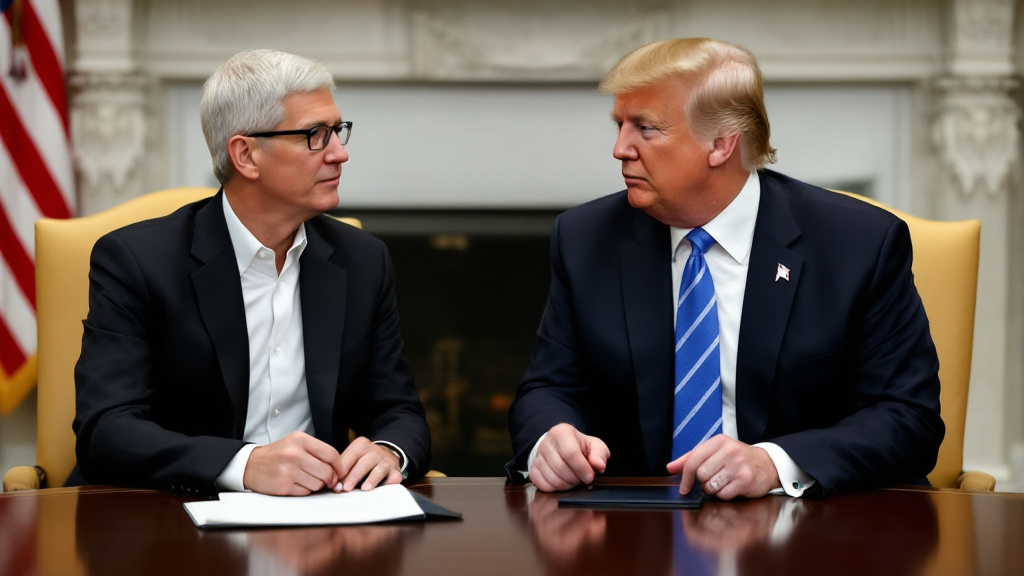
Second, they pulled out the most dramatic ‘political shield.’ When President Trump criticized, “Why go to India? Build factories in the US!” Apple announced a $600 billion (about 780 trillion won) investment plan in the US. Tim Cook personally visited the White House to explain. Many analysts believe this astronomical amount was not for building factories but rather the most expensive ’lobbying effort’ in history to avoid tariff bombs. It was Apple’s response to Trump’s statement that companies investing in the US would be exempt from tariffs.
Thus, while attempting a physical escape by moving factories, Apple also sought to create a political shield with vast sums of money, but the bleeding did not stop. Ultimately, Apple was forced to resort to its last card: ‘price.’
Chapter 4: Calculated Fractures - The Clever Strategy Hidden in the Price Tag
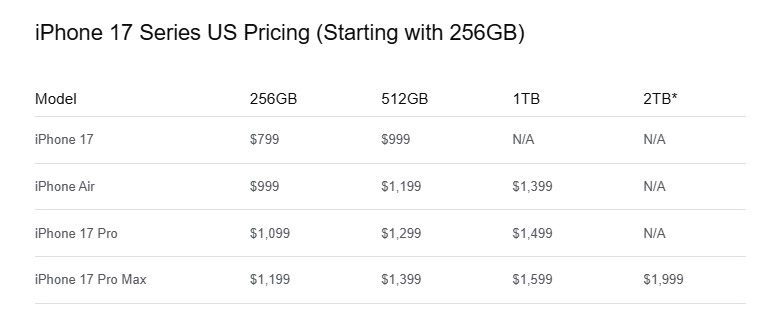
Finally, the fateful day arrived on September 9, 2025. All eyes were on the price of the iPhone 17. The results were surprising. (Based on 256GB)
- iPhone 17 (base): $799 (frozen)
- iPhone Air (new): $999
- iPhone 17 Pro: $1,099 **($100 increase)**
- iPhone 17 Pro Max: $1,199 (frozen)
This price list was a strategy that encapsulated Apple’s concerns and cleverness.
First, they preserved the broadest territory: the ‘mass market.’ By freezing the price of the flagship model, the iPhone 17, they demonstrated their intent to protect the largest consumer base and maintain market share. This meant they were willing to absorb tremendous costs themselves.
Second, they executed a ‘precision strike’ to cover losses. This was the $100 increase on the iPhone 17 Pro model. The target was clear: the ‘pro-sumer’ group, which is less price-sensitive and desires the best technology. Instead of telling them, “We are raising prices due to tariffs,” Apple cleverly framed it as, “We are doubling the storage capacity to provide greater value.”
Ultimately, this pricing strategy shows that Apple is intentionally segmenting its customers. The mass market serves as a ‘breakwater’ protecting against price increases, while the high-end market acts as a ‘buffer’ absorbing the shock of tariffs. This was the first visible ‘fracture’ that Apple’s empire had to make to adapt to a new era.
Chapter 5: The Paradox of Escape - But Why Can’t They Leave China?
Here, we return to the most fundamental question. If it’s this difficult, can’t they just move all the factories? Why can’t Apple leave China?
To put it simply, it’s ‘almost impossible’ at this point. The reason lies beyond mere ‘assembly.’
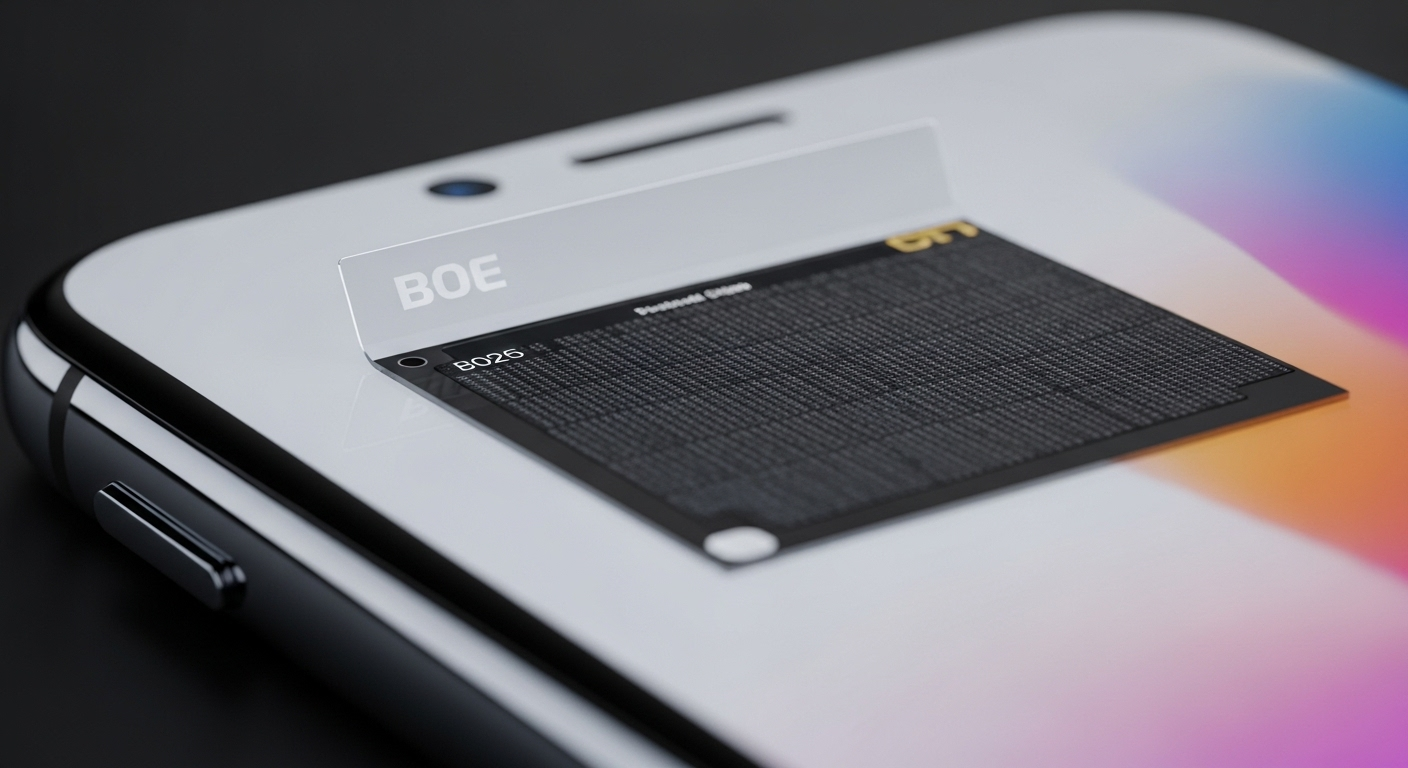
We say the iPhone is ‘assembled’ in China, but that’s just part of the whole process. The real core is the ’ecosystem’ of suppliers that make the hundreds of components that comprise the iPhone. A prime example of this paradox is the Chinese display company, BOE.
After years of effort, BOE has become a key partner supplying the OLED display, the ‘face’ of the iPhone. Now, China is not just a country assembling iPhones but a technological partner supplying the most expensive core components.
This is where the ‘paradox of escape’ lies. While Apple moves its assembly plants (the body) to India, its dependence on core component suppliers (the brain and heart) like BOE deepens. The difficulty of ‘decoupling from China’ is not just about the cost of moving factories. It means replicating the world’s most sophisticated and efficient supply chain ecosystem, built over the past 20 years in China, somewhere else. This is not something that can be achieved overnight.
Conclusion: A New Era, New Conditions for an Empire
Our journey, which began with the small clue of $100, has traversed the massive storm of the 20-year alliance between Apple and China and the US-China trade war.
The pricing strategy of the iPhone 17 may be a clever short-term success for Apple. However, it also marks a historical moment signaling the end of an era of ‘globalization,’ where companies moved to the most efficient locations without borders, and the beginning of a new era where geopolitical costs are directly charged to our wallets.
Apple now faces three treacherous paths:
- Continue to absorb costs: sacrificing enormous profitability.
- Raise prices across the board: risking the loss of countless customers.
- Accelerate complete decoupling from China: enduring skyrocketing iPhone prices and years of supply chain turmoil.
Whichever path they choose, the golden age of the past is unlikely to return. The $100 of the iPhone 17 sends a clear message: the era of affordable and innovative products we enjoyed may have been a gift of a specific era of borderless globalization.
The Apple empire will not collapse. However, the way it sustains that empire must fundamentally change. The iPhone 17 is a small yet significant signal marking the beginning of that painful transformation. And we all have become witnesses and participants in that change.