
A War Without Gunfire in the Land of Promises
Have you ever heard the term ‘friend-shoring’? It may sound a bit unfamiliar, but it’s actually a very simple promise: “Let’s only produce and trade important goods with friendly countries!” This was the sweet proposal from the United States. Especially in fields like semiconductors and electric vehicle batteries, which are at the heart of future industries, it was a grand dream to create a robust supply chain centered around the U.S. while keeping China in check.
The first friend to rush to this wonderful promise was none other than us, South Korea. Major Korean companies, like miners in a new gold rush, headed to the U.S. with enormous sums of money, in the tens or hundreds of billions of dollars. High-tech factories built with Korea’s technological prowess sprang up like hope across Georgia, Texas, Arizona, and other parts of the U.S.
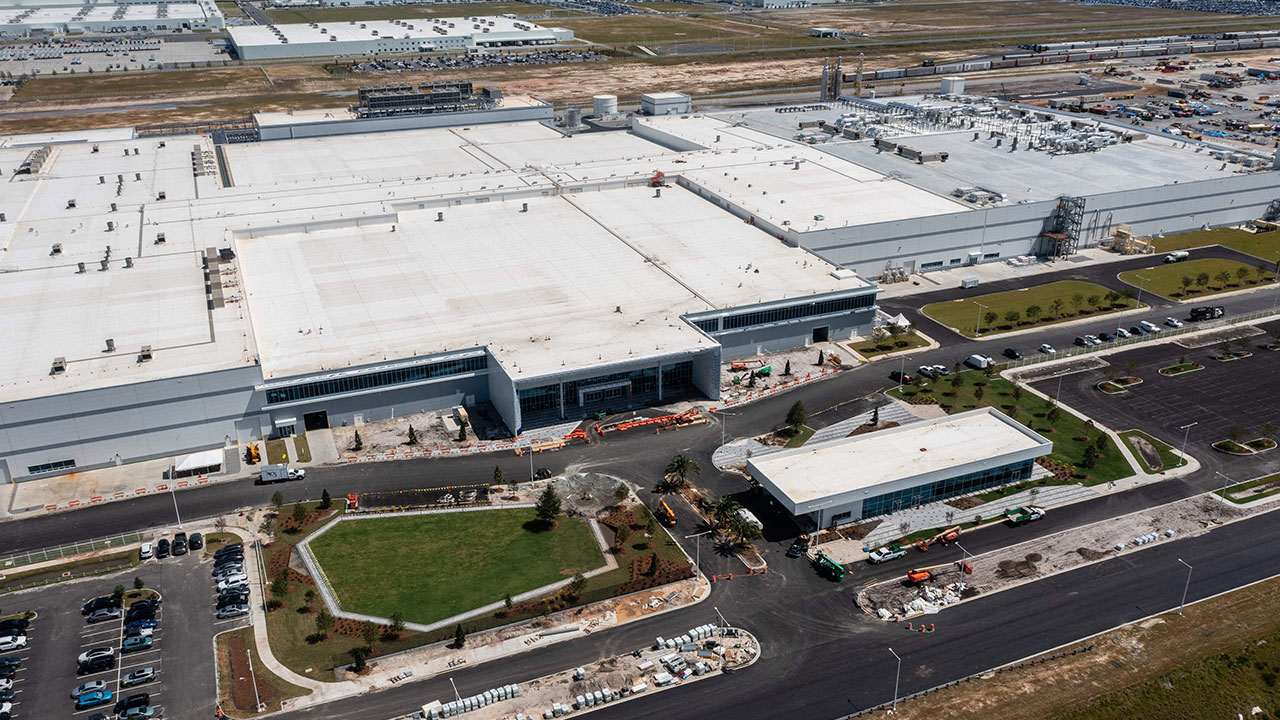
The U.S. government warmly welcomed us, saying, “Friend, you’ve come at just the right time!” and promised massive subsidies and tax benefits. This great investment seemed like a dazzling symbol of the Korea-U.S. alliance evolving from a blood bond to a strong economic alliance.
However, this fairy tale did not last long.
On September 4, 2025, Thursday, the morning in the small town of Ellabell, Georgia, was peaceful. Here, a massive battery factory (HL-GA) was under construction, led by Hyundai Motor and LG Energy Solution, set to drive the future of electric vehicles in the U.S. At that moment, when thousands of sweat droplets were gathering to make the heart of the Korea-U.S. economic alliance beat, peace was shattered.
“Don’t move! Everyone, hands above your heads!”
With a loud noise, armored vehicles blocked the entrance to the construction site, and helicopters stirred up dust from above. Hundreds of fully armed agents poured in. It was a terrifying scene, reminiscent of a movie about a counter-terrorism operation. Agents from the Homeland Security Investigations (HSI), Immigration and Customs Enforcement (ICE), and even the Drug Enforcement Administration (DEA) were mobilized for this operation, targeting hundreds of technicians from Korea.
They were not criminals. They were the best experts who had come to install core equipment in the factory and teach American workers cutting-edge technology. But that day, they had to be dragged away like criminals, shackled in cold chains.
This incident, which would later be called the ‘Georgia Shock’, was a tragedy where the two faces of America collided head-on. The face of the ‘friend’ that extended a hand asking for investment, and the face of ‘America First’ that ruthlessly sacrifices its allies in the name of protecting jobs.
Now, let’s open the door to the shocking truth of how the land of promises became a stage of betrayal.
Chapter 1: What Happened in Georgia That Day
1. “This is not a war movie!” - A Raid Reminiscent of a Military Operation
“At first, I thought it was a movie shoot. When the armored vehicle blocked the construction site door, I just couldn’t believe this was reality…”
As one American worker on site testified, the scene that day was surreal. This operation, involving about 500 agents from the Department of Homeland Security (DHS), the DEA, the Bureau of Alcohol, Tobacco, Firearms and Explosives (ATF), and state patrols, was named ‘Operation Low Voltage’. It was a painfully symbolic name targeting the battery factory.
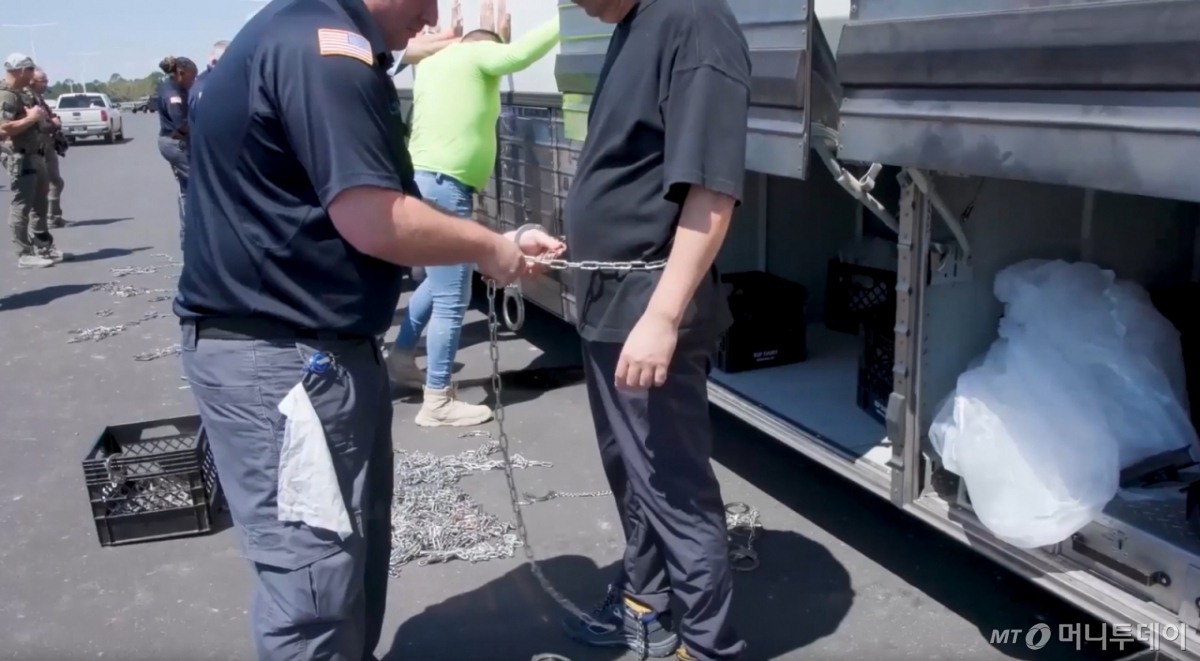
Why did it have to go this far? Why were armored vehicles and helicopters necessary to check visa issues? This was a ‘show’ meant to demonstrate something beyond law enforcement. It was for the American public. An HSI official proudly stated, “This operation demonstrates our firm commitment to protecting American jobs.”
This was politics, not law. And that politics inflicted deep humiliation on us. The images of our technicians being dragged away on a bus, hands bound, released by ICE caused a significant shock and outrage throughout Korean society.
2. Experts Turned Criminals: Who Were They?
Who were the over 300 Koreans detained that day? They were far from the sensational term ‘illegal immigrant workers’ first used by the American media. They were individuals who had legally entered the U.S. under the Visa Waiver Program (ESTA) or business visas (B-1).
These were veteran engineers affiliated with LG Energy Solution and various partner companies. Without them, the precision equipment worth billions would be nothing more than scrap metal. They were the core personnel needed to operate the factory.
What the U.S. government took issue with was their ‘actions’. With ESTA or B-1 visas, they could attend meetings or supervise, but they could not engage in ’labor’ by physically handling tools and machines. But think about it. Can cutting-edge equipment be installed just by saying, “Do it this way”? This was a ‘well-known secret’ in the industry, a practice that the U.S. government had implicitly turned a blind eye to in order to save time and costs.
However, that day, the U.S. government suddenly drew a bright red line labeling this gray area as ‘illegal’, choosing our companies as the first victims.
3. Diplomatic War: A Full-Scale Response for Pride
Immediately after the incident, the South Korean government went into emergency mode. The Foreign Minister flew directly to Washington D.C. to knock on the White House’s door. The main issue was to ensure that our citizens would return not through ‘deportation’, but in a form of ‘voluntary departure’ that would not leave a criminal record. If they were deported, they would be barred from stepping on U.S. soil for several years.
During this process, there was even a moment when President Trump said, “Aren’t these the very technicians we need? Just let them stay and work!” which temporarily halted the procedures. This scene illustrated how disjointed the U.S. government was.
After intense diplomatic negotiations, 316 of our workers were able to board a charter flight on September 12, with their chains removed. However, the faces of those who landed at Incheon Airport were filled with deep wounds and feelings of betrayal rather than relief. With one hand, the U.S. welcomed investments with subsidies, while with the other, it wielded a merciless whip. We clearly witnessed the two faces of America.
Chapter 2: Billions of Dollars Dispersed
1. The Stopped Factory, Frozen Investments
Since that day, the HL-GA construction site has turned into a ghost town. All machinery has stopped, and people’s footsteps have vanished. But the problem did not end in Georgia. The shockwaves spread across the entire U.S. At that time, LG Energy Solution was investing over $11 billion to build battery factories in four locations, including Arizona and Michigan.
The company effectively suspended all business trips to the U.S.. The extreme fear of “not knowing when or where we might be blindsided again” paralyzed the entire system. A single spark turned into a massive wildfire that could burn down the entire future food project of Korea.
2. The Bill Arrives: Dual Evaporation of Revenue and Subsidies
What was the loss implied by this ‘halt’? If the HL-GA factory starts operating a year late, approximately $3 billion, or 4 trillion won, in revenue will vanish. Even a one-month delay would mean over 300 billion won.
But the real disaster lay elsewhere. The massive subsidies promised by the U.S. government, the Advanced Manufacturing Production Tax Credit (AMPC), were at risk of disappearing. This subsidy can only be received if batteries are ‘produced’ in the U.S. If the factory stops and not a single battery is produced, not even a dollar of subsidy can be received.

This is the worst irony. The sweetest ‘carrot’ that lured us turned into a ‘poisoned apple’ in an instant due to the ‘whip’ wielded by another U.S. department.
3. Eroding Trust: Investors Recalculate
Real experts on Wall Street analyzed that this incident fundamentally changed the ‘risk premium’ of investing in the U.S. Until now, the risks of investing in the U.S. were predictable, like taxes or tariffs.
However, the ‘Georgia Shock’ revealed a completely new risk: the ‘sudden labor supply interruption risk due to political motives’. The horrifying reality that a multi-trillion won project could be halted entirely by a single government department’s decision was witnessed by global investors. Now, companies worldwide will ask before investing in the U.S.:
“Could our technicians also be suddenly shackled and dragged away one day?”
Chapter 3: Why Did This Happen? (Underlying Structural Issues)
1. First Cause: “There’s No One!” - Serious Shortage of Skilled Labor in the U.S.
The most fundamental cause is simple. The U.S. currently lacks skilled workers to build cutting-edge factories. After decades of focusing solely on outsourcing manufacturing, the technical foundation has completely collapsed. The term ‘Rust Belt’ didn’t come about for no reason.
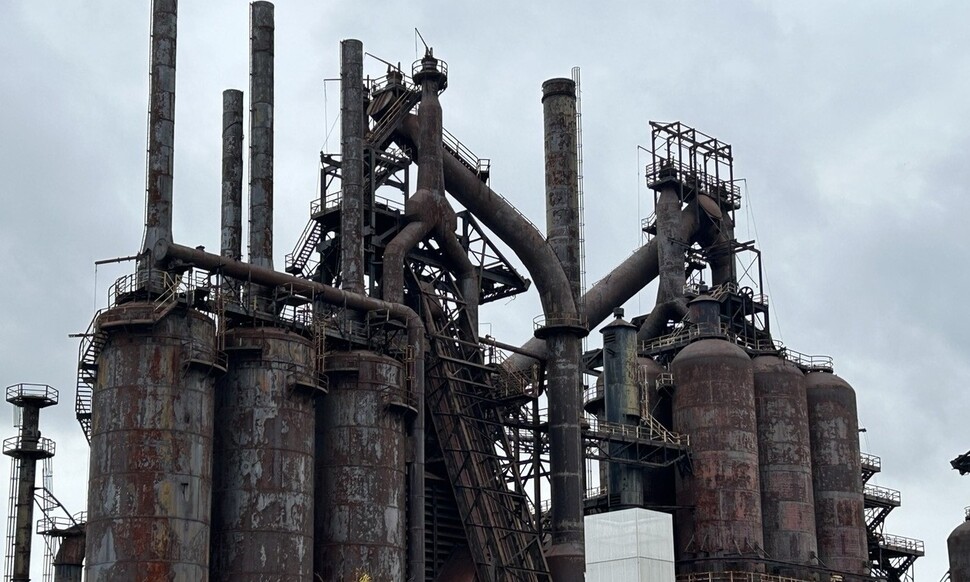
Most of the core equipment for battery factories is made in Korea or Germany. Naturally, technicians from those countries must come to install and repair this equipment. Training local personnel in the U.S. takes years. For companies where a day can cost billions, waiting indefinitely is not an option.
2. Second Cause: “The Road is Blocked!” - A Flawed U.S. Visa System
So why not just go with a formal work visa? However, the U.S. professional visa (H-1B) is like a ’lottery’ with a less than 15% chance of winning. Other visas (L-1) cannot even be applied for by employees of partner companies.
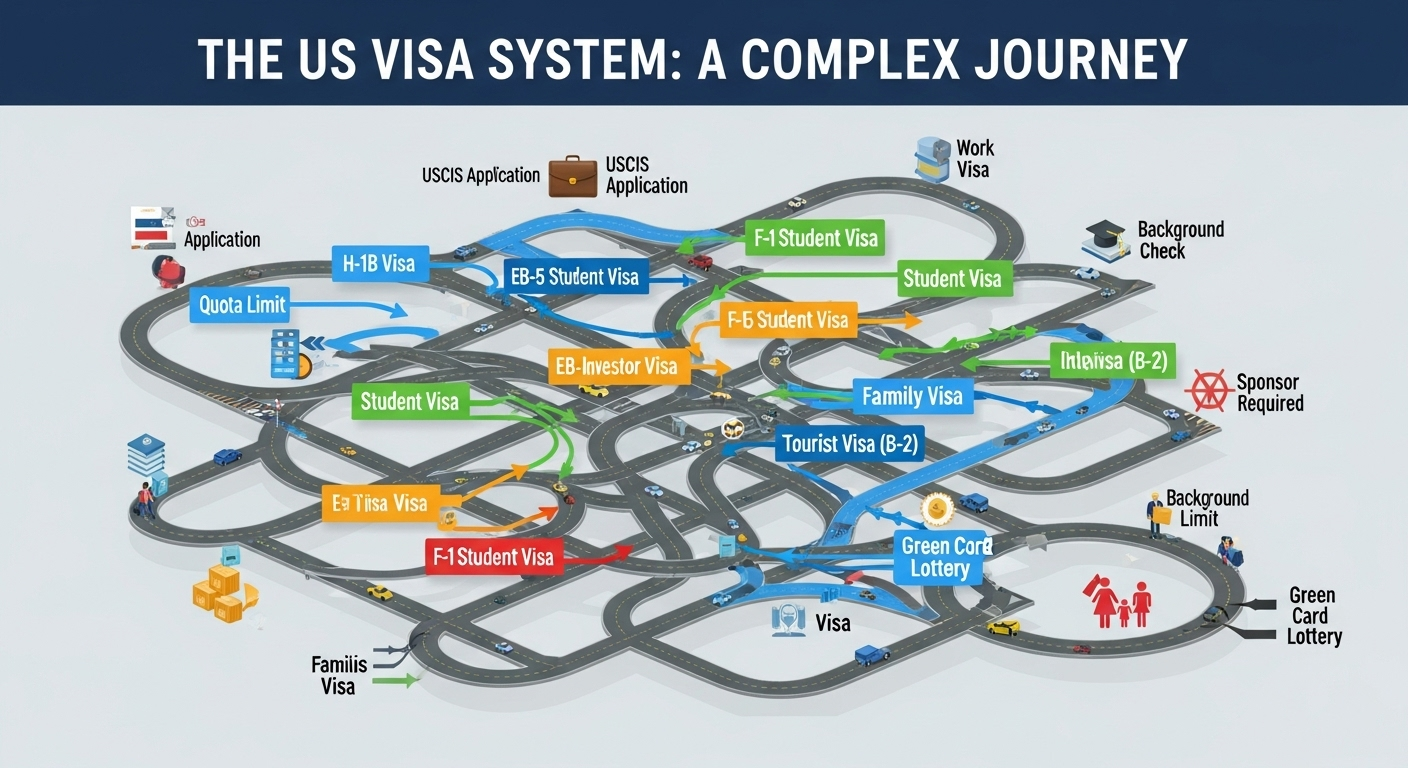
With the main roads completely blocked and no alternative routes available, companies have no choice but to use the ’narrow alley’ of short-term business visas (ESTA, B-1). This was not out of disregard for the law, but a desperate choice to survive within a broken system.
3. Third Cause: “Missed Opportunities!” - Painful Mistakes in Korean Diplomacy
The more unfortunate fact is that other countries have already solved this problem in advance. Countries like Australia, Singapore, and Chile have created separate professional visa ’express lanes’ for their citizens through FTA negotiations with the U.S.
We had two opportunities as well: during the Korea-U.S. FTA negotiations in 2007 and during the renegotiation in 2018. However, we repeatedly missed these important issues due to domestic public opinion or by focusing on immediate fires. Past short-term political calculations have returned as the ‘Achilles’ heel’ that now hinders our economy.
4. The Igniter: “Don’t Take Our Jobs!” - Local Unions’ Discontent
The precarious structure was ignited by local unions’ discontent. They felt that Korean technicians were taking their jobs, and this discontent was amplified by local politicians. Ultimately, this crackdown was not just a unilateral decision by the federal government, but a response to organized political pressure from the local community. This highlights how crucial it is for foreign-investing companies to gain not only the approval of the national government but also the ‘social license to operate’ from local residents and unions.
Chapter 4: A Shaky Alliance, Investments Without a Destination
1. America’s Two Faces: ‘Friend’ or ‘Competitor’?
This incident was the result of a direct clash between two U.S. policies, ‘friend-shoring’ and ‘America First’. From our perspective, it was like being stabbed in the foot by an axe we trusted. We invested the fate of our nation based on America’s promises, only to receive military boots and chains in return.

This sent a terrible message to the world: “Even a core ally of the U.S. can become an enemy at any time due to domestic political logic.” The U.S. itself kicked away the most fundamental premise of ‘friend-shoring’, which is ’trust’.
2. Frozen Investment Sentiment: “Can We Trust the U.S. Now?”
President Lee Jae-myung even warned, “This incident will make Korean companies hesitant to invest in the U.S.” This warning was not just for Korea. Japan, in a similar situation, reacted with almost a sense of panic. CEOs worldwide now had to completely recalculate the risks of investing in the U.S.
3. Shaky Supply Chains: Will China Ultimately Benefit?
What was the biggest reason the U.S. attracted our companies in the first place? It was to escape the influence of China, which dominated the electric vehicle battery market. However, the U.S. has now created a hole in that plan. As the construction of factories is delayed, the time the U.S. has to rely on Chinese batteries will inevitably increase. Ironically, the biggest beneficiary of this turmoil could be their largest competitor, China.
Chapter 5: Turning Crisis into Opportunity, A Strategic Map for New Navigation
Now it’s time to answer the most important question: “So what should we do now?” Here is a concrete strategic map to turn this crisis into an opportunity.
1. Recommendations for Korean Companies: “The Rules of the Game Have Changed!”
- Strict Internal Compliance: Abandon the mindset of ’everyone else is doing it’ and establish a strong immigration law compliance department at headquarters to thoroughly manage partner companies.
- Coexistence with Locals: Collaborate with local universities to create technical training programs that instill the perception of being ‘partners who create jobs’ and always keep communication channels open with the local community.
- Unite as ‘Team Korea’: All companies, including Samsung and SK, must come together and demand with a unified voice, “If a new visa system guaranteeing the safe activities of our technicians is not created, there will be no further investments.”
2. Recommendations for the South Korean Government: “Change the Paradigm of Diplomacy!”
- Make Visas a ‘National Security’ Agenda: Securing a separate professional visa quota for Koreans (tentatively named ‘E-4 Korea-U.S. Alliance Technology Visa’) should be the top priority in diplomacy with the U.S.
- Leverage Investments: Do not give away our massive investments as gifts; negotiate specific ‘give-and-take’ arrangements by saying, “If you want our investments, solve the visa issue.”
- Pursue Practical Benefits with a ‘Two-Track Strategy’: While pushing for long-term legislative passage, relentlessly demand administrative measures that can be implemented immediately.
3. Recommendations for the U.S. Government: “Get Out of the Grave You Dug for Yourself!”
- Create a New ‘Strategic Industry Visa (SIV)’: Abandon the outdated visa system and establish a fast-track visa without quotas for projects essential to national security.
- Establish a Policy Control Tower: The White House must create a coordination process to prevent the Department of Homeland Security from undermining industrial policy.
- Invest in Teaching ‘How to Fish’: Ultimately, the solution lies in cultivating skilled labor within the U.S. A portion of subsidies should be mandatorily invested in vocational training programs.

The ‘Georgia Shock’ has left deep wounds and lessons for everyone. However, how we overcome this crisis and rebuild trust could become an important turning point for the Korea-U.S. economic alliance to mature further. The path will undoubtedly be challenging, but now we know where we need to go.