

Hello! We wake up, buy coffee with a card, and start our day trusting that our salary will appear in our bank account. All of this is thanks to the invisible “faith” we place in massive systems like banks and governments. But what if that faith were to crumble in an instant?
Today, we’re going to talk about something a bit heavy but truly important. Starting with the global financial crisis of 2008 that shook the world, let’s follow the grand journey of how Bitcoin, born from those ashes, created a new concept called “digital sovereignty.”
The Bankruptcy of Trust: The 2008 Financial Crisis, What Collapsed?
The civilization we know is essentially a massive building constructed on a social consensus called “trust.” The pillars of this building were central banks, large financial institutions, and governments. However, the 2008 Global Financial Crisis exposed to the world just how severely rotten these pillars were.
This wasn’t just a recession. It was a global declaration of bankruptcy of trust, where the very guardians meant to protect the system systematically betrayed public faith. Bitcoin was not a technology that suddenly appeared out of nowhere; it was a direct and philosophical response to the failure of this centralized system. The core idea is this: Bitcoin replaced “faith” in institutions with “verification” based on code, thereby returning the new power of “digital sovereignty” to each of us individually.
The roots of this story go back to the “Enron scandal” in 2001. An accounting firm that commanded the highest trust aided a fraud by a top 7 U.S. corporation, and seven years later, Wall Street replicated this method on a global scale. They packaged toxic waste called “subprime mortgages” under the fancy name “CDOs,” and credit rating agencies deceived everyone by assigning them the highest “AAA” rating. Ultimately, the myth that “it can never fail” was shattered with the bankruptcy of Lehman Brothers, and trust crumbled into pieces.
| Feature | Enron (2001) | 2008 Financial System |
|---|---|---|
| Primary ‘Asset’ | Fabricated energy contracts | Subprime mortgages |
| Tool of Concealment | Special Purpose Entities (SPEs) | Collateralized Debt Obligations (CDOs) |
| Mechanism of Deception | Hiding debt off the books | Packaging toxic debt as ‘safe’ assets |
| Colluding Gatekeepers | Arthur Andersen (Accounting Firm) | Moody’s, S&P, Fitch (Credit Rating Agencies) |
| Outcome | Bankruptcy, investor losses, criminal charges | Global financial crisis, bank bailouts, massive wealth destruction |
Table 1: Systemic Deception: Enron (2001) vs. Global Financial System (2008). Both events share a common thread of structural failure exploiting information asymmetry and opacity within centralized trust systems.
It was from the ashes of this trust, on January 3, 2009, that an enigmatic figure named Satoshi Nakamoto released Bitcoin’s first block, the “Genesis Block,” to the world. And within that code, they permanently inscribed this message:
“The Times 03/Jan/2009 Chancellor on brink of second bailout for banks”
This was not merely a note. It was a declaration of why Bitcoin was born, a gauntlet thrown down to create new trust not through human promises, but through mathematics and code.

PART 1. From Belief to Verification: How Does Bitcoin Work?
When people talk about Bitcoin, two perspectives usually clash. One is Bitcoin as a speculative ‘asset’ whose price fluctuates. The other is the hidden world behind it, the rules that change the world, the ‘protocol’ that is Bitcoin.
Beneath the waves of price lies a powerful undercurrent called the protocol. It’s more than just an investment; it’s a ‘decentralized trust system’ that operates solely on mathematics and code, without banks or governments.
| Feature | Perception 1: Investment Asset | Perception 2: Fundamental Protocol |
|---|---|---|
| Primary Function | Means for capital appreciation, speculative tool | System for peer-to-peer value transfer without trusted intermediaries |
| Source of Value | Market demand, liquidity, public attention | Mathematical scarcity, network security, censorship resistance |
| Core Analogy | High-risk tech stock, digital commodity | Digital gold, foundational protocol for currency (like TCP/IP) |
| Key Risks | Price volatility, market collapse, regulation | Protocol failure (bugs), 51% attack (security breach) |
| Time Horizon | Short-to-medium term (trading cycles, bull/bear markets) | Long-term, multi-generational (a new era of money) |
| Key Questions | “What’s the price next month?” “Should I buy or sell?” | “Can this system be stopped?” “What problem does it solve?” |
Table 2: The Duality of Bitcoin. This table clearly distinguishes between the two opposing viewpoints surrounding Bitcoin, providing a framework for a multifaceted understanding of its essence.
What’s interesting is that these two faces have nurtured each other. Interest in Bitcoin as a speculative ‘asset’ has attracted immense capital into this world, and that money has strengthened the network’s security, making the ‘protocol’ more robust. The market’s frenzy was, in a sense, an essential engine for the growth of this new system.
How Do Rules That Nobody Can Break Work?
So, how does Bitcoin create a trustworthy system without a central administrator? The secret lies in this:
- Creating the ‘Original’ in the Digital World (Blockchain): Every transaction is recorded in a public ledger called the ‘blockchain’ and shared with everyone, preventing “double-spending” at the source. This is the first time rarity has been given to the digital realm.
- Truth Costs Money (Proof-of-Work): ‘Mining’ is a process of solving mathematical problems using immense computing power and electricity. The energy used here is not wasted; it is the security cost to protect the ’truth’ of this system.
- Hacking That’s Economically Impossible (51% Attack): Theoretically, if someone controls 51% of the network, they can manipulate the system. However, this would cost an astronomical amount of money. The moment such an attack succeeds, the value of Bitcoin would plummet, effectively making the attacker burn their own money.
- Promises No One Can Change (21 Million and Halving): The total supply of Bitcoin is capped at 21 million, and its supply is halved approximately every four years. Unlike a world where governments can print money at will, everything is predictable and transparent. This is the core of ‘mathematical trust.’
PART 2. Standing on the Shoulders of Giants in History: State vs. Protocol
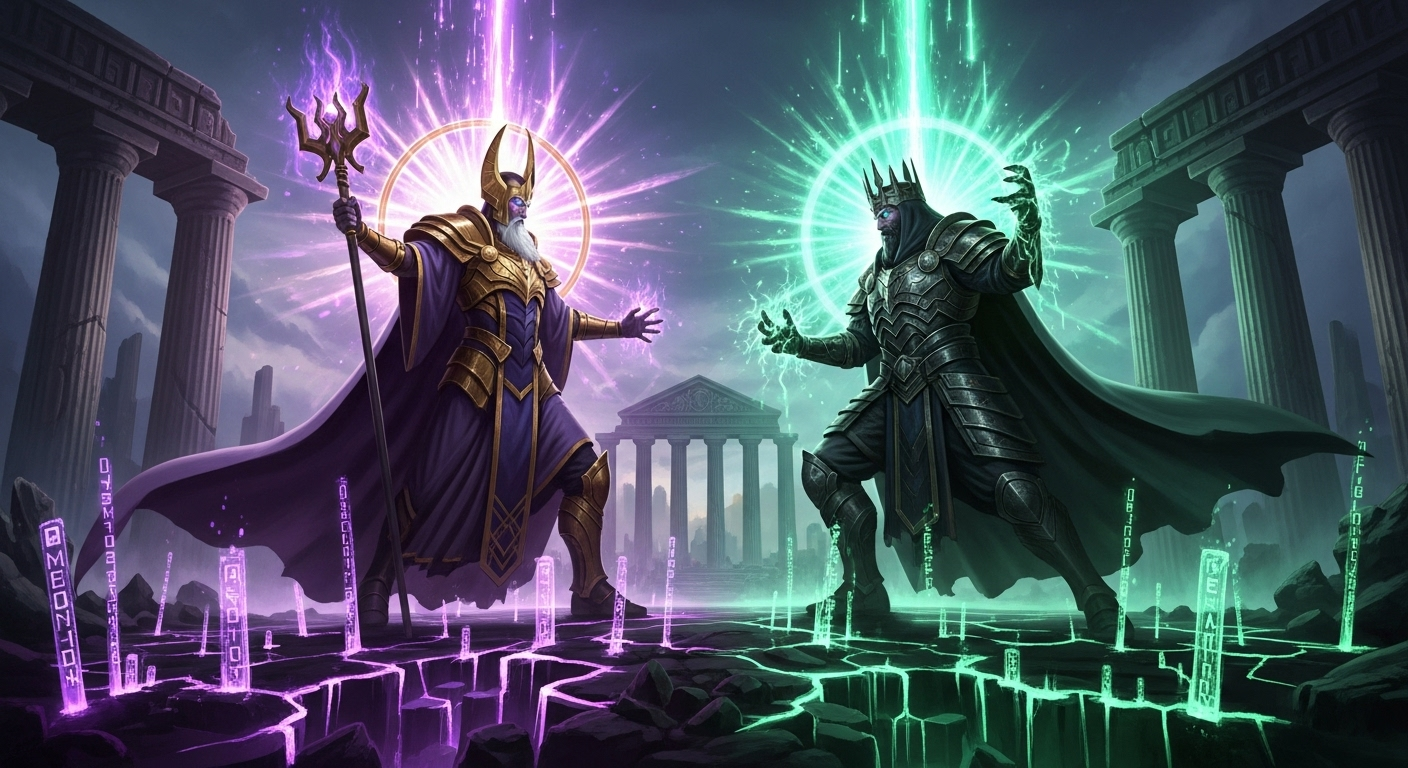
The idea that Bitcoin challenges a state’s monetary sovereignty is not entirely new. Historically, it bears a striking resemblance to the ‘Investiture Controversy’ in medieval Europe, where the Pope and the Emperor clashed.
The Pope’s power at the time stemmed not from his army, but from his normative weapon: ’excommunication,’ the decision of who to recognize and reject within Christendom. This is similar to how the United States excludes certain countries from the dollar payment network (SWIFT) today.
| Category | Medieval Papacy | State Fiat Currency System | Bitcoin Protocol |
|---|---|---|---|
| Source of Authority | Divine authority, collective belief | Monopoly of force, law | Mathematical proof, immutable code |
| Form of Norms | Canon law, religious doctrines | Legislation, central bank policies | Open-source software, consensus rules |
| Enforcement Mechanism | Excommunication (destruction of social ties) | Judiciary, police (physical coercion) | Automatic transaction rejection by nodes |
| Scope of Sovereignty | Non-territorial, Christendom | Territory defined by borders | Global, non-territorial, digital network |
| Eligibility of Members | Baptism, confession of faith | Citizenship, residency | Ownership of private keys, voluntary participation |
Table 3: Comparison of Sovereignty Systems. This illustrates how Bitcoin follows historical precedents while creating a new form of normative power.
Ultimately, Bitcoin does not fight states with armies and weapons. It proposes better rules and lets people voluntarily choose them by thinking, “This is more rational.” Just like the Mormon community in Utah, USA, we can be citizens of South Korea and simultaneously ‘digital citizens’ following the rules of the Bitcoin network for our financial lives.
PART 3. From Theory to Reality: Bitcoin Becomes a Digital Lifeline
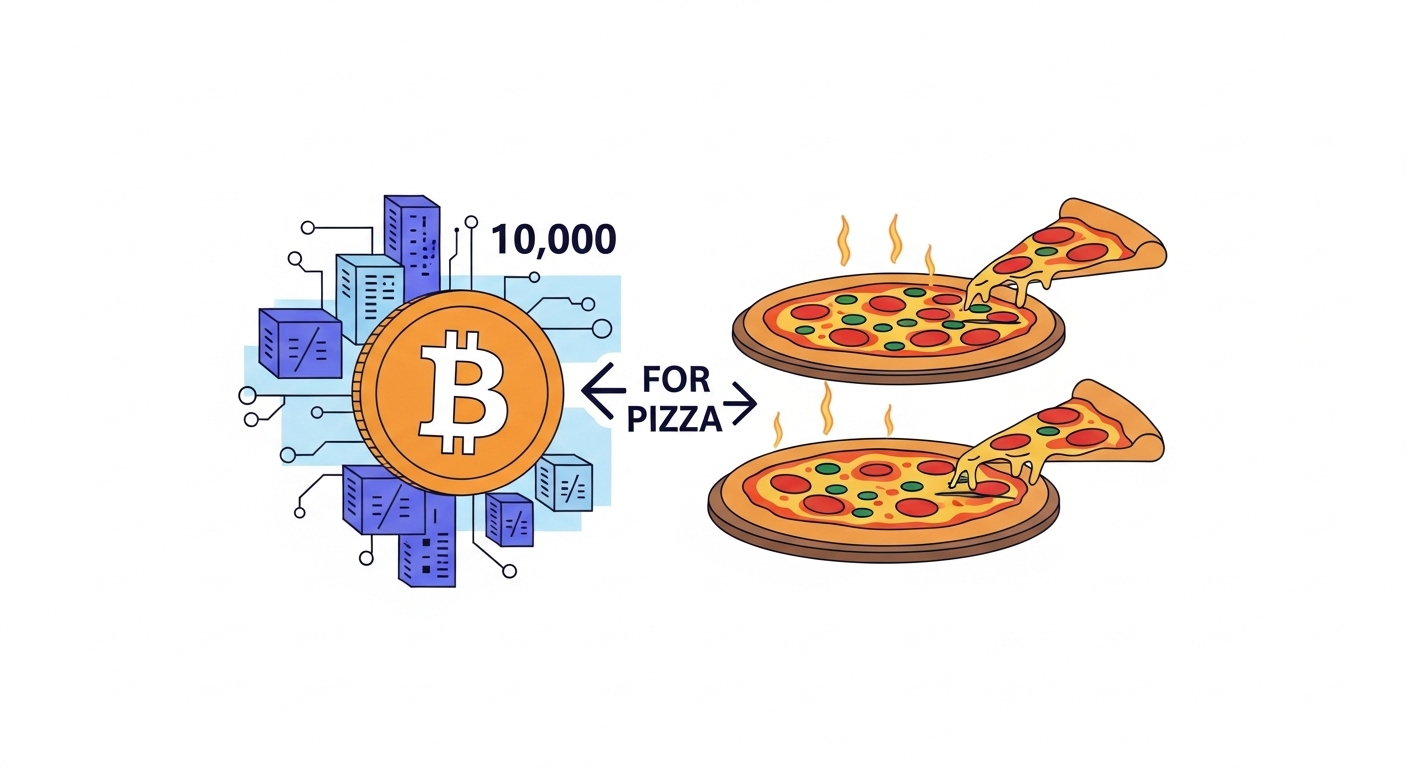
The event on May 22, 2010, when a programmer bought two pizzas for 10,000 Bitcoin, has now become a legend. It was the first time Bitcoin was recognized for its value in the real world. With the creation of the exchange formula ‘10,000 BTC = Two Pizzas,’ Bitcoin stepped out of theory and into reality.
Bitcoin’s true value shines brightest in places where the system has failed most miserably.
- Argentina (Chronic Inflation): For Argentinians who have seen their currency’s value turn into worthless paper for decades, Bitcoin has become a ‘digital vault’ to protect their precious assets. For them, cryptocurrency is not speculation but survival.
- Lebanon (Financial System Collapse): In Lebanon, where banks blocked citizens’ deposits in 2019, Bitcoin became a ’lifeline.’ People could receive remittances from abroad and buy goods without banks. ‘Self-sovereign finance,’ where individuals control their own money, became a reality.
This is by no means a story happening in a faraway land. Even gradual inflation in developed countries is simply the same phenomenon happening slowly.
PART 4. Wall Street’s Endorsement: Bitcoin ETF Becomes a Game Changer
The launch of spot Bitcoin ETFs in the United States throughout 2024 and 2025 was a game changer. It was an official declaration that Bitcoin had finally entered the heart of institutional finance. Legal bridges were built for financial giants like BlackRock and Fidelity to invest in Bitcoin.
| ETF Ticker | Issuer | Assets Under Management (AUM, Estimated End of Q3 2025) |
|---|---|---|
| IBIT | BlackRock | ~$95.8B |
| FBTC | Fidelity | ~$25.1B |
| GBTC | Grayscale | ~$21.3B |
| ARKB | Ark/21Shares | ~$5.5B |
| BITB | Bitwise | ~$4.2B |
Table 4: Key Metrics for US Spot Bitcoin ETFs. This visually represents the magnitude of institutional capital inflow.
With enormous amounts of money flowing through these bridges, Bitcoin has ceased to be the exclusive domain of a few tech enthusiasts and has firmly established itself as a cornerstone of global portfolios.
A World Where Everything is Transparent: The Era of Radical Transparency
The root cause of the 2008 financial crisis was ‘opacity.’ Yet, ironically, Wall Street, synonymous with opacity, has entered a world of ‘radical transparency’ by embracing Bitcoin.
“Don’t Trust, Verify”
The Bitcoin blockchain is an open ledger that anyone can examine. Now, instead of waiting for quarterly reports, we can see in real-time how much money is entering and leaving BlackRock’s Bitcoin wallets. In a world where everything is instantly visible, isn’t this the most powerful light illuminating the opacity that birthed the darkness of 2008?
Conclusion: An Era of New Sovereignty, What Is Your Choice?
Today’s story has viewed Bitcoin not just as a coin, but as a phenomenon signaling a transition in civilization. This grand experiment, born from the crisis of trust in 2008, proposed a new social contract based on mathematical verification rather than human beings.
The theory became reality in Argentina and Lebanon, and finally, it received endorsement from Wall Street.
In conclusion, by separating currency issuance and verification from the state, Bitcoin has thrown the powerful concept of ‘digital sovereignty’ into the world. The future will be an era where multiple sovereignties coexist, including states, corporations, and digital protocols.
This grand experiment to reconstruct the foundation of civilization, ’trust,’ what are your thoughts? The monumental wave this will create for the future international order and individual freedom has only just begun.
References
- 51% Attack: Bitcoin’s Biggest Risk Explained [Webopedia]
- What is a 51% Attack on Blockchain? Risks, Examples, and Costs Explained [Investopedia]
- What is a 51% attack and what are the risks? [Coinbase]
- 51% Attack Blockchain Guide: Understanding Network Security Risks [Startup Defense]
- Bitcoin Pizza Day: Celebrating the 10,000 BTC Pizza Order [Investopedia]
- Bitcoin Pizza Day - Historical Significance and Lessons for Investors [TokenMetrics]
- What Is Bitcoin Pizza Day, And Why It Matters [Paxful]
- Argentina’s growing interest in cryptocurrency is fueled by a lack of trust and ongoing financial turmoil [Bitget News]
- Who Owns Crypto in Latin America? A Demographic Snapshot by Age and Country - June 2025 Survey [rankingslatam]
- Argentina Surpasses Brazil in Latin American Crypto Adoption [Phemex]
- Argentina Leads Latin America in Crypto Adoption Amid Hyperinflation [WebProNews]
- 2025 LATAM Crypto Adoption: Latin America Emerges … [Chainalysis]
- Is Crypto Legal in Lebanon? Regulations & Compliance in 2025 [Lightspark]
- Exploring Bitcoin and Gold I iShares Canada [BlackRock]
- BlackRock’s Bitcoin ETF Nears $100 Billion, Becomes Firm’s Most Profitable Fund [Bitcoin Magazine]
- IBIT iShares Bitcoin Trust ETF [ETF Database]
- iShares Bitcoin Trust ETF | IBIT [BlackRock]
- Fidelity Wise Origin Bitcoin Fund (FBTC) [AAII]
- Spot Bitcoin ETF Flows Daily Chart: BlackRock, Fidelity and More [The Block]
- CME + Glassnode: Bitcoin Insight and Market Trends H1 2025 [Glassnode]
- Spot Bitcoin ETF Balances Hit All-Time High [Unchained Crypto]
- North America Crypto Adoption: Institutions and ETFs [Chainalysis]
- The Landscape of Seizable Crypto Assets in 2025 [Chainalysis]