
Impact of the 8.7 Magnitude Earthquake on Pacific Coastal Countries and Lessons Learned
- Understand the timeline from the occurrence of the 2025 Kamchatka earthquake to the tsunami warning.
- Explore the urgent responses from Pacific coastal countries and the reasons for the minimal impact on the Korean Peninsula.
- Gain insights into the power of this earthquake by comparing it with past major earthquakes and learn lessons for future preparedness.
On the morning of July 30, 2025, a magnitude 8.7 Kamchatka earthquake struck near the Kamchatka Peninsula in Russia. This was the 8th strongest earthquake of the 21st century, immediately instilling fear of a tsunami across the Pacific. Shocked residents rushed into the streets without even putting on shoes, and some areas experienced communication blackouts, resulting in chaos.
What message did this massive natural warning leave us? We will take a closer look at the causes of the earthquake, the responses from various countries, and the lessons we learned.
Update (15:45): A 1.3m tsunami has reportedly occurred in Honshu, Japan. We hope there is no significant damage…
The aftermath of the earthquake in a devastated city
H2. Record of the Day: Timeline of the 2025 Kamchatka Earthquake
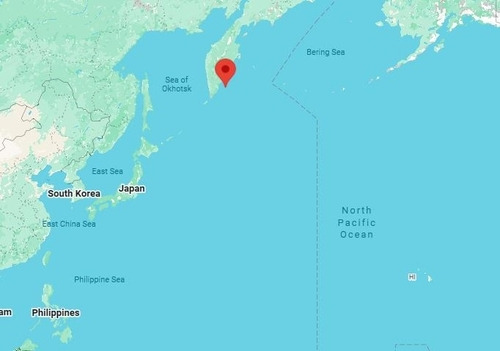
At 11:24 AM local time on July 30, 2025, an earthquake began 136 km east of the Kamchatka Peninsula, with a depth of about 18.2 km, classifying it as a ‘shallow earthquake’.
Shallow earthquakes have a high potential to generate destructive tsunamis as the energy is transmitted almost directly into the seawater. Indeed, shortly after the earthquake, a tsunami of up to 3-4 meters reached the coast of the Kamchatka Peninsula, flooding some villages and prompting emergency evacuations. Vladimir Solodov, the governor of Kamchatka, described it as “the strongest earthquake in decades,” highlighting the severity of the situation.
H2. The Warning from the Earth: Precursors of the Kamchatka Earthquake
The Kamchatka earthquake was not a sudden disaster. Ten days before the main shock, on July 20, a magnitude 7.4 strong earthquake had already occurred in nearly the same area. Over the next two days, more than 130 aftershocks of magnitude 4.0 or higher were recorded, indicating that the earth was continuously sending unstable signals.
The scientific community analyzes this as ‘foreshock’ activity. Foreshocks occur when smaller sections of a large fault break before the entire fault fails, redistributing stress. Just as small cracks appear before a large dam collapses, the earth had been warning of greater danger over the days. Analyzing these precursors provides crucial insights for future disaster prediction systems.
H2. The Tsunami that Shook the Pacific and Responses from Various Countries
The energy of the 8.7 magnitude earthquake spread like a massive wave across the Pacific.
H3. Japan: The Tense Process of Upgrading from ‘Advisory’ to ‘Warning’
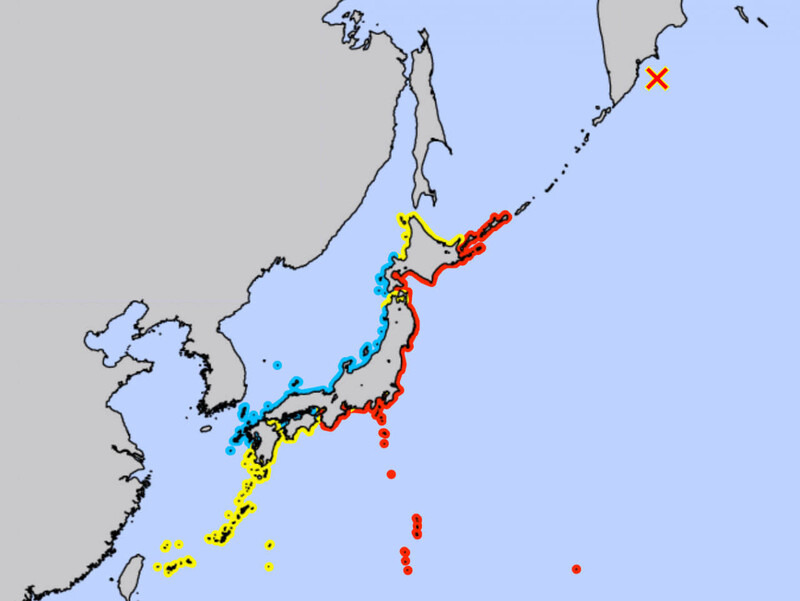
NHK disaster broadcast screen announcing the tsunami warning
- Initial Response (8:37 AM): The Japan Meteorological Agency issued a ’tsunami advisory’ for waves up to 1m based on an initial magnitude of 8.0, covering from Hokkaido to Kyushu.
- Information Revision: Shortly after, the US Geological Survey (USGS) significantly revised the earthquake magnitude to 8.7. A difference of 0.7 in magnitude corresponds to an enormous difference in energy.
- Warning Upgrade: Recognizing the seriousness, the Japan Meteorological Agency immediately upgraded to a ’tsunami warning’ for waves up to 3m along the eastern coast of Japan, urging immediate evacuation to higher ground. NHK suspended regular broadcasts to continuously air disaster warnings, stating, “Tsunamis come repeatedly! Do not approach the coast until the warning is lifted!”
H3. Why Was the Korean Peninsula Safe?
In conclusion, the impact on the Korean Peninsula was minimal. The Korea Meteorological Administration assessed that the sea level around Ulleungdo might rise slightly below 0.3m, but it would not cause damage.
The reason we were safe from the massive tsunami from Kamchatka is due to our ‘geographical location’. For the tsunami to reach the Korean Peninsula, it must pass through the Japanese archipelago, which acts as a massive ‘shield’. Most of the tsunami energy is blocked by the Japanese archipelago, and even if some reroutes into the East Sea, its strength is significantly weakened.
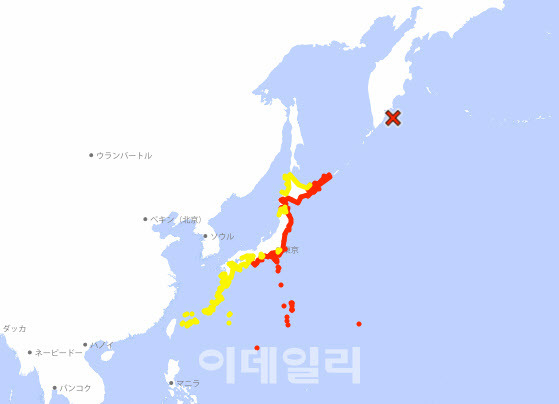
The geographical position of the Japanese archipelago blocking the tsunami
Meanwhile, the Pacific Tsunami Warning Center (PTWC) in Hawaii issued a ’tsunami warning’ for the entire state of Hawaii and a ’tsunami advisory’ for the U.S. West Coast, initiating international cooperation.
Comparison/Alternatives
Comparing the Power of Past Major Earthquakes
To understand the magnitude of 8.7, it is clearer when compared to other major earthquakes in history. Particularly, this earthquake occurred far from densely populated areas, allowing us to avoid the worst-case scenario of a compound disaster like the 2011 Great East Japan Earthquake. This is a silver lining.
| Earthquake | Magnitude | Characteristics |
|---|---|---|
| 2025 Kamchatka Earthquake | 8.7 | Occurred after strong foreshock activity and was far from populated areas. |
| 1952 Kamchatka Earthquake | 9.0 | Generated a tsunami over 9m in Hawaii, causing significant casualties. |
| 2011 Great East Japan Earthquake | 9.1 | Occurred near a densely populated area, leading to a compound disaster with tsunami and nuclear plant accidents. |
Conclusion
The 2025 Kamchatka earthquake was a powerful warning from our living planet. Through this disaster, we are reminded of several important facts.
- Fluidity of Disaster Information: Just as the initially announced earthquake magnitude was revised upward, disaster information can change in real-time, so we must always stay updated.
- Nature’s Warning Signals: Like the magnitude 7.4 foreshock, precursor phenomena can occur before major disasters. Continuous research and monitoring systems for these signals have become increasingly important.
- No Safe Zone: While we were safe this time thanks to the Japanese archipelago, if the epicenter had been in the East Sea, the situation would have been entirely different. We need to maintain a mindset that disaster is not just ‘across the river’ but ‘our own issue’ and always be prepared.
Remembering the lessons from the Kamchatka earthquake and reviewing our disaster preparedness systems and personal safety protocols will be the first step toward a safer future.
References
- Powerful quake hits near Russia’s Kamchatka Peninsula. Japan issues a tsunami advisory AP News
- 2025 Kamchatka Peninsula earthquake Wikipedia
- Kamchatka’s largest earthquake in decades… Russia issues tsunami warning and evacuates residents Daum
- Japan issues ’tsunami warning’ for Pacific coastal areas… Kamchatka Peninsula 8.7 magnitude earthquake Electronic Newspaper
- More than 130 strong aftershocks recorded after M7.4 earthquake east of Petropavlovsk-Kamchatsky, Kamchatka The Watchers
- [Breaking] Meteorological Agency, Kamchatka magnitude 8.7 earthquake… “Minimal impact on the Korean Peninsula” KBS News