
An In-Depth Analysis of the Geopolitical Turmoil in the Middle East in 2025 and Its Impact on the Global Economy, Trump Administration’s Foreign Policy, and South Korea
- Causes and developments of the 2025 Iran-Israel war
- Shock scenario analysis of the war’s impact on the global economy, including international oil prices and financial markets
- Examination of the Trump administration’s response and strategic opportunities and crisis factors for South Korea
Part I: The Iran-Israel War Escalated from Shadow War to Full-Scale War
Explosion of Decades-Long Conflict
The relationship between Iran and Israel underwent a dramatic shift following the 1979 Iranian Islamic Revolution. The previously friendly relations turned into fundamental hostility as Iran defined Israel as ’evil’ after establishing its theocratic regime.
This animosity continued for decades in the form of a ‘Shadow War’. Iran indirectly attacked Israel through proxy forces like Hezbollah and Hamas, while Israel responded with assassinations of Iranian nuclear scientists and cyberattacks. This unstable balance was broken in 2024 when both countries directly attacked each other’s territories, setting the stage for a full-scale war in 2025.
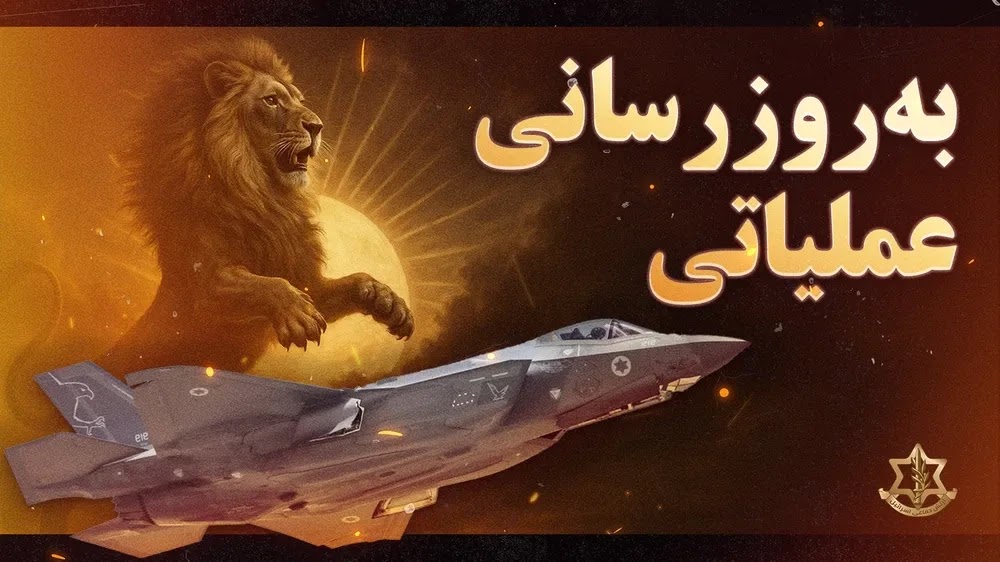
Operation ‘Rising Lion’: Israel’s Large-Scale Preemptive Attack
In the early hours of June 13, 2025, Israel launched a large-scale preemptive attack on Iran under the operation name ‘Rising Lion’. This operation aimed to fundamentally eliminate Iran’s nuclear threat. About 200 bombers targeted key nuclear facilities and military command centers, resembling a ‘decapitation operation’ aimed at eliminating Iranian military leaders and nuclear scientists.
The airstrikes resulted in the deaths of top commanders, including the Chief of Staff of the Iranian Armed Forces and the Commander of the Revolutionary Guard, along with numerous nuclear scientists. Initial casualties exceeded 224, with hundreds injured, plunging the entire Middle East into the chaos of war.
‘Operation True Promise 3’: Iran’s Missile Retaliation
In response to the Israeli airstrikes, Iran’s Supreme Leader Ali Khamenei declared a strong retaliation and initiated ‘Operation True Promise 3’. Hundreds of Shahed drones and approximately 150-200 ballistic missiles were launched toward key Israeli facilities, including the Ministry of Defense headquarters in Tel Aviv.
Despite Israel’s multi-layered air defense system and U.S. support, some missiles penetrated the defenses and reached the mainland, resulting in civilian casualties. This demonstrated both the limitations of Israel’s air defense and Iran’s striking capabilities, escalating the conflict further.
U.S. Intervention and the 12-Day War
Initially limited to defensive support, the Trump administration changed the dynamics of the conflict on the ninth day of the war by launching direct attacks. U.S. forces bombed three key Iranian nuclear facilities, including Fordow and Natanz. After 12 days of fighting, both sides agreed to a ceasefire, but the war left significant damage on both countries. Israel’s economy suffered billions in losses, while Iran’s military leadership and nuclear program were severely compromised.
Political Repercussions: Netanyahu’s ‘Rally-Around-the-Flag Effect’
The full-scale war with Iran became a decisive turning point for Israeli Prime Minister Benjamin Netanyahu, who was facing a political crisis. In the face of a national crisis, a ‘rally-around-the-flag effect’ emerged in Israel, transcending ideological divides. Following the outbreak of war, Netanyahu’s approval ratings surged, and he surpassed his competitors in polls for the ‘most preferred prime minister’ for the first time in over a year. The ‘Rising Lion’ operation not only neutralized Iran’s nuclear program but also dramatically extended Netanyahu’s political life.
Part II: Shockwaves Hitting the Global Economy
Oil Price Shock and Crisis in the Strait of Hormuz
Following news of the Israeli airstrikes, Brent crude prices surged by 13% during trading, surpassing $80 per barrel. This reflected fears of geopolitical risk rather than actual supply disruptions, indicating a ‘geopolitical risk premium.’
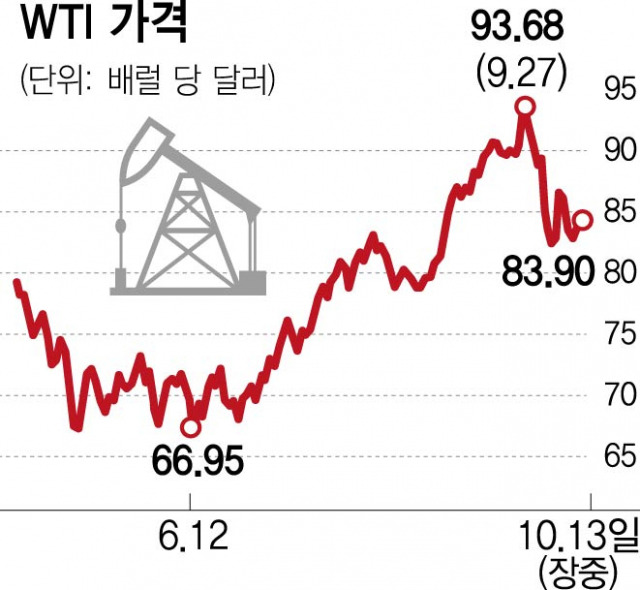
Market fears concentrated on the Strait of Hormuz, through which 20% of global maritime oil transport passes. When the Iranian parliament passed a resolution to block the Strait of Hormuz, it was perceived as a tangible threat to the global economy. However, if the conflict does not prolong, there is a possibility that oil prices could stabilize due to OPEC+’s production capacity and the release of U.S. strategic reserves.
Scenario-Based Economic Impact Analysis
The impact of the Iran-Israel war on the global economy can be divided into three scenarios based on the intensity of the conflict. In my view, the most realistic scenario is limited conflict followed by negotiations between both sides.
| Category | Scenario 1: Limited Conflict | Scenario 2: Escalation to Local War | Scenario 3: Full-Scale War and Strait of Hormuz Blockade |
|---|---|---|---|
| Core Assumption | Ceasefire after 12-day war, normal operation of the Strait of Hormuz | Escalation through proxy forces, disruption of operations in the Strait of Hormuz | Full-scale U.S.-Iran war, complete blockade of the Strait of Hormuz |
| Brent Crude Price | $75-90/bbl | $120-130/bbl | $150-200+/bbl |
| Global GDP | Slight decline from baseline forecast | Severe slowdown, stagflation | Severe recession at Great Depression levels |
| Global Inflation | Temporary rise followed by stabilization | Sharp increase and prolonged inflation | Uncontrollable skyrocketing |
| S&P 500 | Short-term correction followed by recovery (-5% ~ -10%) | Entering bear market (-10% ~ -20%) | Market collapse level crash (-20% ~ -30%+) |
| Beneficiary Sectors | Defense, Energy (short-term) | Defense, Energy, Commodities | Defense, Energy (extreme) |
| Affected Sectors | Aviation, Tourism, Shipping, Consumer Goods | All industrial sectors (excluding energy) | All industrial sectors (excluding energy) |
Inflation Reignition and Financial Market ‘Risk-Off’
The surge in oil prices and rising shipping costs could reignite global inflation. This would delay central banks’ interest rate cuts and solidify a ‘higher for longer’ interest rate environment, hindering the recovery of the global economy. In financial markets, there may be a pronounced ‘risk-off’ phenomenon, with funds flowing into safe assets like the U.S. dollar, government bonds, and gold instead of risk assets like stocks.
Part III: The Trump Administration’s ‘Grand Bargain’
‘America First’ and Transactional Diplomacy
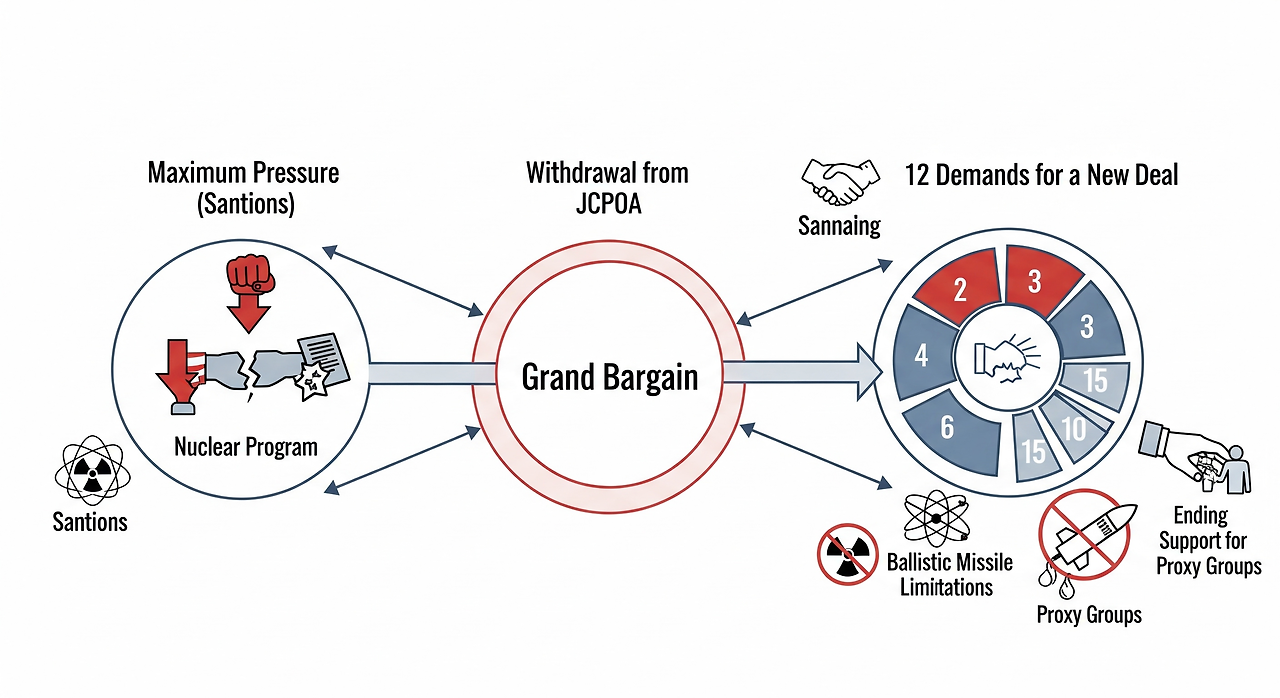
The Middle East policy of the re-elected Trump administration is based on the principle of ‘America First.’ This prioritizes U.S. national interests absolutely over allies or international norms, characterizing all diplomatic matters as ‘deals.’ The withdrawal from the Iran nuclear agreement (JCPOA) in 2018 symbolically illustrates this policy direction.
Crisis Response: Support for Israel and Direct Intervention
The Trump administration openly supported Israel’s preemptive strike and took independent actions, such as refusing to sign the G7 joint statement. On the ninth day of the war, U.S. forces directly bombed Iranian nuclear facilities, marking the peak of the ‘Maximum Pressure’ strategy to bring Iran to the negotiating table. President Trump publicly pressured the Iranian leadership on social media with the message “UNCONDITIONAL SURRENDER!”
Ultimate Goal: A New ‘Grand Bargain’
The ultimate goal of the Trump administration is not war, but to secure a comprehensive ‘Grand Bargain’ that surpasses the existing JCPOA based on overwhelming superiority. This new agreement would focus on permanently freezing and dismantling Iran’s nuclear program, limiting its ballistic missile program, and halting the activities of regional proxy forces. This represents a macro strategy to reshape the security landscape in the Middle East and maximize U.S. economic interests.
Part IV: Exposing Strategic Limitations of Major Powers
The Iran-Israel war has clearly revealed the limitations of major powers outside the U.S., particularly China and Russia, in the Middle East.
| Category | U.S. (Trump Administration) | China | Russia |
|---|---|---|---|
| Official Position | Support for Israel’s right to self-defense, prevent Iran’s nuclear development | Condemn Israeli/U.S. airstrikes, defend Iran’s sovereignty | Condemn Israeli/U.S. airstrikes, express concern over escalating tensions |
| Key Actions | Direct bombing of Iranian nuclear facilities, ‘Maximum Pressure’ sanctions | Withdrawal of nationals, defending Iran’s position at the UN Security Council | Lack of substantial support beyond rhetorical condemnation |
| Strategic Goals | Conclude ‘Grand Bargain’, reshape Middle Eastern order | Protect energy supply chains, safeguard ‘Belt and Road’ interests | Focus on the Ukraine war, avoid friction with Trump |
| Core Constraints | Potential friction with allies, unpredictability | Lack of military intervention capability, complex interests | Exhaustion of national power due to the Ukraine war, loss of influence |
China’s Calculated Neutrality and Dilemma
China, while having a strategic partnership with Iran, also has substantial economic interests entangled with Israel and Gulf countries, making it difficult to take sides. Ultimately, China limited itself to rhetorical condemnation of the airstrikes and avoided military or economic support. This prioritization of its energy security and protection of the ‘Belt and Road’ project shows that China’s influence in the Middle East remains limited.
Russia’s Limited Response
Russia, another ally of Iran, also appeared powerless due to the depletion of its military and diplomatic capabilities from the Ukraine war. Russia did not take any substantial actions beyond issuing a principled condemnation, indicating its status as a regional actor rather than a global power.
Part V: Implications and Strategies for South Korea
Impact of the Iran-Israel War on the South Korean Economy
With approximately 70% of its crude oil imports dependent on the Middle East, South Korea’s economy is structurally vulnerable to this situation. The surge in oil prices and logistics disruptions could directly impact various industries. Is your industry safe?
- Negative Impact: Industries sensitive to rising oil and logistics costs, such as refining, petrochemicals, shipping, logistics, automotive, electronics, and construction.
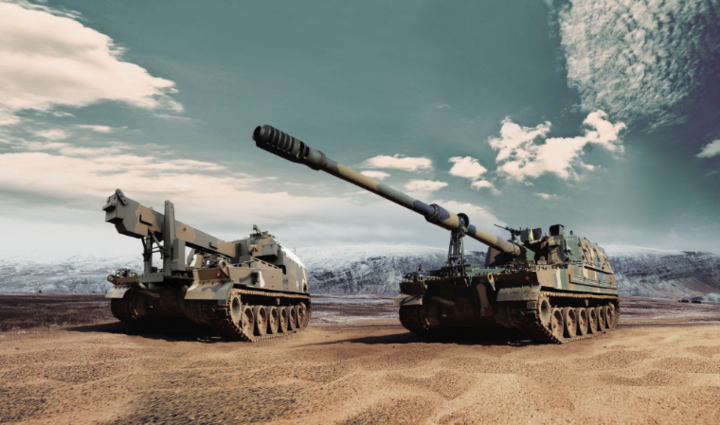
- Positive Impact: Due to security anxieties in Middle Eastern countries, ‘K-Defense’ may face unprecedented export expansion opportunities. Interest in systems like Cheongung-II and KF-21 fighter jets is surging, with expectations for large additional contracts.
South Korea’s Strategic Checklist for Crisis Response
In the rapidly changing international landscape, the government and businesses must pursue the following strategies to protect national interests.
Recommendations for Government Policymakers
- Enhance Energy Security: Diversify crude oil import sources to the U.S., South America, etc., and establish a joint release plan for strategic reserves.
- Economic Stabilization Measures: Activate a ‘24-hour emergency economic response team’ to monitor foreign exchange and financial markets and swiftly implement market stabilization measures if necessary.
- Proactive ‘Trump Risk’ Management: Clearly communicate South Korea’s position to ensure that its energy security and economic interests are not compromised during negotiations with the Trump administration.
- Foster ‘K-Defense’ Strategic Industries: Recognize defense exports as a core asset of national security and diplomacy, and enhance support at the government level.
Recommendations for Business Executives
- Supply Chain Stress Testing: Conduct tests based on worst-case scenarios, such as the blockade of the Strait of Hormuz, and secure alternative supply chains (Plan B).
- Dynamic Financial Hedge Strategies: Develop step-by-step financial hedge strategies that flexibly respond to oil price and exchange rate volatility based on scenario analyses.
- Reassess Risks and Opportunities in the Middle East Market: Review local risks and explore entry strategies in new opportunity areas such as defense, IT, and renewable energy.
- Ensure Supply Chain Visibility: Invest in digital technologies to secure visibility across the entire supply chain and develop capabilities to respond swiftly in the event of logistics disruptions.
Conclusion
The 2025 Iran-Israel war will be a turning point not just for regional conflict but for the global order.
- Key Summary 1: Decades of ‘Shadow War’ have escalated into full-scale war, fundamentally reshaping the geopolitical landscape of the Middle East.
- Key Summary 2: The Trump administration will seek to bring Iran to the negotiating table through ‘Maximum Pressure’ and pursue a ‘Grand Bargain’ that maximizes U.S. interests.
- Key Summary 3: South Korea faces an energy security crisis but also encounters new opportunities for expanding ‘K-Defense’ exports.
During this monumental transition, the government and businesses must maximize crisis management capabilities and adopt flexible and bold responses to seize new strategic opportunities. If further in-depth analysis is needed, please feel free to reach out.
References
- The Real Reasons Behind the Middle Eastern War: Israel’s Strategy and Iran’s Limitations Link
- Iran-Israel War - Wikipedia Link
- Israel: Major Issues and U.S. Relations - Congress.gov Link
- Israel’s Airstrike on Iran: Background and Outlook - Korea Institute for Defense Analyses Link
- Israel Bombs Iranian Government Facilities After U.S. Airstrikes - News and Post Link
- 2025 Israel-Iran Conflict - Namu Wiki Link
- Exploding Israel-Iran Conflict, Surge in Casualties… U.S. Provides Support to Israel - Hankyoreh Link
- The Ongoing Israel vs. Iran War, What is the Worst-Case Scenario for Us? | Professor Seong Il-gwang (Part 1) Link
- [U.S. Attack on Iran] U.S. Economic Uncertainty Expands… Market on Alert for Strait of Hormuz Blockade | Yonhap News Link
- [New York Oil Prices] Amid Ceasefire, Speculation on Trump’s Easing of Sanctions Against Iran… WTI Plummets 6% | Yonhap News Link
- Israel’s Economy Suffers Billions in Losses from 12-Day Conflict with Iran - TRT Global Link
- War Resurrects Netanyahu, Surpassing Competitors in Approval Ratings After a Year - Yonhap News Link
- Netanyahu as the ‘Big Winner’… Boosting Approval Ratings After Devastating U.S. and Iran - News1 Link
- Netanyahu Resurrected by War… Leading in Approval Ratings After a Year / Yonhap News TV Link
- Financial Market Impact of Israel-Iran Conflict… Three Scenarios | Korea Economic Daily Link
- Impact of Iran’s Threat to Blockade the Strait of Hormuz, International Oil Prices Rise 4% - Chosun Ilbo Link
- Oil Market Report - July 2025 – Analysis - IEA Link
- Implications of Recent Movements in International Oil Prices Following the Geopolitical Crisis in the Middle East | KDI Economic Education Link
- Trade Links Analyzes the Crisis of the Strait of Hormuz Blockade… “Energy Maritime Logistics Entering ‘Extreme Emergency’ Phase” - Maritime News Link
- Is U.S. Full-Scale Intervention in the Israel-Iran War the Prelude to a Global Economic Depression? - Sky Daily Link
- Impact and Response Directions of the Energy Market During Trump’s Re-election Period Link
- The Return of the Trump Administration in 2025 and U.S. Middle Eastern Policy > Issue Brief Link
- Prospects and Implications of the Trump Administration’s Middle East Policy - Korea Institute for Defense Analyses Link
- “Trump Decides Not to Sign G7 Joint Statement Regarding Iran-Israel” | Yonhap News Link
- Inside Trump’s Strike on Iran’s Nuclear Program - CSIS Link
- Political Background of the Iran-Israel War - Im Myung-mook Link
- China’s Middle East Strategy in 2025: Between Iran and Israel Link
- Russia and China Respond to the 12-Day War in Iran | CNA Link
- Between Two Fires: Kremlin’s Loss of Leverage Exposed By Israel… Link
- Heightening tensions in the Middle East to create fallout for Korean industries - The Korea Times Link
- Middle East may turn to Korean defense industry as conflict rages - Korea JoongAng Daily Link