The Secret of Micro-Storytelling That Captivates You
- The principle behind personalized recommendations that drive clicks
- Opening techniques that maximize immersion in the early stages of viewing
- The secret of endings that make you have no choice but to press play on the next episode
Your finger pressing the “Watch Next Episode” button. Is that movement entirely your will? I too have experienced finishing a whole season in a weekend, becoming one with the sofa. We often blame our lack of willpower, but the real culprit is elsewhere. It’s the clever ‘micro-storytelling’ strategy that induces Netflix binge-watching.
1. A First Impression Just for You: ‘Personalized Thumbnails’
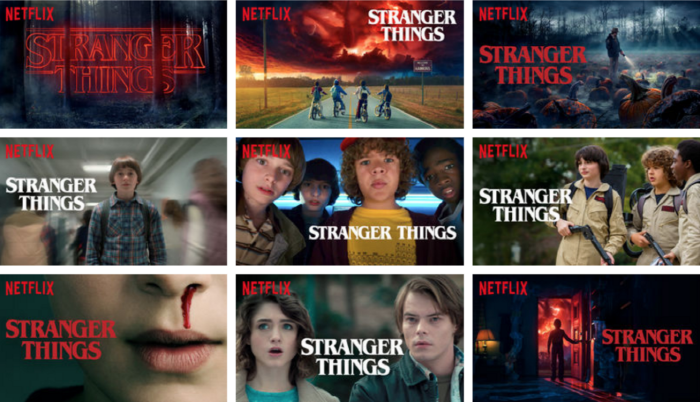
The story begins long before you press play. The countless ’thumbnails’ filling the Netflix screen are not just posters. They are ‘1-second trailers’ meticulously designed with data to capture your taste.

According to the IT tech media WIRED, Netflix shows completely different thumbnails for the same content depending on the user group.
- If you enjoy romance dramas, thumbnails showing the poignant relationships between the protagonists.
- If you’re a horror movie fan, thumbnails featuring the monster ‘Demogorgon’.
This goes beyond simple A/B testing to ‘personalized micro-storytelling’. Netflix already knows what ‘stories’ you’re drawn to through your viewing history and designs a ‘first impression’ to match. The thumbnail you clicked without thinking was actually a fateful invitation selected after countless data analyses.
2. The 90-Second Battle: The ‘Cold Open’ That Makes Escape Impossible
Don’t relax just because you’ve pressed play. The real battle is decided in the first 90 seconds. A Netflix executive said, “If you don’t hook viewers in the first 90 seconds, you lose them.” The technique devised for this is ‘Cold Open’.
A cold open is a directing method that throws the most intense conflict or mystery of the story from the very first scene, without tedious explanations of the background or characters. Do you remember the first scene of
“What on earth is going on? I have to see the end of this story.”

This powerful opening creates a huge ‘information vacuum’ in the viewer’s brain. In psychology, this is called the ‘Zeigarnik effect’. People feel a strong desire to complete unfinished stories. Cold opens use this effect as a powerful psychological device to draw viewers into the story without giving them time to change channels.
3. A Lure Thrown at the Peak of Emotion: The ‘Cliffhanger Ending’
One episode ends. The protagonist is in a life-or-death crisis, and a huge secret is about to be revealed. The screen turns black, and the “Next Episode Auto-Play” countdown begins. 5, 4, 3…
This is the final puzzle piece that completes Netflix binge-watching: the ‘Cliffhanger’. A cliffhanger is the ultimate version of the Zeigarnik effect, cutting off the story at the peak of emotion. It leaves an ‘unresolved task’ in the viewer’s brain, creating extreme psychological tension. The only way to resolve this tension is to watch the next episode.

Netflix goes a step further. The ‘Auto-Play’ function eliminates even the smallest ‘gap’ between the desire to resolve tension and decision-making. It doesn’t give you time to think. Ultimately, we are drawn into the world of “Watch Next Episode” again by the perfect combination of a psychological lure (cliffhanger) and a technical device (auto-play).
Comparison: Netflix vs. Traditional TV Broadcasting Strategies
How have Netflix’s binge-watching strategies changed viewing habits from traditional TV broadcasting? The key difference between the two methods is the elimination of ‘waiting’.
| Category | Traditional TV Broadcasting | Netflix |
| — | — | — |
| Content Delivery | Broadcast at fixed times, e.g., once a week | Entire seasons released simultaneously |
| Ending Strategy | Cliffhangers to encourage viewing the following week | Cliffhangers to encourage immediate viewing of the next episode |
| Viewer Control | Must adhere to broadcast times | Watch as much as you want, when you want |
| Psychological Effect | Waiting and anticipation for a week | Immediate gratification, amplified regret upon stopping |
While traditional TV made viewers ‘wait’, Netflix has completely changed the ownership of the viewing experience by making it ‘impossible to stop’.
Conclusion
Netflix’s strategy for stealing our time is clear. This is not just technology, but the result of sophisticated design that penetrates human psychology.
-
3 Key Summaries:
-
Personalized Thumbnails: Designs the ‘first impression’ of a story you’ll like in advance to encourage clicks.
-
Cold Open: Stimulates intense curiosity within the first 90 seconds to prevent drop-offs and increase immersion.
-
Cliffhanger & Auto-Play: Creates peak emotional tension and then connects to the next story without giving time to think.
-
This principle can be directly applied to your business, blog, or personal branding. When customers first encounter your service, are you capturing their attention? What is the ‘cliffhanger’ that makes customers look forward to what’s next?
Of course, these powerful persuasion techniques come with ethical responsibilities. We should aim for ‘Brilliant Patterns’ that win hearts by providing truly valuable experiences, not ‘dark patterns’ that deceive users. The best storytelling is not a technique to manipulate people, but an art to win their hearts.
References
- How Netflix Uses A/B Testing to Perfect Its Programming WIRED